BRUSSELS – Facing a rapidly widening trade imbalance with China that has hit a staggering 1 billion euros per day, the European Union has launched two targeted trade policy changes on Wednesday, designed to shore up its struggling domestic steel sector and curb the flood of unregulated low-value small e-commerce parcels entering the bloc. The announcement marks the most significant shift in Brussels’ trade approach to Beijing in recent years, as growing domestic political and industrial pressure forces policymakers to abandon the status quo of unbalanced trade.
The first measure ends the decades-old “de minimis” customs exemption that had allowed all parcels valued under 150 euros to enter the EU duty-free. In its place, a new fixed 3 euro ($3.42) customs duty will be applied to all low-value small parcels entering the bloc. European Commission President Ursula von der Leyen framed the change as a long-overdue correction to an unfair playing field, noting that the exponential growth of low-value online imports from Chinese firms has placed domestic European retailers at a crippling competitive disadvantage. She added that a large share of these unregulated imports also fail to meet the EU’s strict product safety and environmental standards, putting ordinary consumers at unnecessary risk.
EU data confirms the scale of the small parcel surge: the bloc received 5.9 billion small parcels from international sources in 2025, up from just 1.4 billion in 2022. At roughly 16 million parcels per day, these shipments account for 97% of all cross-border parcel traffic into the EU, though they make up only 2% of total import value. European officials estimate that Chinese e-commerce giants including Temu and Shein control around 90% of this low-value parcel trade, a concentration that has upended traditional brick-and-mortar retail across the bloc. The U.S. implemented an identical policy change last year, signaling a coordinated global shift toward restricting this trade model. The new rule also addresses widespread environmental concerns, as the majority of these small shipments come wrapped in excessive single-use plastic that adds to the EU’s waste management burden.
Bernd Lange, chair of the European Parliament’s trade committee, welcomed the move in an online statement, saying that “Europe finally shows teeth against flood of cheap package deals.” However, some trade analysts caution that the 3 euro duty may not deliver the transformative change policymakers are seeking. Gary Ng, a research fellow at the Central European Institute of Asian Studies, noted that the fee is negligible compared to the large price gap between Chinese manufactured e-commerce goods and equivalent European products. Ng added that while the duty may reduce casual impulse purchases, consumers and platforms can easily evade the measure by grouping multiple small orders into a single shipment to avoid or reduce fees.
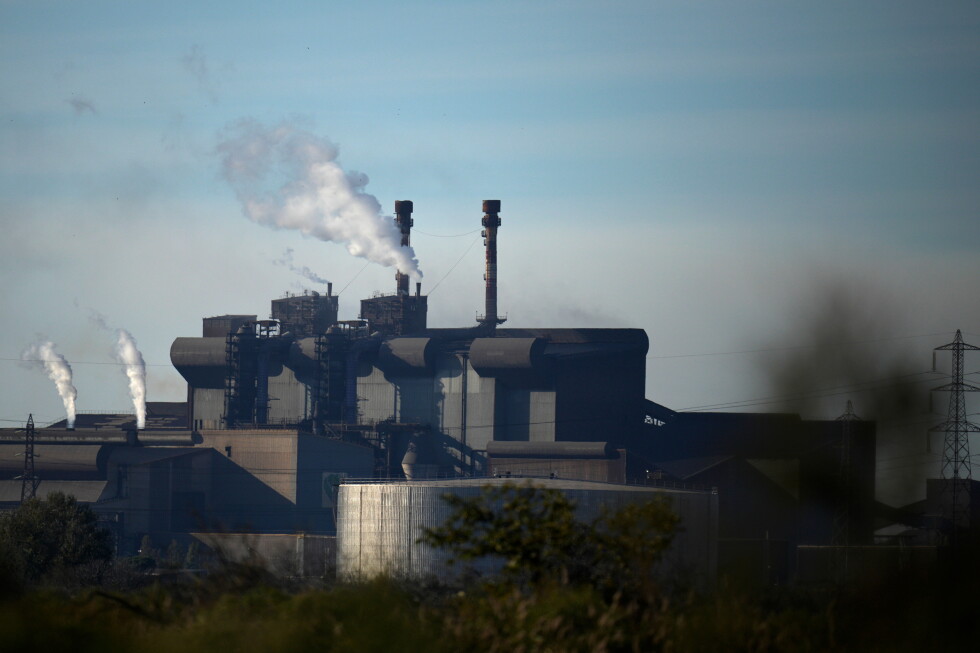
The second, equally impactful measure targets the EU’s strategically critical steel sector, which has been reeling from years of global overcapacity driven largely by Chinese government production subsidies that have flooded global markets with artificially cheap steel. Under the new rules, the EU will set an annual tariff-free import quota of 18.3 million metric tons for 26 categories of steel products. Any imports that exceed this quota will face a 50% punitive tariff. The framework also introduces strict new transparency requirements for importers, mandating that they disclose where the core “melt and pour” production stage took place to prevent Chinese steel from being rerouted through third countries to skirt EU trade protections.
Europe’s steel industry has already slid into a deep crisis, with the European Steel Association reporting that crude steel output fell to a historic low in the first half of 2026. Axel Eggert, the trade group’s director-general, warned in March that “Europe’s steel production is shrinking while imports as a share of the EU market are rising.” He urged EU policymakers to quickly enact the full, unwatered-down measures, warning that further delay would put more European industrial capacity and jobs at permanent risk. Notably, while China produces more than half of the world’s total steel output, most of the EU’s steel imports currently come from allied and partner economies including the U.K., Ukraine, India, Turkey, Japan and South Korea. Ukraine has received full exemptions from the new tariffs to support its post-invasion economic recovery, though the rules could still trigger dispute mechanisms under existing free trade agreements with other partners including Japan. This new steel framework builds on emergency tariffs the bloc put in place last October to address diverted steel shipments stemming from new U.S. trade policy under the Trump administration.
A senior anonymous Commission official confirmed that Brussels intends to work with like-minded global partners to collectively address the systemic issue of global steel overcapacity, noting that “in an ideal world there is fair competition and level playing fields. Unfortunately, we don’t seem to live in an ideal world.”
The EU’s trade deficit with China ballooned to roughly 360 billion euros ($410 billion) in 2025, and projections show the gap continuing to widen through 2026. Against this backdrop, the new measures have already drawn a sharp rebuke from Beijing, which has repeatedly warned Brussels against adopting what it calls “discriminatory” trade policies. China’s Ministry of Commerce issued a formal warning in May, stating that it would “firmly respond” to any measures targeting Chinese companies. Alicia García-Herrero, chief economist for Asia Pacific and the Middle East at French bank Natixis, noted that even though the measures are not formally labeled as targeting China, Beijing is certain to oppose them, as it views the framework as a potential precedent for broader trade restrictions on Chinese exports across multiple sectors.
Chinese policy analysts have already warned of growing global backlash against China’s export-led manufacturing model. A recent report from Tsinghua University’s Center for International Security and Strategy identified what it calls “China Shock 2.0” — a massive surge of heavily subsidized advanced Chinese manufacturing exports flooding global markets — as one of the top 10 security risks facing China. The report warns that the EU’s new tariffs, combined with existing protectionist sentiment in the U.S., could trigger a “wolf pack effect” where dozens of other countries follow suit with steep tariff hikes and stricter investment screening targeting Chinese firms. The report notes that this coordinated response would not only cause direct economic losses but also damage China’s broader strategic and international business reputation globally. Beijing has pushed back against this framing, arguing that its export growth brings shared economic benefits and technological innovation to global markets.
HSBC economists Frederic Neumann and Justin Feng noted in a recent research note that while the EU has historically taken a less confrontational approach to trade with China than the U.S. under the Trump administration, the overall policy direction in Brussels is clearly shifting toward greater restriction. This shift aligns with a broader G7 push for greater supply chain independence for critical minerals and high-tech goods, with G7 leaders issuing a joint statement in June committing to diversify supply chains away from over-reliance on single sources.
Chinese officials have pushed back against the idea that China is to blame for the EU’s trade imbalances. “China and the EU are partners, not rivals,” Guo Jiakun, a spokesperson for the Chinese Ministry of Foreign Affairs, said this Tuesday. “The root cause of the EU’s problems does not lie with China.” Trade analysts note that China successfully weathered the Trump administration’s escalated tariff threats last year, in part by leveraging its control over global rare earth supply chains to negotiate a truce with Washington. This experience has left Beijing more confident in its ability to withstand external pressure, leading analysts to predict that China will be unwilling to make major concessions to the EU in upcoming trade talks.
“If China managed a U.S. tariff ramp-up and the global energy shock during the U.S.-Iran conflict, it may show less inclination to make concessions to the EU,” Neumann and Feng wrote. “The near-term outlook points to limited progress towards a comprehensive China-EU settlement.” García-Herrero added that even though the EU common market is critical to China — 90% of China’s battery exports and 60% of its electric vehicle exports go to the bloc — Beijing believes it can split EU member states through targeted lobbying to prevent unified action. “China thinks Europe has no leverage,” she said. “They do think they have the upper hand, by all means.”
The new measures come just one day after a high-profile meeting between China’s Commerce Minister Wang Wentao and EU Trade Representative Maroš Šefčovič in Brussels. After the talks, Šefčovič reaffirmed the EU’s commitment to open trade but stressed that the bloc must defend its own industrial base. “The EU remains open for business but we need to defend our industrial base and keep pushing for a level playing field globally, so our industries get a fair shot at competing,” he said. “That is why today’s talks – and the ones to follow – matter.” Šefčovič has set an October deadline for reaching meaningful progress on rebalancing bilateral trade, adding bluntly that “the status quo is not an option.”