Global financial markets entered a new trading session Tuesday with broad upward momentum across most Asian equity benchmarks, driven by a positive close on Wall Street and a sharp rebound for South Korean technology and chip stocks that pulled back sharply in prior sessions amid a sector-wide sell-off.
The recovery in Asian tech stocks comes against a months-long backdrop of soaring investor enthusiasm for artificial intelligence-linked assets, which has lifted shares of top chipmakers across the region even as growing fears over a potential bubble in overvalued AI stocks have injected widespread volatility into global markets. South Korea’s benchmark Kospi index, which has emerged as a major beneficiary of the global AI boom due to the outsized role of domestic chip manufacturing giants like SK Hynix and Samsung Electronics, advanced 1.3% on Tuesday to close at 8,504.43. The gain reversed much of the index’s recent losses: it fell 0.2% in the previous trading session and tumbled 5.8% the session before that, dragged down by the broad tech sell-off. On Monday, both Samsung Electronics and SK Hynix had unveiled aggressive long-term investment plans totaling more than $500 billion to expand South Korea’s domestic chip manufacturing and AI infrastructure. On Tuesday, Samsung shares rose 3.6% while SK Hynix gained 1% as investor confidence returned to the sector.
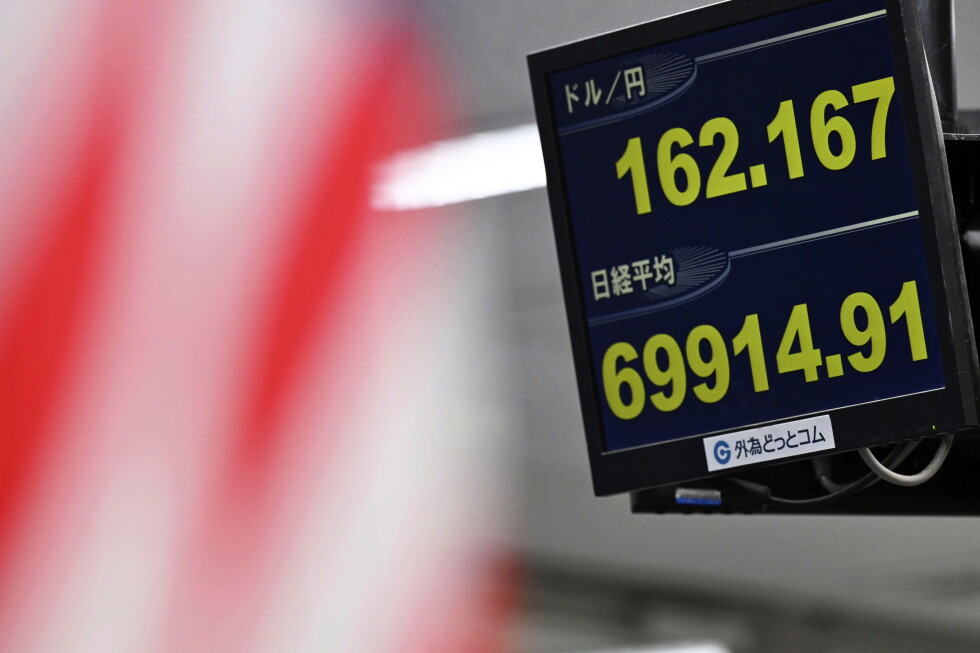
Other major Asian indexes also posted solid gains on Tuesday. Japan’s Nikkei 225, another index that has seen strong tailwinds from the global AI boom, climbed 0.9% to 70,116.82. Leading Japanese chip equipment manufacturer Tokyo Electron jumped 4.3%, while SoftBank Group, the major investment holding firm with a stake in AI startup OpenAI, added 0.6%. Taiwan’s Taiex index surged 3.2% in Tuesday trading, while Australia’s S&P/ASX 200 recorded a modest uptick of less than 0.1% to settle at 8,825.80. Mainland China’s Shanghai Composite Index edged 0.2% higher to 4,080.42, though Hong Kong’s Hang Seng Index bucked the regional upward trend to fall 0.8% to 22,836.39. India’s Sensex also posted a small loss of 0.1% for the session.
In energy markets, oil prices stabilized near pre-conflict levels as geopolitical developments emerged around the four-month standoff between the U.S. and Iran. Both countries announced separately this week that they would send delegations to Qatar, though Iranian officials clarified that no formal bilateral talks with the U.S. had been finalized. Brent crude, the global benchmark for oil pricing, traded 0.2% lower at $73.73 per barrel on Tuesday, a level that remains close to the $72 per barrel price recorded before the outbreak of hostilities in late February. U.S. benchmark crude fell 0.4% to $70.49 per barrel, as traders continue to monitor diplomatic progress that could lead to a permanent end to the conflict and ease geopolitical risks to global energy supplies.
U.S. stock futures edged higher in early trading, pointing to a potential continuation of gains from the prior session. On Monday, all three major Wall Street benchmarks recovered from earlier losses to close solidly higher, recouping some losses from a rare down week for U.S. equities. The broad benchmark S&P 500 gained 1.2% to end at 7,440.43, the Dow Jones Industrial Average climbed 0.6% to 52,182.74, and the technology-heavy Nasdaq Composite jumped 2.1% to 25,820.14. Major U.S. chip and AI stocks led the gains: Intel rose 2.7%, Micron Technology gained 1.1%, Nvidia added 1.3%, and Advanced Micro Devices climbed 3.4%.
In currency markets, the U.S. dollar strengthened slightly against the Japanese yen, rising to 162.18 yen from 161.94 yen as the yen continued its recent weakening trend. The euro edged lower against the dollar, trading at $1.1399, down from $1.1422 in the prior session.