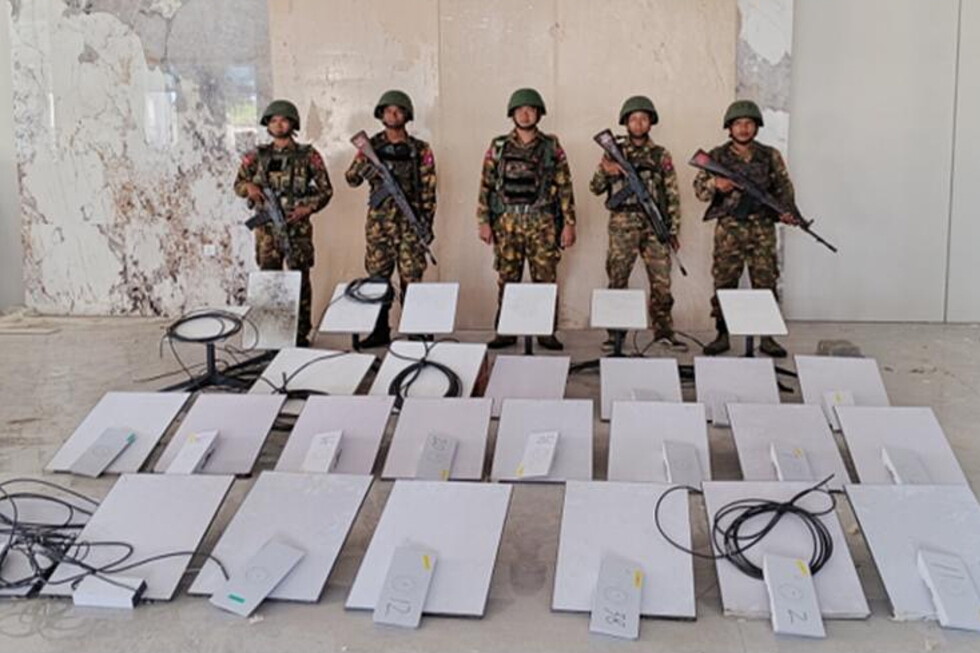
A landmark joint investigation by The Associated Press and PBS’s FRONTLINE has uncovered new details about the sprawling transnational cyberscam industry operating out of militia-controlled compounds in Myanmar, revealing that illegal fraud operations have quickly reorganized and expanded following a high-profile government crackdown last year.
The inquiry drew on an unprecedented array of evidence to map scam activity across the country: tens of thousands of internal leaked documents, visual materials including photos and videos from scam centers, a joint analysis of abusive AI deployment with conflict analytics firm C4ADS, in-depth interviews with 58 scam survivors and 36 current and former scammers spanning 19 nations, and a comprehensive review of hundreds of thousands of device connections linked to four major scam compounds tied to U.S.-sanctioned entities.
All device connection data analyzed in the probe was collected by anti-trafficking non-profit International Justice Mission, which obtained commercially available advertising technology data covering multiple periods between February 2025 and January 2026 before sharing it with AP. Each entry in the dataset includes a device’s exact geographic coordinates and assigned IP address. To cross-reference and validate the information, AP worked with fraud prevention firm Scamalytics to cross-check IP address allocations to internet service providers, prioritizing Scamalytics’ results in cases of conflicting or unclear data. The dataset was also augmented with layered risk assessments from multiple sources: open-source IP blacklists maintained by Firehol, IP2ProxyLite, IPSum, Spamhaus and X4Bnet Spambot, plus Scamalytics’ proprietary risk scoring system built on past fraud reports and independent analysis. Investigators stress that these scores signal potential risk, not definitive proof of intentional fraudulent activity on the part of service providers.
The investigation carried several important limitations that researchers openly acknowledge. The dataset only captures devices with geolocation capabilities activated, meaning the total scope of internet infrastructure serving Myanmar’s scam compounds is far larger than recorded here. Cybersecurity firm Spur Intelligence Corporation reviewed the dataset and flagged confirmed cases of ad fraud, which AP removed from its analysis, though investigators note that undetected ad fraud may still be present in the remaining data. Commercial data alone also cannot draw definitive conclusions about the specific role any given telecommunications or internet service provider plays in supporting scam operations, even when patterns of traffic align with fraudulent activity. Providers can offer a range of digital services that scammers exploit, from basic internet connectivity and hosting for fake crypto exchange and counterfeit retail websites to allowing VPN and proxy use that hides scammers’ true physical locations, even as traffic routes through global internet infrastructure.
All devices included in the core sample were geolocated to four major established scam compounds: Tai Chang, Deko Park, KK Park, and a newly established site near Hpakalu, Myanmar.
According to U.S. and European sanction documentation, KK Park—one of the most notorious scam hubs along the Thai-Myanmar border—operates under the protection of the Karen Border Guard Force, also called the Karen National Army (KNA). The KNA is an ethnic Karen armed militia affiliated with Myanmar’s ruling national military. In May 2025, the U.S. Treasury formally designated the KNA as a transnational criminal organization, citing its central role in facilitating cyberscams that target U.S. citizens and its involvement in human trafficking. The Treasury’s Office of Foreign Assets Control confirmed the group provides security for KK Park and profits directly from illegal scam activity by leasing land to criminal syndicates running the fraud operations. In October 2025, Myanmar’s military junta carried out a widely publicized demolition campaign targeting KK Park, forcing scammers to disperse to other undeveloped scam sites across the country, including the new emerging compound near Hpakalu. International Justice Mission’s data confirms that multiple devices active at KK Park just days before the military raid were already operating from the Hpakalu site by January 2026, proving direct movement of scam operations to new locations after the crackdown.
The other two established compounds, Deko Park and Tai Chang, are located in territory controlled by the Democratic Karen Benevolent Army (DKBA), another armed ethnic group. The U.S. Treasury sanctioned the DKBA in November 2025 for its proven role in supporting cyberscam centers, including the Tai Chang compound. Rescued human trafficking victims held at Tai Chang have documented widespread abuse, including torture and beatings carried out by DKBA soldiers guarding the compound.
Beyond the four core compounds, AP verified satellite imagery of 25 new scam compounds across Myanmar that were identified by International Justice Mission. All of these new sites have been established or have expanded dramatically since the October 2025 crackdown on KK Park. AP analyzed a sample of device activity from these new sites between March 1 and June 1, 2026, provided by the anti-trafficking organization, and found that at least 13 of the new compounds rely on Starlink IP addresses for their internet connectivity. Investigators note this finding comes from a limited sample and may not capture all Starlink activity across the new sites.
AP shared full detailed data on the location and timing of device connections with all companies identified in the investigation ahead of publication.
This report is part of an ongoing collaborative project between The Associated Press and FRONTLINE that will include a full documentary release in the coming months. The Associated Press receives financial support from multiple private foundations, but maintains full editorial control over all investigative content. AP’s standards for partnership with philanthropic organizations, a full list of financial supporters, and funded coverage areas are available to the public on AP.org. Members of the public can share tips with AP’s global investigative team via email or the official AP tip portal.