A US-mediated framework accord reached between Lebanon and Israel late last month has ignited fierce domestic and international backlash over a hidden provision that critics argue could permanently block Lebanese efforts to hold Israel accountable for alleged war crimes committed since the start of its 2024 military campaign. Signed on June 26 in Washington D.C. by the U.S., Lebanon, and Israel, the 14-point trilateral deal’s Article 13 requires both signatory nations to commit to “good faith measures demonstrating positive intent”, which explicitly includes halting all hostile or adversarial actions in international political or legal bodies. For Lebanese legal and human rights advocates, this wording amounts to a blanket ban on pursuing justice for thousands of civilian casualties documented over the past eight months of conflict.
Halima Kaakour, a Lebanese member of parliament, international law scholar, and prominent human rights activist, was among the first to condemn the provision. Speaking to Middle East Eye, Kaakour emphasized that decades of documented Israeli violations against Lebanese civilians have cemented the inherent legal right of the Lebanese state and public to demand full reparations for harms suffered. “This clause strips that right away and robs the Lebanese people of the justice they are owed,” she said. “The right to justice cannot be traded away for any political deal, no matter how important it is framed to be.” Kaakour further noted that the provision exposes a calculated political bargain by Lebanon’s ruling authorities: the government has agreed to abandon international legal action in exchange for a promised Israeli withdrawal from occupied Lebanese territory, a withdrawal that is already Lebanon’s legal right under existing UN resolutions, and should never have been conditional on surrendering justice.
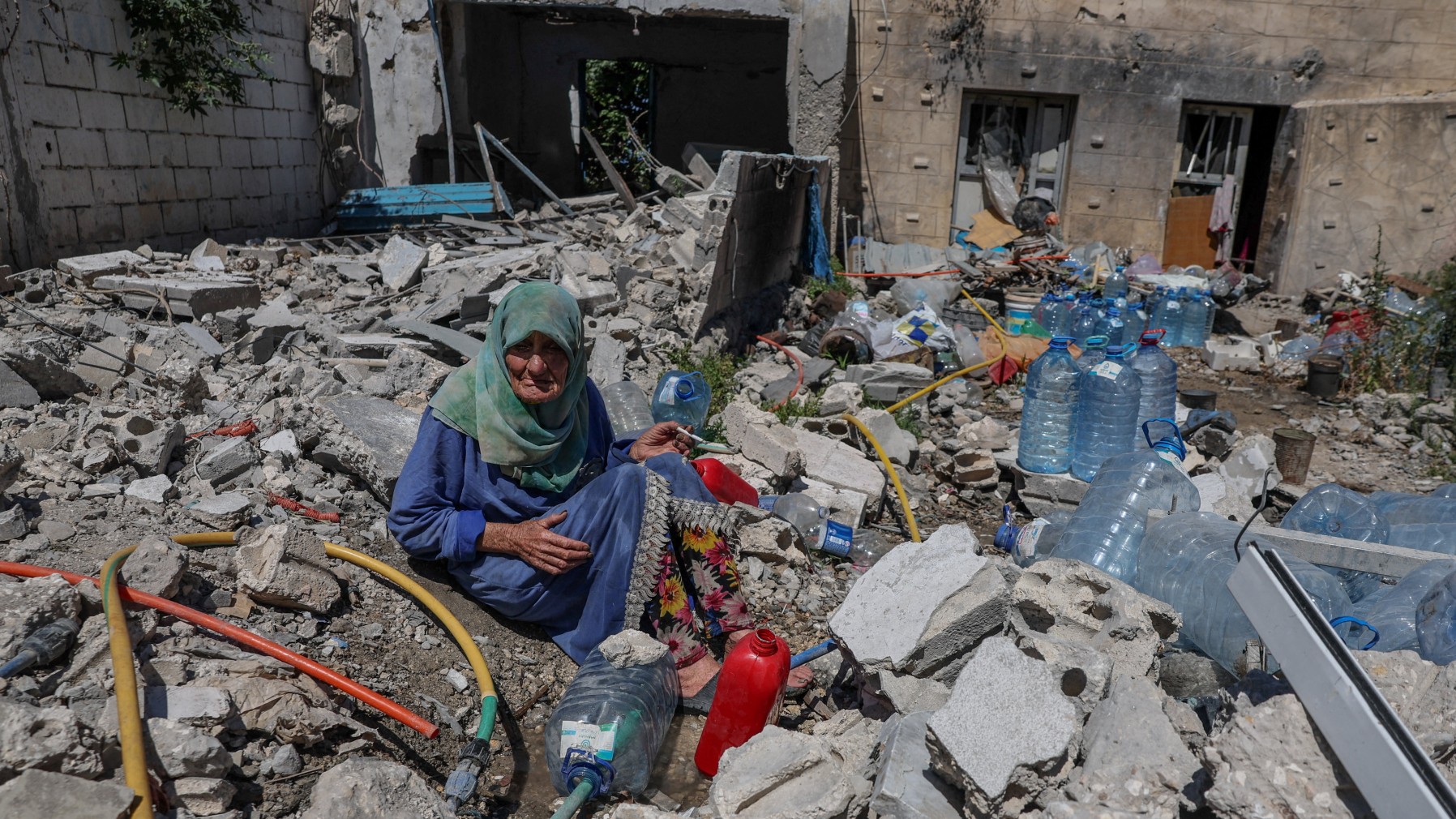
Since October 2023, Israel’s military campaign in Lebanon has been linked to widespread accusations of war crimes, including the forced displacement of over 1 million Lebanese civilians and the deliberate targeting of civilian infrastructure and non-combatants. Official figures put the total Lebanese death toll from Israeli strikes at more than 8,000 people since the conflict began. A sharp escalation in hostilities that followed Israel’s March 2024 strike on Iran has pushed the four-month death toll alone above 4,200, including more than 300 medical and rescue workers and 11 professional journalists.
Farouk al-Moghrabi, a former senior legal advisor to the Lebanese government, echoed Kaakour’s criticism, arguing the deal represents a deliberate attempt to override longstanding international legal frameworks designed to protect victims’ rights and guarantee accountability for mass atrocities. “This right to justice belongs exclusively to the Lebanese people and the individual victims of these crimes,” al-Moghrabi told Middle East Eye. “Not even the Lebanese state, nor any authority signing this agreement, has the legal power to eliminate this inalienable right.” He added that the provision is fundamentally unconstitutional under Lebanese law, which explicitly enshrines that valid international treaties take precedence over domestic legislation, meaning no domestic political deal can erase the rights granted to victims under international human rights law. Al-Moghrabi also raised urgent questions about the upcoming planned visit of the UN High Commissioner for Human Rights to Lebanon, which is intended to document war crimes on the ground, asking whether the terms of the agreement would force Lebanon to block the UN’s investigation.
Lebanon’s National Human Rights Commission released an official statement backing these criticisms, stressing that no sovereign agreement can supersede the fundamental right of victims to pursue legal redress. “The commission underlines that prosecuting perpetrators of war crimes, crimes against humanity, and torture does not qualify as a hostile act or partisan political position,” the statement read. “It is simply the legitimate exercise of the core human right to justice.” Middle East Eye attempted to contact Lebanon’s presidency for an official response to these criticisms but received no reply before the publication of its original report.
A key complicating factor in this debate is that neither Lebanon nor Israel are member states of the International Criminal Court (ICC), meaning the court currently holds no formal jurisdiction over crimes committed on Lebanese territory. For decades, regional human rights organizations have pressured the Lebanese government to grant the ICC jurisdiction over its territory, a move that would open the door to formal investigations of alleged war crimes committed by all parties to the conflict. For the ICC to gain jurisdiction over crimes committed during the current conflict, either nation would need to ratify the Rome Statute, the court’s founding international treaty, or Lebanon could submit a special declaration under Article 12(3) of the statute that grants the court temporary jurisdiction over crimes committed on its soil. This exact mechanism was used by Ukraine in 2014 after Russia’s invasion of Crimea, when Ukraine was not yet an ICC member.
Lebanese civil society groups have pushed for exactly this step since October 2023, after the outbreak of the latest conflict. In April 2024, the Lebanese government came close to meeting their demands: the Council of Ministers formally instructed the country’s foreign minister to submit the Article 12(3) declaration, granting the ICC jurisdiction over all crimes committed on Lebanese territory starting October 7, 2023. The move came after Israeli forces killed Reuters journalist Issam Abdallah and independent investigators confirmed Israel had illegally used white phosphorus against civilian populations. Just one month later, however, the government reversed its decision without any public explanation, and the declaration was never filed. Unconfirmed reporting from Middle East Eye indicates the reversal stemmed from fears the ICC would also open investigations into military actions carried out by Lebanese armed groups against Israel.
The June 26 framework deal, which capped five rounds of direct talks brokered by the U.S. starting in April, includes a pilot program that would allow Lebanese military forces to take control of two small areas currently occupied by Israel, as well as a vague process aimed at the disarmament of Hezbollah. Critically, the agreement sets no clear timeline or conditions for Israel to withdraw from the much larger swathes of Lebanese territory it currently occupies, instead tying any full withdrawal to progress on Hezbollah disarmament and unspecified “security improvements” that eliminate threats to Israel.
Hezbollah, the dominant Lebanese armed and political movement, has long maintained it will only agree to disarm if Israel fully withdraws from all occupied Lebanese territory and ends all threats to Lebanese sovereignty. Hezbollah Secretary-General Naim Qassem has already rejected the framework deal outright, calling it “null and void” and demanding an unconditional Israeli withdrawal with no concessions required.
For Israeli Prime Minister Benjamin Netanyahu, the deal represents a major diplomatic win. Netanyahu confirmed that the agreement permits Israeli forces to remain in occupied southern Lebanon indefinitely if Hezbollah refuses to disarm, and framed the accord as a significant geopolitical defeat for Iran, which provides political and military support to Hezbollah. “Iran is trying to force us out of southern Lebanon through violence,” Netanyahu said. “In this agreement, Israel, Lebanon, and the United States are collectively telling Iran: this conflict is no business of yours.”
The United States, which served as the broker and third signatory to the deal, hailed the agreement as a historic breakthrough. U.S. Secretary of State Marco Rubio called the signing “the beginning of the beginning” of a long-term peace process between the two long-adversarial nations.