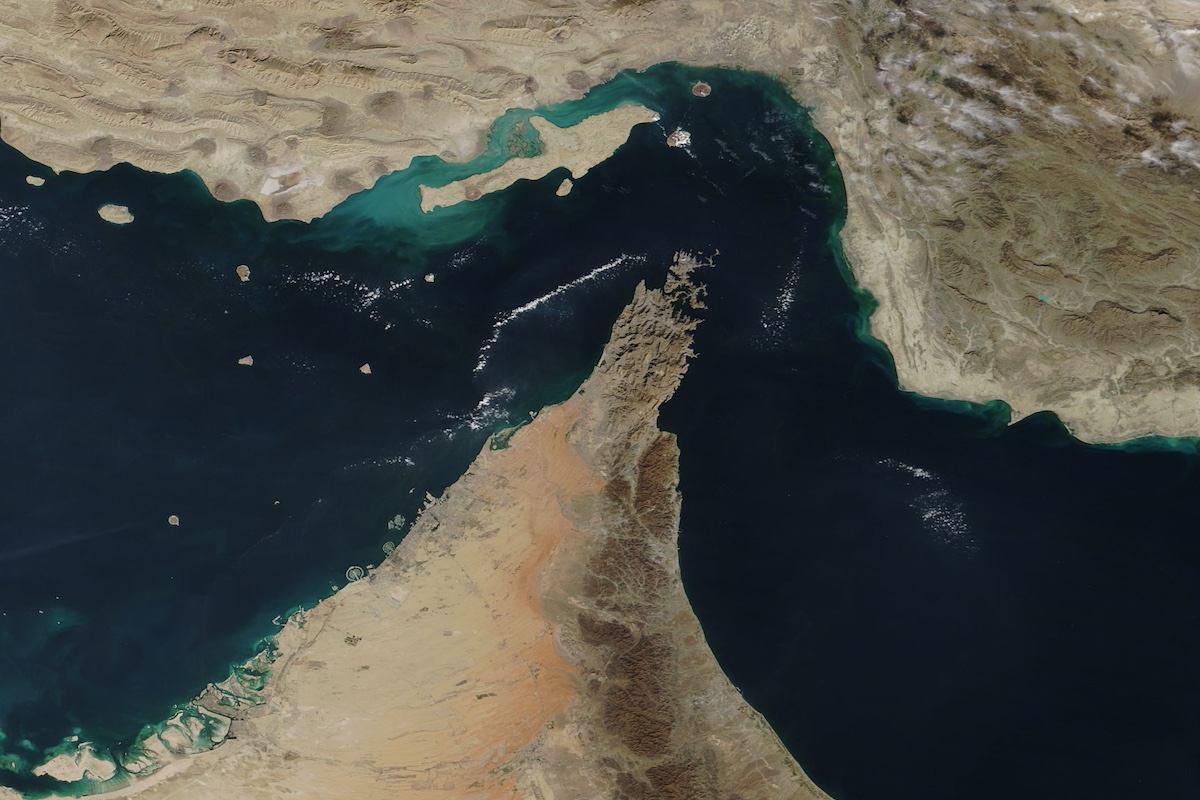
Tensions in the Middle East have reached a fresh boiling point, as the United States and Iran have exchanged targeted strikes near the strategic Strait of Hormuz, one of the world’s most critical maritime chokepoints. This latest escalation comes on the heels of alleged Iranian drone strikes on a commercial cargo ship attempting to pass through the waterway, with both Washington and Tehran now accusing one another of violating the terms of a recently agreed 60-day interim peace agreement.
In the wake of coordinated attacks on Iranian targets by the U.S. and Israel, Tehran has increasingly signaled its intention to formalize permanent control over the strait, a move that has sparked global anxiety over potential permanent tolls on the roughly 130 commercial vessels that transit the waterway each day. While Iran has framed potential tolls as a stable new source of state revenue, international analysts argue that such a policy is neither legally justified nor practically enforceable.
Global concern over the situation is well-founded. Since the outbreak of the latest regional conflict, Iran has targeted more than 40 neutral commercial vessels passing through the strait, using drones, missiles, and sea mines to disrupt shipping. These attacks have left multiple innocent merchant mariners dead, and have brought regular commercial traffic through the chokepoint to a near-standstill for more than three months, triggering substantial ripple effects across global supply chains and energy markets.
Anxiety has been amplified by the careful wording of the 14-point interim peace deal, which only requires Iran to use its “best efforts” to guarantee free, uncharged passage of commercial vessels for the 60-day term of the agreement. The deal states that future transit arrangements will be negotiated between Iran, Oman, and other Gulf states “in line with applicable international law and the sovereign rights of coastal states of the Strait of Hormuz.” This vague language has left policymakers and shipping industry leaders worried that Iran intends to formalize tolls once the interim deal expires.
However, under the United Nations Convention on the Law of the Sea (UNCLOS), the Strait of Hormuz is classified as an international strait, meaning all commercial and military vessels hold an inherent right of unimpeded transit passage that no coastal state can legally suspend. While sections of the strait do overlap with Iran’s territorial waters, the International Maritime Organization’s official traffic separation scheme — the designated shipping lanes that act as maritime “roadways” for safe transit — lie almost entirely within Omani territorial waters, leaving Iran with no legal authority to restrict or charge for passage through the main shipping route.
Beyond legal barriers, permanent tolls face steep practical challenges that make enforcement nearly impossible. Many point to the Suez and Panama Canals as precedents for tolled waterways, but these routes are fundamentally different from the Strait of Hormuz. Both canals are narrow, man-modified transit routes that lie entirely within the territory of a single state, with a tightly controlled entry and convoy system that makes non-compliance impossible. The Suez Canal, for example, has a navigable channel of only roughly 200 meters wide, requiring all vessels to take on local pilots and follow a rigid schedule that enforces toll payment.
By comparison, the Strait of Hormuz is nearly 39 kilometers wide at its narrowest point, spanning territorial waters controlled by both Iran and Oman. This vast geographic scale makes it physically impossible to stop, inspect, and coerce every vessel that refuses to pay a toll. Unlike confined canals, there is no single entry point to monitor, and the wide expanse of the strait gives ship captains multiple routes to avoid Iranian enforcement.
Beyond geography, a permanent Iranian toll would face widespread global opposition. The issue extends far beyond added shipping costs: imposing tolls on transit through an international strait would set a dangerous precedent that undermines the fundamental principle of freedom of navigation enshrined in international law, threatening shipping routes through straits around the world. Even Oman and other neighboring Gulf states have publicly warned that tolling arrangements would destabilize global maritime trade.
Unlike canal authorities that charge tolls in exchange for maintaining the waterway and providing navigation services, Iran would be charging vessels to exercise a right that all ships already hold under international law. For shipping companies and flag states, there is no incentive to voluntarily comply with such a demand, meaning Iran would have to rely on ongoing coercion to enforce tolls.
Over the past three months of conflict, Iran has already used military tactics including attacks on commercial vessels to deter transits, killing innocent seafarers and disrupting global energy and commodity markets. However, continuing these aggressive tactics after the conflict ends would draw severe international backlash, including harsh new sanctions, widespread diplomatic condemnation, and pushback even from Iran’s key trading partners such as China. Without sustained coercion, Iran lacks the means to enforce a permanent tolling regime.
As regional security expert Jennifer Parker, an adjunct professor at the University of Western Australia and UNSW Sydney, notes, Iran is currently leveraging its ability to disrupt shipping through the strait to gain bargaining power in ongoing peace negotiations. But leverage gained through temporary disruption does not translate to permanent, enforceable control. While Iran can disrupt commercial traffic in the short term, it is extremely unlikely to be able to impose and maintain permanent tolls on the Strait of Hormuz.