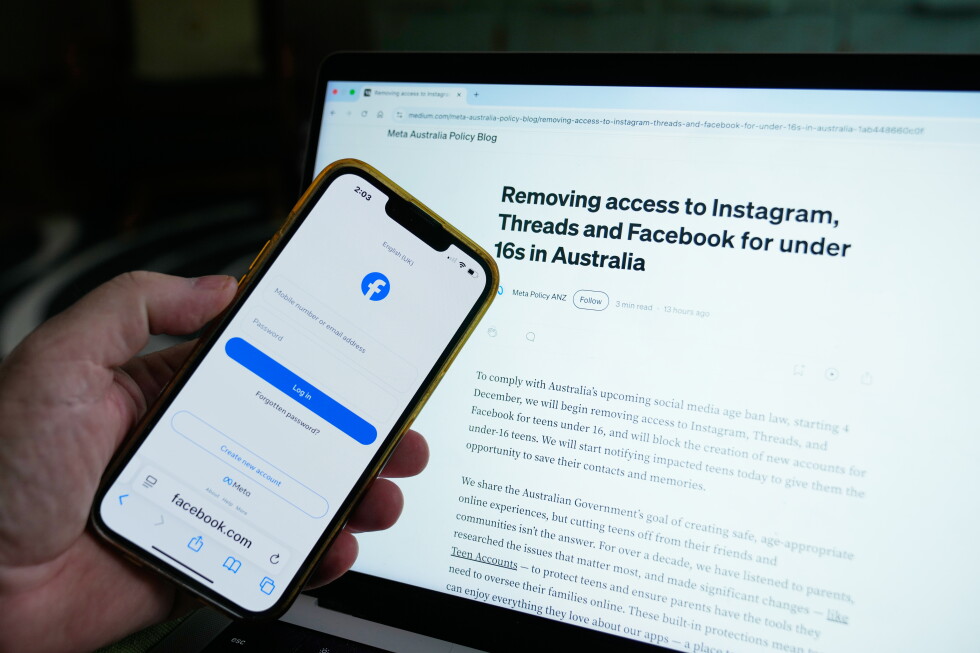
CANBERRA, Australia — More than six months after Australia implemented its landmark world-first ban on social media use by children under 16, the federal government is moving to double maximum penalties for non-compliant platforms after widespread failures to block underage users, a development that is being closely watched by governments around the globe considering similar age restrictions.
Communications Minister Anika Wells confirmed Sunday that the government will table draft amendment legislation in national parliament this week, which would lift the top fine for platforms that fail to take reasonable steps to block under-16 accounts from AU$49.5 million to AU$99 million (equivalent to US$68 million). Major platforms targeted by the original law include Meta-owned Facebook and Instagram, which have been the focus of ongoing criticism over weak enforcement.
Speaking to Australian Broadcasting Corp. on Monday, Wells blamed deliberate intransigence from Big Tech for the need to strengthen the regulation that came into full effect on December 10 last year. “We can all agree we would like the scheme to work better than it is currently, but that is on Big Tech taking the Mickey,” Wells said, deploying the common Australian colloquialism for bad faith and deceptive conduct.
Alongside steeper penalties, the proposed amendments would grant expanded regulatory authority to Julie Inman Grant, Australia’s eSafety Commissioner — the national body tasked with overseeing compliance with the ban. The new powers would allow Inman Grant’s office to compel relevant information and documentation from platforms, as well as from third-party stakeholders such as age verification technology providers. This access will allow regulators to independently verify platforms’ own claims about enforcement efforts, and shed light on the persistent gaps that allow under-16 users to circumvent age restrictions.
The push for tougher rules comes after official data revealed deep failures in the initial phase of the ban. The federal government initially reported that more than 5 million underage accounts had been removed, deactivated, or restricted shortly after the ban entered into force. But a March progress report from eSafety found that 70% of children who held accounts on major platforms on December 10 still retained access to those accounts on leading services including Facebook, Instagram, Snapchat and TikTok.
Inman Grant publicly revealed in April that her office was actively considering court action against the underperforming platforms alongside YouTube, over allegations that they had not fulfilled their legal obligation to take reasonable steps to exclude underage users. The commissioner has already publicly acknowledged satisfactory progress from a smaller group of other platforms covered by the ban, including X (formerly Twitter), Kick, Reddit, Threads and Twitch.
Wells noted that monthly compliance updates from eSafety since March have shown no meaningful improvement in enforcement from the major platforms, prompting the legislative overhaul. “These changes ensure that the eSafety Commissioner has the tools and powers she needs to hold platforms to account and we’re making sure that she can do just that,” Wells added.
The amendment has already garnered early cross-party support. Senior opposition lawmaker Jane Hume announced that the center-right coalition would review the proposal with an openness to supporting it, noting that the original 2024 legislation was flawed from the start. Hume argued that the initial law failed to grant the eSafety Commissioner sufficient authority to hold major tech companies accountable, resulting in the stalled implementation. “The legislation was clearly undercooked in the first place,” Hume said.
The original under-16 social media ban passed parliament with overwhelming bipartisan support in 2024, giving targeted platforms more than 12 months to prepare and roll out enforcement measures ahead of the law’s entry into force. As one of the first national mandatory bans on underage social media use in the world, Australia’s regulatory experiment is being closely monitored by dozens of other countries that have either implemented or are planning similar age restrictions to protect minor children online.