At a formal announcement held at Airbus headquarters in the French city of Toulouse, Vanessa Hudson, chief executive of Australia’s flag carrier Qantas, declared a defining milestone for global aviation: the decades-long “tyranny of distance” separating Australia and Western Europe has finally been overcome. Last week’s announcement confirms that the world’s first regularly scheduled commercial flight exceeding 20 hours will connect London and Sydney, launching in October 2027, 80 years after Qantas first launched its iconic Kangaroo Route between the two cities.
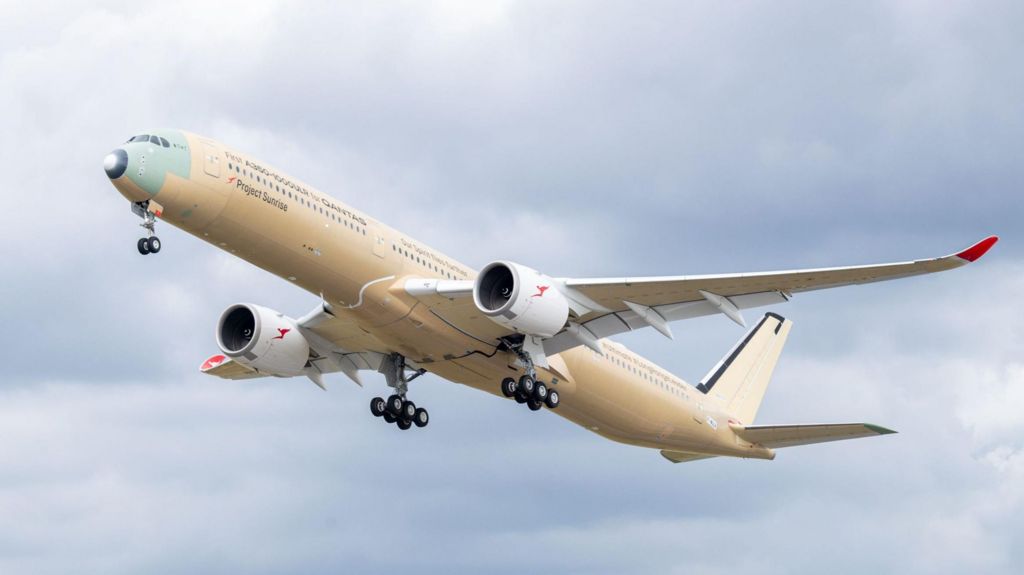
When the Kangaroo Route first launched in 1947, the journey between London and Sydney was a multi-day adventure that required seven stopovers across four full days of travel. Over the decades, Qantas has steadily cut the number of layovers, reducing the journey to just one stop in Singapore for its current service. The upcoming non-stop service, powered by custom-modified Airbus A350-1000 ultra-long-haul aircraft, will cut approximately four hours from total travel time, with the full flight expected to clock in at around 22 hours.
This breakthrough, years in the making and repeatedly delayed, comes on the heels of a period of intense turbulence for Qantas. Executives are betting that premium and time-sensitive travelers will embrace the new marathon flight, despite its longer airborne duration and higher price point. “We feel really confident that this is going to be a success,” Hudson told the BBC in an interview following the announcement.
Industry analysts widely recognize the launch as a transformative milestone in commercial aviation, but the move has sparked debate over whether the service aligns with what most long-haul travelers actually want. Qantas has already overcome significant technical and operational hurdles to reach this point, but challenges remain. Eliminating a stopover cuts down on costly landing fees, but Hudson acknowledged that the ultra-long flight carries a proportionally higher fuel cost. The modified aircraft also features a reduced total seat count, with 40% of seats allocated to premium economy, business, and first class cabins.
To address health risks associated with prolonged seated air travel, such as deep vein thrombosis, Qantas has redesigned the economy cabin to add extra legroom and incorporated a dedicated on-board wellness zone. Passengers will be able to follow guided stretching routines on dedicated screens and have additional space to move around during the flight. Hudson pointed to the proven success of Qantas’ existing non-stop Perth-London route, noting that customers have consistently shown a willingness to pay a premium for the convenience of direct service.
That enthusiasm is shared by many leisure travelers, including Australian travel agent Karis Heemskerk, who has already experienced the 18-hour non-stop Perth-London route multiple times with her family. Heemskerk described direct long-haul service as “amazing” and a far more efficient use of travel time. “I think the direct flights cut time and there is no risk of missed connections and the stress of your luggage being lost,” she explained. “Cons are that it can be gruelling and it is a long time for some individuals to be confined to a cabin. [But] overall, I’m a big fan of the direct flights.”
Not all frequent travelers share that enthusiasm, however. Tom Gill, a 33-year-old cultural consultant based in Melbourne who travels to London at least once annually, said a 22-hour non-stop flight sounds unappealing. “I don’t mind an airport stopover at all: the idea of sitting in a plane for 20, 21 hours non-stop would be quite unbearable for me,” he said. For Gill, cost is the main barrier: the new non-stop route is expected to be priced roughly 20% higher than Qantas’ current one-stop service, putting it out of reach for his regular travel. “To be clear, I’d try anything once. If it was cheaper I would definitely consider it,” he added.
Data from the UK Travel Industry Association ABTA shows that travel from the UK to Australia has grown over the past year, with particularly strong growth among travelers aged 18 to 24, reflecting the country’s enduring status as a top bucket-list destination for global travelers. Even so, Bryan Terry, managing director of Alton Aviation Consultancy, warned that demand for the ultra-long-haul non-stop service is likely to remain niche, creating financial risk for Qantas. “Qantas is targeting premium and time-sensitive travellers willing to pay a meaningful premium to avoid a Dubai, Singapore, or Los Angeles connection,” he explained. Terry noted that Singapore Airlines’ existing record-breaking non-stop service between Singapore and New York has already proven that travelers will pay significantly more to eliminate a layover, but the customer base remains limited. Even so, he acknowledged that the new London-Sydney route conquers “one of the last frontiers in commercial aviation.” “Every generation of aircraft has chipped away at Australia’s isolation, but a non-stop Sydney to London or New York has always been just out of reach,” he added.
The project to develop the non-stop route, codenamed Project Sunrise, was first launched back in 2017, the same year Qantas announced its first non-stop London-Perth service. Previous launch timelines were delayed by setbacks, but the project is now moving forward: the first of 12 custom-modified Airbus A350-1000 aircraft was delivered to Qantas in April 2026. The aircraft are fitted with an additional fuel tank to extend maximum flight time to 22 hours, and feature adjusted cabin lighting and meal scheduling to reduce traveler jetlag upon arrival.
Malcolm Ridley, Airbus’ chief test pilot, explained that adapting the A350-1000 for ultra-long-haul service required only modest engineering adjustments. While Qantas has exclusive rights to the first 12 modified aircraft, Ridley said other global carriers have already expressed informal interest in the design. “When the aircraft goes into service and people can see what it’s capable of, we may see more interest,” he added.
The launch of the world-first route comes as Qantas works to rebuild its reputation following a series of high-profile controversies in the first half of the 2020s. In 2024, the airline agreed to pay a A$100 million ($66.1 million) penalty to settle a case with Australia’s consumer watchdog, after it was found to have sold tickets for already-canceled flights, affecting up to 880,000 customers. The following year, Qantas was hit with a record A$90 million fine following a years-long industrial relations dispute over its decision to outsource Australian ground handling operations, which led to 1,800 employees being laid off. These scandals, combined with chronic poor on-time performance, pushed Qantas down to 24th place in the 2024 Skytrax global airline rankings, its worst-ever result and a steep drop from 5th place just two years prior.
Hudson, who took over as CEO in 2023 and opened her tenure with a public apology for the airline’s past missteps, said Qantas has made rebuilding customer trust its top priority. “It’s been hard work in lifting on-time performance, investing in the customer experience and that’s in all of our fleets, all of our networks,” she said. While she noted that customer satisfaction and operational reliability have improved “leaps and bounds,” she emphasized that the work to rebuild is ongoing. For Qantas, Project Sunrise represents more than a new route: it is a key step in the airline’s efforts to reset its reputation and deliver new value to customers, and the entire global aviation industry is watching closely to see if the historic bet pays off.