Long before European printing presses turned newspapers into a mass information medium, the sprawling Mughal Empire of South Asia built one of the early modern world’s most sophisticated, far-reaching news networks. From the late 1500s onward, armies of trained scribes, court agents, and administrative secretaries produced regular documents called *akhbarat* — handwritten Persian bulletins that captured everything from royal court intrigue and military campaigns to official appointments, treasury updates, and even elite gossip.
Drafted quickly on fragile paper, these hybrid documents served multiple purposes at once: they functioned as internal intelligence briefings, official government circulars, and public news bulletins rolled into one. On any given day, hundreds, and possibly thousands, of these reports circulated between the imperial court in Delhi and provincial administrative hubs across the subcontinent. For a empire that, at its 17th century peak, controlled most of South Asia and ruled nearly a quarter of the global population, this network was the glue that held its sprawling territories together. Many reports were read aloud to gathered local officials, carrying updates from the emperor’s court to the most distant corners of his domain.
For decades, tens of thousands of pages of these *akhbarat*, along with complementary administrative orders and records, have rested dormant in archives and libraries across India and the United Kingdom. While the historical community has long been aware of their existence, very few scholars have ever committed to deep dives into these unindexed, massive collections. That changed when University of California, Berkeley historian Munis D. Faruqui dedicated nearly 20 years of his academic career to untangling the stories held within these documents.
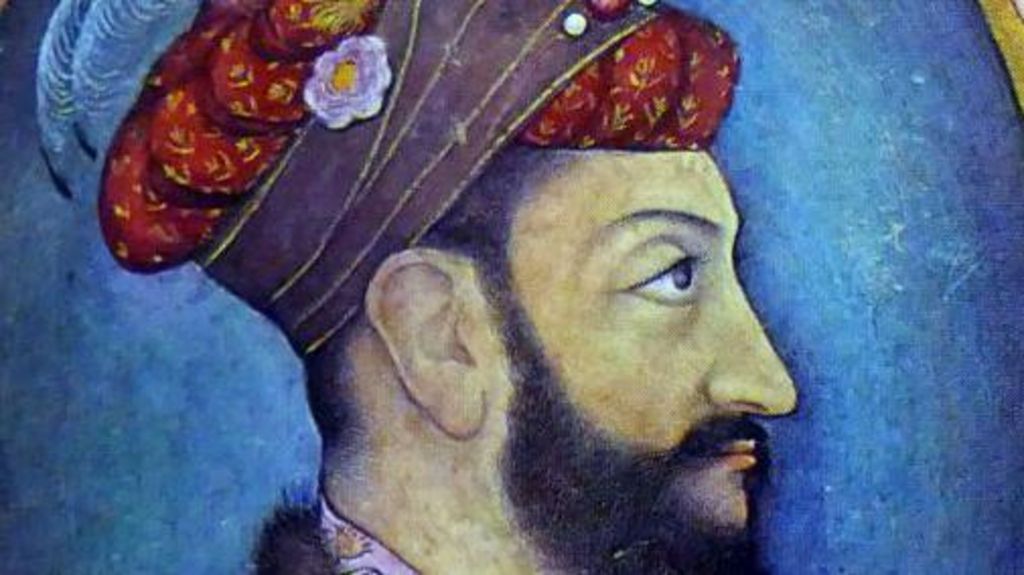
Faruqui began his work in 2007, diving into the *Akhbarat-i Darbar-i Mualla* (Newsletters of the Exalted Court), a massive collection split across archival institutions in both India and the UK. Working through more than 6,500 pages held at Kolkata’s National Library alone, Faruqui traced the lives of princes, military generals, court advisors, royal women, imperial eunuchs, and other lesser-known historical figures across tens of thousands of individual entries. The product of this decades-long work is an upcoming new history of Mughal emperor Aurangzeb — also known by his regnal title Alamgir — and the Mughal state during the late 17th century that promises to rewrite long-held assumptions about both the emperor and how his empire actually functioned.
Today, four major collections of these *akhbarat* are confirmed to exist, held in London, Bikaner, Sitamau, and Kolkata, though historians suspect additional caches may be held in private collections. One large set of documents was stored for decades in bundles in the cool, dry basement of Jaipur Fort. In the early 1800s, James Tod, an East India Company official and early antiquarian, borrowed a large portion of these reports, but failed to return them when he departed for Britain in 1823. He later donated the entire collection to the library of the Royal Asiatic Society of Great Britain and Ireland, where it remains today.
The most extensive surviving collection is held at Kolkata’s National Library, which holds 21 full volumes of *akhbarat* specifically documenting the reign of Aurangzeb, who ruled the Mughal Empire from 1658 to 1707 as its last great expansionist emperor. These volumes were once part of the personal archive of Sir Jadunath Sarkar, the pioneering Indian historian and Aurangzeb’s most influential 20th century biographer.
At first glance, the content of the reports can seem overwhelmingly mundane. Most entries focus on routine administrative details: new official appointments, local land disputes, troop movements, ceremonial gift exchanges, reports of royal illnesses, and endless granular administrative updates. But when read as a whole, Faruqui argues, these documents create something extraordinarily rare: an almost uninterrupted record of an empire monitoring its own day-to-day operations.
Archival coverage of Aurangzeb’s first 20 years on the throne is spotty, but surviving material from the early 1680s onward is remarkably extensive, providing an almost daily record of court and empire life for years at a time. All together, the documents shed new light on roughly a third of Aurangzeb’s 49-year reign.
Faruqui, who has spent his entire academic career studying late 17th century Mughal India — a period when the empire was at its territorial peak, but already showing early signs of the decline that would eventually open the door for British colonial rule — says the *akhbarat* have completely reshaped his understanding of the era. “My whole experience of working with the akhbarat has been one big eureka moment after another!” he explained in an interview. “It never ceases to amaze me how the density of the informational ecosystem was at the time.”
The reports Faruqui studied were originally created for the Raja of Jaipur, but hundreds of other regional nobles, princes, and high officials almost certainly received similar regular updates from their own agents stationed across the empire. This created a connected information ecosystem that was remarkably advanced for the pre-modern world. “I am floored when I think about the ecosystem that spawned such rich knowledge gathering and transference,” Faruqui added.
The sheer volume of information flowing through the network confirms that, by pre-modern standards, the Mughal state maintained a surprisingly detailed awareness of events across its vast territories. While Faruqui notes the state’s ability to act on this information was inconsistent, the network’s reach shaped the lives of tens of millions of people, for better and for worse.
Time and again, the contents of the *akhbarat* upended long-held historical assumptions that Faruqui had accepted early in his career. For example, he found very little evidence in the reports of the widespread forced religious conversions that have long been closely associated with Aurangzeb’s rule. The research also revealed that the imperial harem and the corps of imperial eunuchs wielded far more political influence than most modern historians have recognized.
Aurangzeb himself comes off as less distant and coldly austere than popular and historical narratives have often portrayed him. Faruqui also found far fewer hostile references to Sikh communities and leaders than he expected, a finding that contradicts a long-standing Sikh historical tradition that holds Aurangzeb responsible for the persecution of Sikh communities and spiritual leaders as early as 1711.
Many of Faruqui’s most important discoveries came not from dramatic single revelations, but from noticing repeated patterns across hundreds of entries. One name that appeared again and again throughout the newsletters was Zinat-un-Nisa, Aurangzeb’s daughter. While historians have long known of her existence, almost nothing had been written about her actual role in Aurangzeb’s court. But entry after entry placed her at the center of key political events.
Within weeks of starting his research, Faruqui realized Zinat-un-Nisa was far from a minor royal figure. He found she was a powerful political actor in her own right, and an “extraordinarily influential and important political bulwark for her ageing and politically vulnerable” father during the final years of his reign. She will now feature prominently in Faruqui’s new discussion of the political role of the Mughal imperial harem.
Each new discovery forced Faruqui to rethink decades of established scholarship. “Many of the stories I had been telling myself since the 1990s [when I first heard about the akhbarat] required rethinking,” he said. The *akhbarat*, he argues, offer historians a once-in-a-generation chance to reassess not just Aurangzeb’s legacy, but the entire structure and function of the Mughal Empire.
So why have most historians avoided working with these vast collections? Faruqui says he understands the hesitation. Early in his own career, he spent seven frustrating weeks working through another massive unindexed Mughal archive before ultimately abandoning the project. That experience left him wary of large, unorganized collections for nearly a decade.
The *akhbarat* present exactly the same challenge. “Searching for anything in it is like hunting for a needle in a haystack,” he says. With no central index and tens of thousands of unorganized entries, working through the archive requires extraordinary patience, stamina, and a willingness to read hundreds of pages just to identify subtle patterns and critical information.
Faruqui notes that Aurangzeb has remained one of the most debated figures in Indian history in part because of the sheer volume of surviving documentary evidence from his reign. While the surviving record for earlier Mughal emperors is relatively sparse, by Aurangzeb’s rule the documentary trail expands dramatically: administrative archives, private correspondence, regional court histories, biographical collections, poetry, European trading company records, and traveller accounts are all abundant.
For Faruqui’s research, the *akhbarat* were irreplaceable, but they are only one small part of a much larger body of underused Mughal archival material. “Dozens of books, if not more, can be written based on all the materials that are out there waiting for intrepid historians to come along and utilise them,” he says.
When Faruqui first opened the Kolkata collection nearly 20 years ago, he had no idea how transformative the material would be. “Upon turning the very first page of the first volume, I realised what an extraordinary resource this collection is,” he recalls. “I immediately saw storylines that had been long ignored or barely touched.”
His upcoming book only explores a small fraction of the new historical narratives held in the collection. “There are so many, many others that remain to be explored by others,” he says.