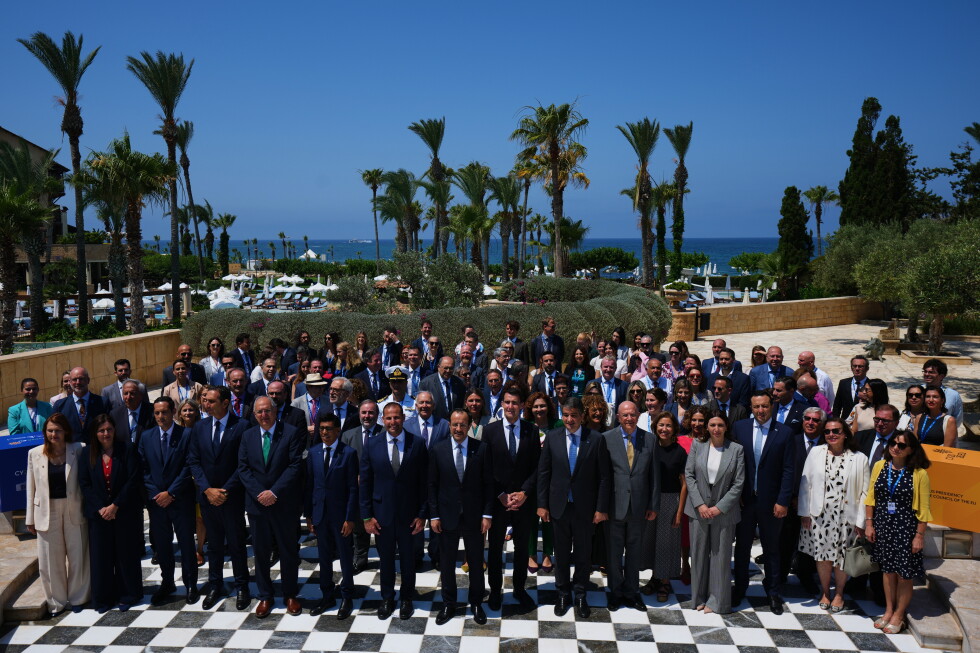
PAPHOS, Cyprus – The European Commission, the executive governing body of the European Union, announced two unprecedented policy frameworks Friday, designed to address longstanding systemic disadvantages facing the EU’s thousands of islands and hundreds of coastal regions, with targeted initiatives ranging from upgraded transport connectivity to affordable housing expansion.
Across the 27-nation bloc, more than 4,000 islands are home to roughly 17 million EU residents, and three full member states – Ireland, Malta, and Cyprus – are entirely island nations. An additional 95 million people make their homes along EU coastlines, meaning nearly one in three bloc residents stand to benefit from the new policies.
Speaking at a Paphos conference focused on empowering island and coastal communities, European Parliament Vice President Younous Omarjee emphasized the historic nature of the announcement, noting that “Islands have been overlooked in the past, but now that comes to an end.”
Raffaele Fitto, European Commission Executive Vice President for Cohesion and Reforms, explained that the new strategies replace the fragmented, piecemeal policy approaches that have failed to solve these regions’ unique barriers to development, replacing them with a unified, comprehensive support framework.
Geographic separation from continental EU markets and overreliance on air and sea transport create steep structural disadvantages for island communities: daily costs for transportation, housing, and core public services run significantly higher than those on the mainland, a burden Fitto describes as the “cost of insularity” borne daily by millions of EU citizens and business owners, solely based on their geographic location.
The standalone island strategy is structured around four core policy pillars: improving overland, air and maritime transport connections and digital infrastructure; addressing climate change impacts and closing unmet energy needs; reversing demographic decline and resolving widespread housing shortages; and strengthening security and crisis response capacity. Fitto stressed that islands across the bloc – from the Baltic Sea to the Mediterranean – sit on the front lines of modern geopolitical instability, making these resilience investments all the more critical.
At this stage, the commission has not released details on specific projects that will receive EU funding. Project selection and funding allocations will be handled by individual member states, which will submit formal proposals once the bloc’s next multiannual budget is finalized. Fitto confirmed that priority funding will go to high-impact projects such as seawater desalination plants and affordable residential development.
Fisheries and Oceans Commissioner Costas Kadis added context for the coastal community strategy, noting that coastal regions collectively contribute roughly 265 billion euros ($302 billion) annually to the EU’s total GDP, yet face overlapping pressures from climate change, population decline, lack of affordable housing, and limited access to essential public services.
The coastal strategy’s core goal is to reduce overreliance on single-industry economies by diversifying local economic activity and creating new, sustainable employment opportunities. A key policy proposal outlined by Kadis is a new blue carbon credit program, which would generate funding for conservation and restoration of coastal wetlands, marshes, and mangroves – ecosystems that provide powerful natural carbon sequestration benefits while also strengthening coastal resilience.
Other flagship initiatives include the OceanEye project, which would position the EU as a global leader in ocean observation and climate research, and support for dual-use fishing infrastructure and vessels that can support both commercial fishing and sustainable tourism operations. The strategy also allocates dedicated investment in partnership with the European Investment Bank to boost coastal communities’ ability to withstand climate change-driven extreme weather events and long-term environmental shifts.