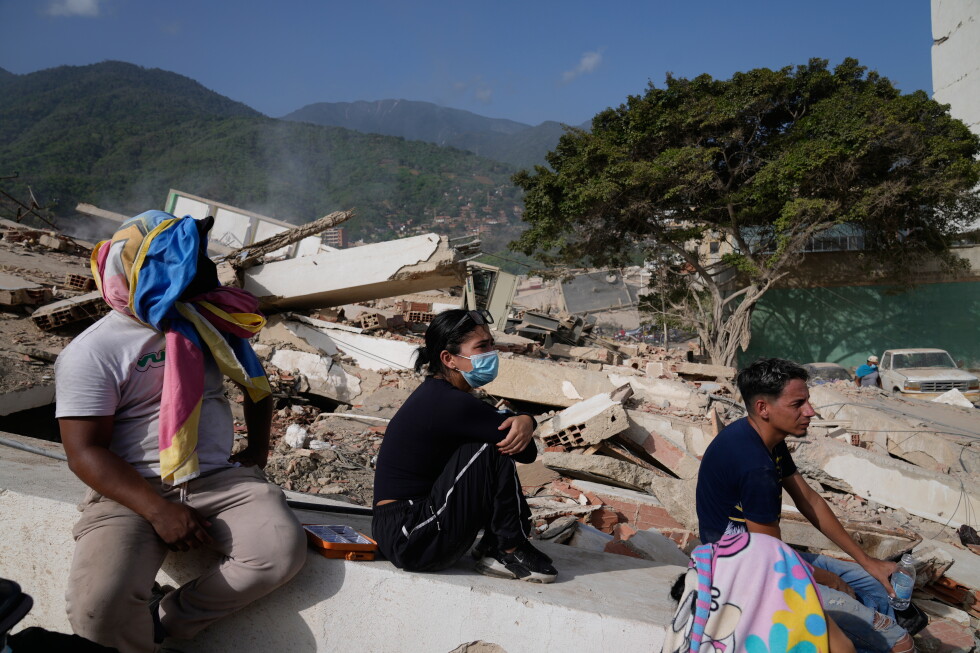
CARACAS, Venezuela — In the wake of two massive, near-simultaneous earthquakes that devastated northern Venezuela this week, thousands of residents who suddenly lost their homes are now camping in public spaces, their futures hanging in the balance as rescue teams race to find survivors amid a growing death toll.
On Wednesday evening, a 7.2-magnitude quake and a 7.5-magnitude tremor struck just 39 seconds apart, toppling structures across Caracas and neighboring regions, damaging hundreds of residential buildings. The confirmed death count already numbers in the hundreds, and officials expect that number to climb as search-and-rescue operations continue across the hardest-hit northern coastal areas. As of the latest update, at least 920 people have been killed and more than 3,300 injured, with thousands still reported missing.
For the Quintero family, the quakes turned a stable apartment life into makeshift nomadism. The entire family now clusters around their small, worn sedan, with children taking the passenger seats, their pet parakeet Paquito and several pet turtles housed in the trunk. Francisco Quintero, a professional musician, says the whole family spends each night searching for a spot to sleep near the vehicle, waiting for official guidance on long-term housing support.
Thousands of displaced Venezuelans have flooded into city parks, public plazas, and even the shoulders of blocked highways, scrambling for open space to set up temporary shelter. This disaster comes as Venezuela already grapples with decades of economic collapse, leaving more than half of its 30 million people in extreme poverty, with nearly 8 million already reliant on humanitarian aid before the earthquakes struck.
In Guaira, the hardest-hit state just north of Caracas, displaced families have staked out claims to space on a dusty local baseball field, stretching out bedsheets to mark their territory, with all their possessions stuffed into thin plastic bags. Others have taken shelter under palm fronds. Among them is Alexandra Martínez, a 35-year-old mother of two, who wept as she described the total loss of her apartment: ‘The walls, the kitchen, everything, are destroyed. It split right down the middle.’
Across Caracas, identical scenes of displacement play out. Desiré Gil, a 37-year-old street vendor who sells mangos and other small goods, now lives with her four children on a small grassy public plaza. Her 6-month-pregnant daughter was turned away from a local hospital Thursday after experiencing contractions, as a section of the facility’s maternity ward collapsed, and the building is already overflowing with patients transferred from other damaged medical centers. Though Gil’s building did not fully collapse, large sections of its structure are crumbling, and she refuses to return, terrified of a secondary collapse in aftershocks. ‘We have nowhere to live,’ Gil said. ‘This is the only option we have for the moment.’
Like thousands of other displaced residents, Gil and her family are waiting for Venezuela’s civil protection agency to inspect damaged structures and rule on whether they are safe to reoccupy. But there is no clear timeline for when these inspections will begin, as government resources remain focused on search and rescue operations across the affected region. The Ministry of Education has announced that some school buildings will be converted into emergency shelters, but it has not released details on how many facilities will be repurposed or when they will open. For now, Gil says her family will remain on the grassy plaza ‘until the government gives us an answer.’
Near the Gil family’s camp, other displaced residents use backpacks as pillows and prop up colorful beach umbrellas for shade from the tropical sun, while rescue and military helicopters buzz constantly overhead on their way to disaster zones.
Civil engineering experts say the widespread structural collapse is no surprise, due to outdated building codes that left most of Caracas’s housing stock seismically vulnerable. José Rangel, a university professor and practicing civil engineer, explained that over half of Caracas’s buildings were constructed before 1982, when the national government first adopted a modern construction code tailored for earthquake-prone seismic zones. ‘Everything that we’ve built before that year is seismically vulnerable,’ Rangel told state broadcaster Venezolana de Televisión.
Rangel noted that he and other engineering experts had already been working on seismic retrofitting plans and prioritizing infrastructure assessments for schools, hospitals, and bridges before the quakes hit. He called on the government to implement stricter building standards for reconstruction, and warned that it will take weeks to complete inspections and clear buildings for reentry. ‘It’s a process that lies ahead,’ Rangel said. ‘Right now, the most important issue is rescuing people.’ He urged independent engineers and architects to volunteer for the upcoming inspection effort, adding that investigating the root causes of building collapses is critical to avoiding similar damage in future seismic events: ‘The causes of the collapse must be determined. It’s how we learn lessons after an earthquake.’
Magaly Noguera and her family are among those waiting anxiously for inspections. Their high-rise apartment building sustained heavy damage, and Noguera recalled the terror of the quake, when she, her son, his wife, and 3-year-old grandchild huddled together under a kitchen door frame before they could flee down the stairs to safety. ‘That day, the descent seemed endless to me,’ she said. ‘I don’t want to be in my house.’ The family now sleeps outdoors near a government building, surrounded by dozens of other households in the same situation.
Down the street, the scope of the displacement is on full display: a man carried a full-size mattress on his left shoulder, his partner hauled multiple pillows under her right arm, and their small child walked tucked between them, heading toward an uncertain temporary shelter. The disaster has added a devastating new layer of crisis to a country already grappling with one of the worst humanitarian emergencies in the Western Hemisphere, leaving thousands of families to wonder how long they will remain without stable housing.