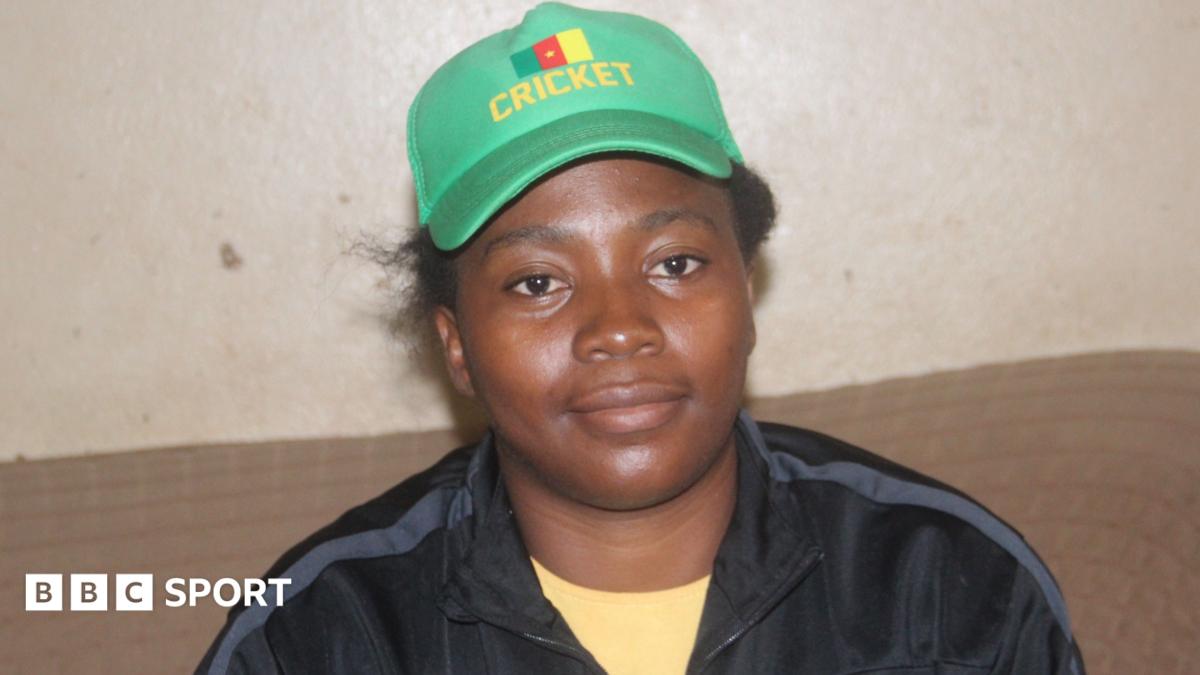
When 29-year-old Madeleine Nseke Sissako first stepped onto an informal cricket pitch in Yaounde at the age of nine, she and her young teammates faced widespread ridicule. Neighbors, unfamiliar with the sport, mocked the group for carrying the cricket bats they called sticks, drawing an unlikely comparison to the pop-culture Ninja Turtles. Few locals believed the little-known sport could ever take root in the Central African country, where the word ‘cricket’ is most often associated with the common insect rather than a global team sport.
Against that backdrop of skepticism, Nseke Sissako has emerged as one of Cameroon’s most accomplished and ambitious professional cricketers, leading a quiet revolution to grow the sport from its humble grassroots origins. Cricket runs deep in her family: eight members of the Nseke clan have represented Cameroon at the senior or youth international level, and it was her older brother Abanda Protais who first convinced the reluctant youngster to give the sport a chance. ‘I grew up always by his side, going with him to every practice,’ Nseke Sissako recalls. ‘At first, I had no real love for the game, but he talked me into it and taught me all the fundamentals.’
Today, Nseke Sissako wears two pivotal hats: she serves as both captain and head coach of the Yaounde-based Emergence Ladies Cricket Club, which she has led to multiple domestic titles, and has represented Cameroon’s senior women’s national team, the Cricket Lionesses, since 2021. Ranked 67th out of 79 global sides in the ICC Women’s T20 rankings, Cameroon’s national program has marked steady progress in recent years, notching wins over Lesotho, Eswatini and Mozambique in 2024. ‘We’ve come so far,’ Nseke Sissako says. ‘When we first started competing internationally, we were the obvious underdogs, always the weakest team. Back then, we mostly traveled just for the experience, to get photos, and see new places. That’s changed now.’
Her father, Eugene Nseke Toube, a former professional footballer, has supported his daughter’s work in cricket but keeps her grounded. ‘I always tell her she still has a lot to learn, and she has to keep putting in the work if she wants to reach her goals,’ he explains. ‘We encourage her to keep pushing, but where she is now isn’t the finish line.’
Cricket’s journey in Cameroon began only in 2003, when a development project spearheaded by Victor Agbor-Nso — now president of Cameroon’s national cricket governing body Fecacricket — introduced the sport to the country. ‘We started from absolutely nothing,’ Agbor-Nso says. ‘No one knew what cricket was. It was just a joke, a laughing stock.’ The sport grew steadily enough for Fecacricket to earn affiliate membership with the International Cricket Council (ICC) in 2007, and the federation officially recognized by Cameroon’s ministry of sports two years prior, in 2005.
Agbor-Nso credits the Nseke family, which received a special award from Fecacricket in 2024 for their contributions, with transforming the sport’s profile in the country. ‘The Nsekes have been absolutely critical to turning our dream for Cameroonian cricket into reality — starting from scratch to building a respected sport that people can look up to,’ he says. Today, the country counts 22 registered clubs (12 men’s, 10 women’s) with more than 550 top-level registered players, and Agbor-Nso estimates that roughly 70,000 Cameroonians across the country are learning the sport, mostly through school-based outreach programs.
Still, major barriers remain. A lack of specialized cricket infrastructure and equipment is one of the biggest hurdles; Cameroon currently has no international-standard cricket venue. ‘If we had a proper stadium with the right playing surface, Cameroon could compete with the best in the world,’ Nseke Sissako says. Fecacricket also faces persistent funding shortfalls: the body only raises roughly a third of its annual budget target, even with support from the ICC and the Cameroonian government, slowing the federation’s progress. ‘We have huge ambitions, but the resources we have right now are nowhere near enough,’ Agbor-Nso explains. ‘We’re working to attract new sponsors to come and support our growth.’
In recent years, Fecacricket has prioritized expanding women’s cricket, shifting from allocating just 20% of its resources to the women’s game to working toward a 50-50 split between men’s and women’s programming. Agbor-Nso points to Nseke Sissako as the perfect role model for this new era. Beyond leading her domestic club, she also served as head coach of Cameroon’s Under-19 women’s national team during recent qualifiers for the 2026 Women’s Under-19 T20 World Cup, working to inspire the next generation of female players. ‘All we can do now is keep working and believe in ourselves,’ Nseke Sissako says. ‘We need to boost the sport’s visibility, and keep planting the seed in schools through targeted development programs.’
As the 2026 Women’s T20 World Cup unfolds across England, Wales and South Africa, Nseke Sissako is rooting for the tournament’s only African competitor — the two-time defending runners-up South Africa, who remain the only African nation to ever qualify for the tournament. ‘I will always support South Africa, because it’s because of their success that the rest of the world is paying more attention to African cricket,’ she says. ‘A South African win would give a huge boost to the sport across the whole region, including here in Cameroon.’ Drawing inspiration from Cameroonian football icon Roger Milla, who broke barriers for African football on the global stage, Nseke Sissako says she and her teammates see themselves as the trailblazers of Cameroonian cricket — and she holds an unshakable ambition to turn Cameroon into ‘one of the biggest cricket-playing nations in Africa and the world.’