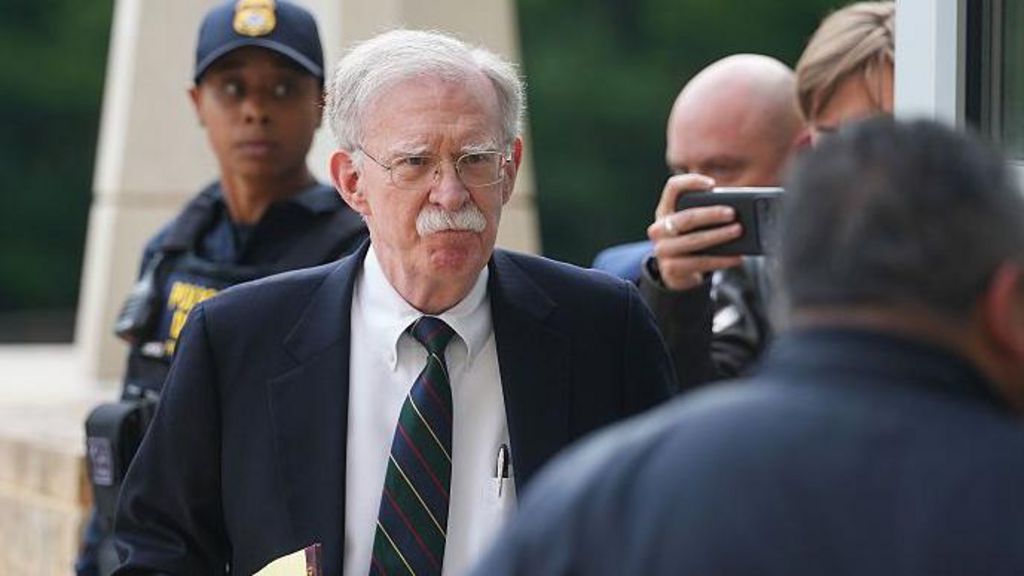
In a stunning legal development that cuts through the heart of U.S. national security accountability, John Bolton, one of former President Donald Trump’s most high-profile former aides and persistent critics, has entered a guilty plea to a single charge of illegally retaining classified national security materials tied to notes he compiled for his 2020 memoir.
Bolton, who served as Trump’s White House national security adviser before being fired in 2019, originally faced 18 felony counts related to improper handling of sensitive government information and had pleaded not guilty following his indictment. Friday’s court proceeding marked a dramatic reversal, with the 75-year-old former diplomat acknowledging the accuracy of all allegations against him, including that he shared diary entries containing top-secret national defense data with family members. When asked by the judge whether he committed the acts in question, Bolton confirmed his guilt and issued a public apology for his actions. “I did, your honor,” he told the court, adding “I am sorry for it.”
Under the terms of the plea deal reached with federal prosecutors, Bolton faces a maximum potential prison sentence of up to five years behind bars. He has already agreed to pay $2.25 million in financial penalties, complete 100 hours of court-ordered community service, and participate in a full debriefing with senior national security officials to account for all improperly retained classified information, according to U.S. reporting from CBS News, the BBC’s U.S. partnership affiliate. Bolton’s formal sentencing is scheduled for October 28, as confirmed by multiple U.S. media outlets.
Speaking to reporters immediately following Friday’s hearing, U.S. Attorney Kelly Hayes emphasized that Bolton was far from an inexperienced official when it came to handling sensitive government data. As a decades-long national security figure who previously served as U.S. Ambassador to the United Nations under George W. Bush, Bolton knew full well the protocols for handling classified materials and who was cleared to receive them, Hayes said. “He also knew the damage to national security that could be caused by mishandling that sensitive information,” Hayes added. “Nevertheless, as Mr. Bolton just admitted, he put our national security at grave risk in violation of the law.”
The roots of the legal case stretch back to the release of Bolton’s tell-all memoir, *The Room Where It Happened*, which hit bookshelves in 2020. The book offered a scathing insider portrait of Trump’s tenure in the White House, depicting the then-president as deeply uninformed on key global geopolitical issues. The Trump White House immediately moved to block publication, filing a lawsuit that argued the manuscript contained classified information that had never gone through mandatory pre-publication review. A federal judge rejected the White House’s injunction request, and the book was released to the public just days later.
The U.S. Department of Justice launched a formal investigation into Bolton’s handling of classified materials shortly after the book’s publication, probing whether he improperly disclosed sensitive information in his memoir. Beyond the book-related counts, prosecutors also accused Bolton of transmitting classified materials from his time as national security adviser to two of his relatives. In a previously undisclosed detail included in the indictment, investigators found that a hacker once gained access to an online account where Bolton stored the classified documents, and issued a threat to unleash what would be “the biggest scandal since Hillary [Clinton]’s emails were leaked.”
In the years since leaving the White House, Bolton has remained one of the most vocal Republican critics of Trump, who is now the 2024 Republican presumptive presidential nominee. Trump has repeatedly hit back at Bolton, publicly calling for him to be jailed and labeling the former adviser a “sleazebag.”
Bolton’s indictment comes as part of a string of high-profile criminal cases targeting prominent Trump critics, including former FBI Director James Comey and New York Attorney General Letitia James. However, legal experts and former federal prosecutors told the BBC that Bolton’s case is distinct from other political prosecutions due to the overwhelming weight of evidence gathered by investigators. A source familiar with the plea deal explained that Bolton chose to plead guilty in part because he recognized a continued trial would require the release of additional classified information as part of his defense, a step he refused to take to avoid further harm to U.S. national security. “The ambassador has admitted to what he has done,” the source said.
Carrie Cordero, a senior fellow at the Center for a New American Security, noted that while bringing charges against such a high-ranking former official for classified material mishandling is rare, it is not without precedent. “Cases that involve classified information present challenges to prosecute, but they can and are brought against both low-level and high-level officials, from time to time,” Cordero explained. Earlier this year, in January, Bolton was among a group of high-profile former Trump administration critics who had their lifetime Secret Service protection stripped by the Trump-aligned House of Representatives.