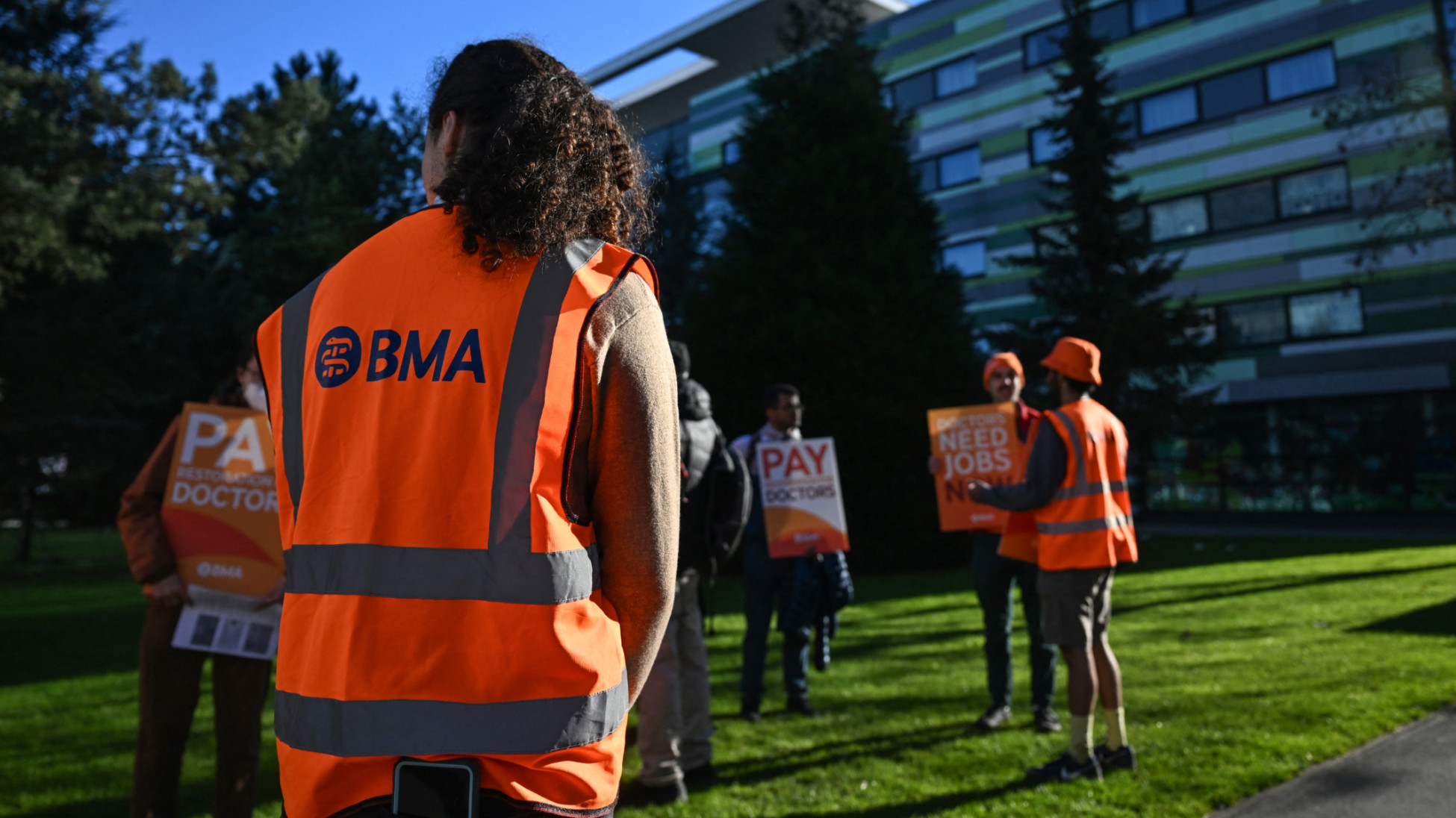
At its annual representatives meeting this week, the British Medical Association (BMA)—the body representing more than 200,000 doctors across the United Kingdom—passed a landmark motion rejecting the adoption of the International Holocaust Remembrance Alliance (IHRA) working definition of antisemitism within the National Health Service (NHS). The vote marks the highest-profile pushback yet against UK government policies that healthcare workers say are being used to stifle legitimate criticism of Israel’s actions in Gaza and suppress advocacy for Palestinian human rights.
The approved motion does more than reject the definition: it calls for an urgent independent inquiry into how the IHRA framework has impacted lawful political speech and professional expression regarding Israel’s military campaign in Palestine. It also affirms the right of UK healthcare institutions to push back against attempts to use the definition to shut down public debate over alleged war crimes and human rights violations. With the motion’s passage, BMA members are now authorized to lobby the UK government, NHS England, and key sector stakeholders to reverse current policy aligned with the IHRA definition.
In an official statement provided to Middle East Eye (MEE), the BMA emphasized the core motivation behind the vote: “Doctors have witnessed in horror the humanitarian crisis that has unfolded during the Middle East conflict, with the devastating loss of civilian life and in particular, the attacks on healthcare workers and healthcare facilities, and must be able to legitimately challenge the actions of states and armed forces without being unfairly accused of any kind of discrimination, or threatened with disciplinary action.”
The BMA’s decision comes in direct response to policy moves from the UK’s Department of Health and Social Care (DHSC), which earlier this month formally backed the findings of a government-led review into anti-Jewish hate in the NHS. That review, led by controversial government antisemitism adviser Lord John Mann, centers the IHRA definition—a document long mired in debate for its framing that critics say conflates legitimate criticism of the Israeli state with antisemitism. The Mann review’s recommendations include mandatory antisemitism training for all NHS staff, a ban on political symbols in NHS workplaces, and a prohibition on doctors and nurses attending political protests while in official uniform.
Weeks before the BMA vote, MEE revealed that a cross-coalition of UK healthcare workers had already submitted an open letter to the DHSC calling for an immediate halt to the rollout of the Mann review’s recommendations. At this week’s annual meeting, BMA delegates passed a separate emergency motion backing that call to pause implementation. Though some attendees alleged the motion amounted to antisemitism and called for it to be pulled from the agenda, the BMA’s internal legal team confirmed the motion complied with all rules, and it passed after full debate.
The vote follows a growing pattern of disciplinary action and regulatory investigations targeting UK doctors who have publicly criticized Israel’s actions in Gaza. Many of these cases have explicitly cited the IHRA definition to justify disciplinary measures, giving the BMA’s decision immediate personal stakes for hundreds of medical professionals across the country.
London-based emergency doctor Dr. Nadeem Crowe is one of the most high-profile doctors targeted: he was abruptly suspended from his role at London’s Royal Free Hospital mid-shift in August 2024 after an anonymous complainant used the IHRA definition to label his social media posts about Palestinian rights as antisemitic. The suspension was only lifted after Crowe was pressured to delete the posts, with hospital leadership threatening a full formal investigation if he refused to comply.
Crowe described the personal and professional toll of the action in an interview with MEE: “I know the reality of this weaponisation intimately – after dedicating 15 years to my clinical career, I was abruptly suspended following an anonymous complaint that used the IHRA definition to brand my private social media posts regarding Palestinian rights as ‘antisemitic’. It completely derailed my career, and the toll has been severe personally – this hostile regulatory overreach profoundly aggravated a long-standing clinical anxiety disorder, forcing me onto sick leave, requiring increased medication, and causing severe emotional and psychological distress. Being stripped of your livelihood mid-shift over your identity and humanitarian beliefs doesn’t just impact your job, it rips you apart emotionally.”
Crowe has since filed a legal claim against the hospital trust alleging racial discrimination and harassment, and is awaiting a court ruling on the case. He called the BMA’s vote to reject the IHRA definition a long-overdue win for healthcare workers’ rights. “For too long, this deeply flawed framework has been misapplied, serving instead to systematically stifle legitimate political speech, humanitarian concern, and criticism of the state of Israel. The BMA is finally standing up for intellectual honesty and the rights of healthcare professionals to speak out on global humanitarian crises,” he said.
Another UK doctor, Dr. Nizar Mhani, has faced a barrage of repeated anonymous complaints over his public criticism of Israel’s military campaign in Gaza, all citing the IHRA definition. Though every investigation launched by his regulator and hospital has cleared him of any wrongdoing, he said the campaign of complaints was explicitly designed to intimidate him into silence. “There are malicious groups who have been canvassing for complaints against me, on the grounds that I allegedly support terrorism and am an antisemite. Their intention was to harass me into feeling intimidated to the point where I was no longer able to criticize Israel or support the Palestinian cause. I was doxxed, webpages were set up with my details on, and information shared about how to complain about me. I’ve had investigations by my regulator and my hospital, and every single one has concluded there is no case to answer and that I committed no wrongdoing,” Mhani told MEE.
Despite the harassment, Mhani said he has no plans to stop speaking out. “I don’t think I will stop speaking out – the price I’m paying is small compared to what Palestinians are going through,” he said. He welcomed the BMA’s rejection of the IHRA definition, calling it a deeply flawed and overly politicized framework that has been weaponized to target pro-Palestine healthcare workers.
Alongside rejecting the IHRA definition and pausing the Mann review rollout, BMA delegates passed two additional key votes this week. The first called for an immediate end to vexatious complaints against doctors, which the union says are regularly used to misuse UK medical regulatory processes to intimidate and harass staff who speak out on Middle East issues. The second vote opposes the General Medical Council (GMC), the UK’s medical regulator, having the legal authority to appeal rulings issued by its own independent tribunal service—a power that allows the GMC to re-investigate and re-sanction doctors who have already been cleared of all allegations.
That vote aligns with legal action the BMA launched earlier this month challenging the GMC’s appeal power, which many healthcare workers say is being explicitly used to crack down on pro-Palestine advocacy. The most prominent example of this is the case of prominent British-Palestinian surgeon Dr. Ghassan Abu Sitta, who was cleared of allegations of antisemitism and glorifying terrorism brought by the pro-Israel lobby group UK Lawyers For Israel. Despite the tribunal’s ruling clearing Abu Sitta, the GMC has since launched an appeal to overturn the verdict.
Abu Sitta told MEE the appeal lays bare how the regulator has become a tool for political pressure from pro-Israel lobby groups. “The decision by the GMC to appeal to the High Court to overturn the findings of its two tribunals and to effectively say it needs a third attempt to find a judge who will give it the right political verdict highlights the extent to which the regulator has become a tool for political pressure at the hands of UK Lawyers For Israel. All of the complaints against me came from UK Lawyers For Israel, and that in itself highlights the complicity of the GMC in pandering to an organisation that says it exists to wage lawfare against those that it considers the enemy of Israel,” he said.
Abu Sitta added that doctors hold a unique moral responsibility to speak out on human suffering they witness, and that targeting them for that testimony is an attempt to silence the truth. “Doctors are in a unique position to become bearers of witness to human suffering in a way no other profession can – those who are behind this oppression want to silence the witnesses’ statements, and punish them by having them thrown out of the profession,” he said.
In a response to MEE’s request for comment on the BMA’s votes and the Abu Sitta case, a GMC spokesperson defended the regulator’s actions, saying: “Our focus is protecting the public, and we are satisfied given the nature of the allegations that it is right that we appeal in [Dr Abu Sitta’s] case. We operate independently of both the government and the medical profession, and make all of our fitness to practise decisions on the facts of each case, assessing whether there is any current or ongoing risk to public protection, public confidence in the medical profession, and professional standards and conduct.”
Mhani echoed the BMA’s concerns about the GMC’s appeal power, saying the mechanism is being exploited by political lobby groups to target dissenting doctors. “This is a dangerous lever to the processes that exist, and it is being used as a vehicle for political entities and lobby groups who are putting pressure on the GMC to overturn decisions. The regulator runs the risk of becoming a vehicle for abuse and a conduit for harassment towards its registrants, and it is slowly becoming unfit for purpose,” he said.
In a final vote reaffirming core professional rights, BMA delegates voted to uphold all doctors’ right to freedom of speech on political issues, matters of public conscience, international conflict, and international humanitarian law. Delegates noted that widespread belief among UK doctors that political pressure is unduly influencing GMC disciplinary processes, with restrictions on speech only being enforced when that speech supports Palestinian rights. Mhani summarized that view, saying: “It is only now that opinions have been shared in support of the Palestinian cause that apparently political views are sensitive and need curtailing, and this in and of itself is part of the dehumanisation of Palestinians.”