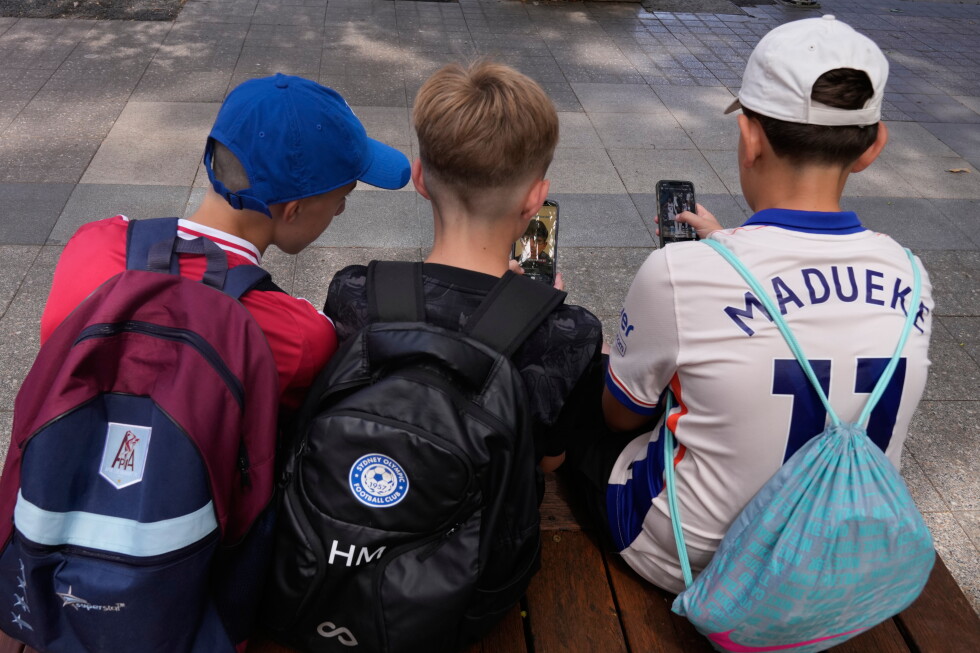
Australia’s federal government is prioritizing legislative reforms to toughen a landmark national ban on social media use for children under 16, after mounting data and expert analysis confirmed the original policy has failed to block underage users from major platforms, Prime Minister Anthony Albanese has confirmed.
First implemented last December 10, Australia’s ban was a global first — no other country had previously codified an age-based prohibition on under-16s holding social media accounts on major platforms including Meta-owned Facebook and Instagram, Alphabet’s YouTube, and ByteDance’s TikTok. But in the seven months since the rule took effect, overwhelming evidence has shown the policy has fallen far short of its goals. Leading the push for stronger powers, Australia’s top online safety regulator eSafety Commissioner Julie Inman Grant has already signaled she is considering taking major platforms to court for failing to meet their obligations under the current law.
Speaking to Parliament Thursday, Albanese confirmed his administration is actively reviewing all options to strengthen the existing framework. “We’re working on that as a priority because this is something that other generations didn’t have to deal with, which is why it is complex,” he told lawmakers. In a follow-up interview with the Australian Broadcasting Corp. Friday, Albanese added that the government is assessing whether existing laws are robust enough, and whether Inman Grant’s office currently has full authority to enforce the ban effectively.
Independent data backs up claims that the original ban is not working. Internal data released by the eSafety office in March found that 70 percent of underage Australian children still maintain active accounts on major platforms including Facebook, Instagram, Snapchat and TikTok. A separate study published Wednesday in the *British Medical Journal* went further, finding that 85 percent of Australian teens aged 12 to 17 continue to access platforms they are barred from using under current law.
Lisa Given, an information sciences expert at Melbourne’s RMIT University, told the Associated Press that the government’s push for reform is a direct response to this overwhelming evidence of failure. “I do think it’s failing,” Given said. “Many kids in the media have reported that they also think that this is really a failed exercise.”
The *Sydney Morning Herald* reported in early June that Inman Grant told a private interview that she currently lacks “potent powers” to enforce the ban, noting that “a regulator is only as good as the tools and the resources that they are given.” The AP requested comment from Inman Grant’s office Friday to verify the reporting, but did not receive an immediate response.
Given explained that the current regulation puts the onus on platforms to take “reasonable steps” to remove underage accounts, but the law does not clearly define what qualifies as reasonable steps. If platforms fail to comply, they can face maximum fines of 49.5 million Australian dollars, equal to roughly $34 million U.S. — but enforcement has stalled without clear regulatory authority. “Either the eSafety Commissioner needs more powers or we’ve got to have some other approach to enforcement,” Given said, adding that courts will likely need to ultimately clarify what the law requires of platforms.
Albanese confirmed that alongside strengthening the under-16 ban, the government will move forward with a broader digital duty of care law, which would hold social media companies legally accountable for foreseeable harms to users caused by platform content and algorithmic recommendation systems.
Australia’s push to toughen age-based social media restrictions is part of a growing global trend. Just last week, the United Kingdom announced its own plans to ban children under 16 from most major social media platforms, framing the rule as a necessary protection for young people against harmful online content and excessive screen time. Canada, Brazil and Indonesia have already introduced similar age-based legislation or restrictions, while France, Spain, Denmark, Thailand and South Korea are all currently developing or studying comparable regulations to limit children’s social media access.