When Mauricio Pochettino first floated the idea in March 2026 that the United States men’s national soccer team could lift the FIFA World Cup trophy this summer, the claim was met with widespread skepticism. For decades, the US has been a consistent presence on the world’s biggest soccer stage, qualifying for nine of the last 10 tournaments, including the current edition. But its on-pitch results have rarely matched that consistency: over that 30-year stretch, the Stars and Stripes only advanced past the round of 16 once, reaching the quarter-finals in 2002. The nation’s greatest World Cup achievement remains a semi-final finish at the inaugural tournament in 1930, a distant milestone that has felt far out of reach for generations of American players and fans.
Seven months on from that bold opening statement, everything has changed. Appointed as US head coach in 2024 on a two-year contract, the former Tottenham Hotspur manager has already steered his new side to back-to-back group stage wins – a 4-1 rout of Paraguay followed by a 2-0 victory over Australia in Seattle – that have secured the team’s place in the knockout rounds. More than that, Pochettino has reshaped the entire identity of the national side, instilling an aggressive, attacking style of play that has caught the eye of neutrals and pundits alike. Now, across the United States, the question Pochettino first posed back in March hangs in the air, asked by diehard soccer supporters and casual new fans alike: Why not us?
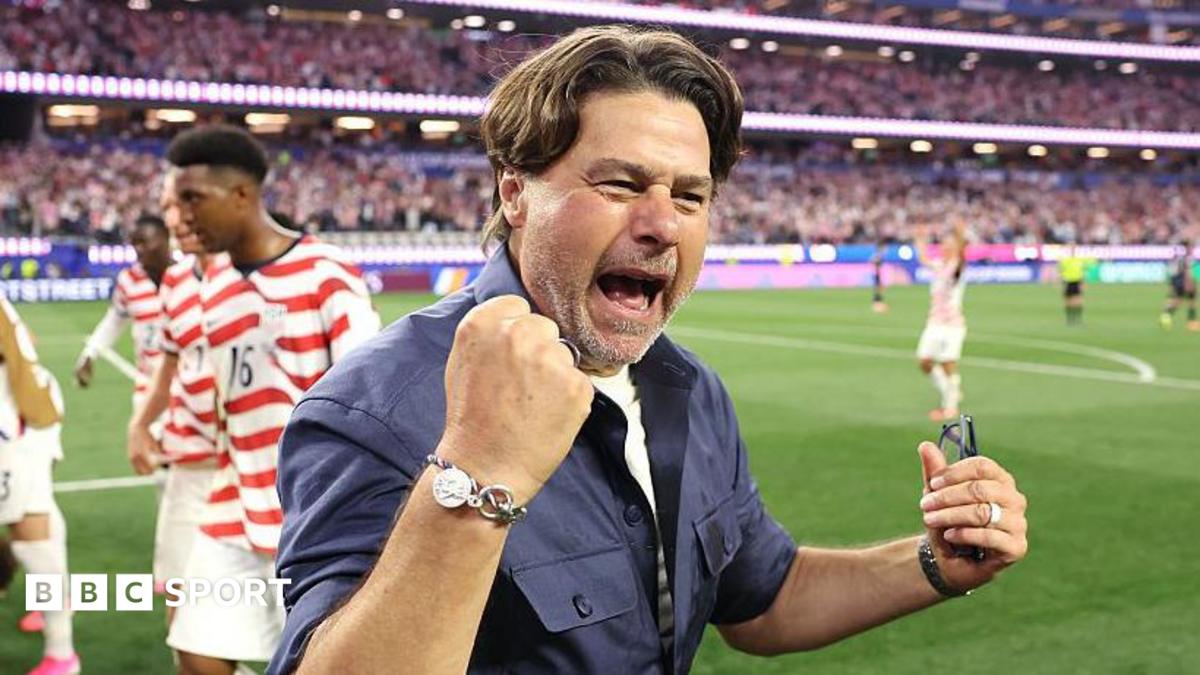
In the immediate aftermath of the win over Australia, Pochettino had to pause his live pitchside interview as thousands of American fans in the stands burst into a spontaneous chant for their manager, their adoration filling every corner of the stadium. That level of public support was far from guaranteed before the tournament: initially, there was widespread uncertainty about the Argentine boss, particularly given his original contract only runs through the end of this World Cup, fuelling persistent speculation he would return to European club management once the tournament concludes.
Today, however, that skepticism has evaporated. Pochettino has built a cohesive, dynamic squad that blends explosive young homegrown talent with experienced established stars plying their trade in Europe’s top leagues, a mix that has already proven far more competitive than many pre-tournament predictions suggested. He has worked tirelessly to strip away the deep-seated “underdog” mentality that has long defined US soccer at the World Cup, replacing doubt with unshakable belief across the camp. That new mindset is written all over the inside of his temporary hotel office, where motivational slogans are painted on the walls: “why not us?”, “believe, work, compete”, and “now is our time!”
That energy has clearly transferred to the pitch. In their two opening matches, the US has played with a swagger and aggression that has caught opponents off guard. US forward Tim Weah pointed to Pochettino’s South American coaching roots as a key factor in the shift. “I think he brings that South American spirit that we’ve been missing,” Weah explained. “We’ve always been the good guys, so now it’s kind of nice being on the other end and being the aggressor a bit. It’s fun. Coach Poch is an amazing coach.”
Alignment between fans, players and staff is what makes underdog teams dangerous at major tournaments, and that unity is already on full display for the US. After beating Australia, the entire squad walked the perimeter of Seattle Stadium to applaud the home crowd, who responded by belting out a full-throated version of John Denver’s *Take Me Home, Country Roads* – a track that is quickly becoming the team’s unofficial victory anthem. Thousands of jubilant supporters poured into the streets of downtown Seattle after the final whistle, still chanting Pochettino’s name long after the match ended.
“He’s our Braveheart,” one long-time US fan told BBC Sport outside the stadium. “He is the leader who is willing to take us through the fight and the pain until the end. He has brought us a really good era. He doesn’t over complicate it and gives us a very straightforward game to watch.”
Another supporter, who has followed Tottenham for 16 years, called Pochettino’s appointment a dream come true: “The day he took over the USA was a dream come true for me and look at us now, he wants to win it!”
Even in Los Angeles, where the US will face Turkey in their final Group D match on Friday, the buzz around Pochettino and his squad is palpable. One American fan, who supports Arsenal, said even casual fans who rarely follow soccer have gotten behind the team – and that Pochettino’s history with Arsenal’s north London rivals Tottenham doesn’t matter anymore. “It feels like even people here who are not big soccer fans are now behind the team, so it is really cool,” they said. “I feel everything Pochettino has done is pretty positive. I like him. I think he is on the way out after this and that does hurt, though.”
Another fan praised the no-nonsense winning mentality Pochettino has brought to the national program, free from the internal politics that have plagued past US squads. “I think it is good to have a manager like this who comes in without the American politics. He comes in and he just wants to win. Why can’t we win it? Why not us?”
For his part, Pochettino says the connection he feels with American fans is mutual, even comparing the energy of the US crowd to that of his home nation’s famously passionate supporters. “Argentina have amazing fans, but I think we are matching Argentina,” he said after the Australia win.
With his contract set to expire at the end of the tournament, speculation has long persisted that Pochettino will leave the post to return to club management in Europe. But the team’s strong start to the World Cup, paired with the overwhelming outpouring of support from the American public, has opened the door to a possible change of plans. Asked about his future earlier this week, Pochettino made it clear the only focus right now is on the current tournament, but he did not rule out extending his stay.
“Now we’re focused on the World Cup. Then, if we want to stay, we have months to talk, or days or weeks. Because it’s four years until the next World Cup,” he told reporters in a roundtable interview. For Pochettino, the greatest legacy he can leave at this stage is not necessarily a trophy, but a lasting bond between the national team and the American public. “Of course, we want to win. But that is the legacy that we need. Why not be a part of it?”