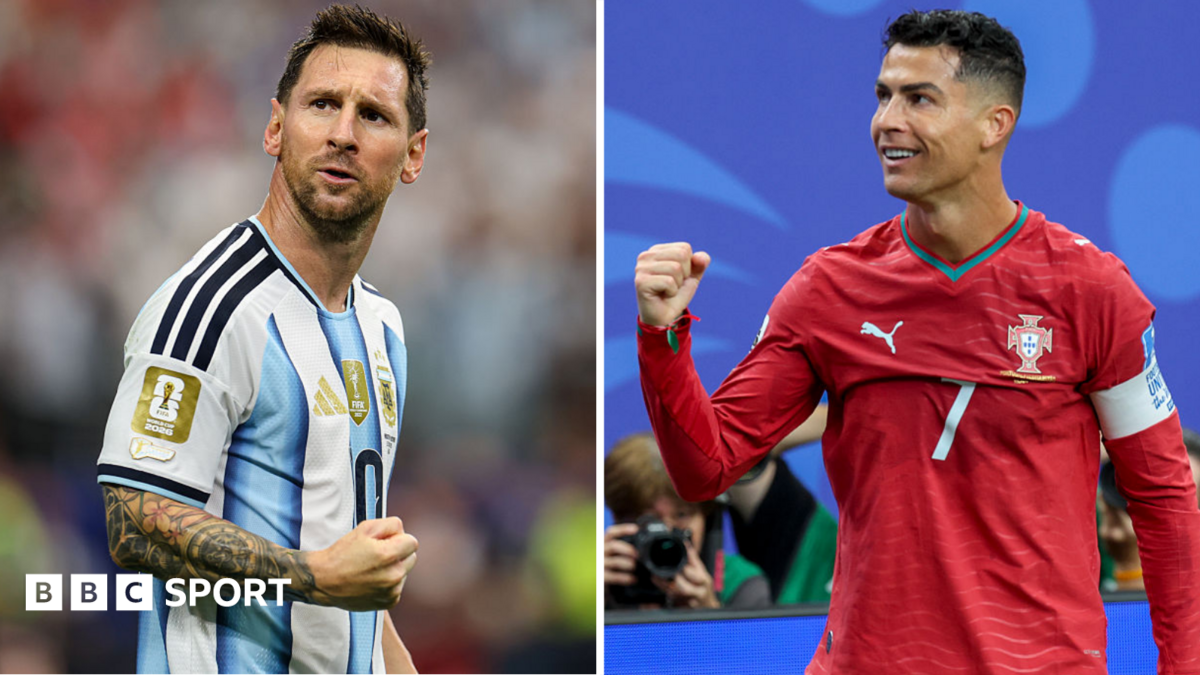
The 2026 FIFA World Cup has delivered one of its most remarkable storylines before the knockout stages even begin: two of the greatest footballers to ever step onto the pitch, 39-year-old Lionel Messi and 41-year-old Cristiano Ronaldo, have cemented their legacies with new, unprecedented records that reaffirm their enduring dominance on the world’s biggest sporting stage.
Widely expected to be the final World Cup appearance for both icons, the tournament has instead turned into a celebration of their longevity, competitive grit, and once-in-a-generation talent. For Messi, who turned 39 on the day of his match against Austria, a two-goal haul pushed his all-time World Cup goal tally to 18, earning him the top spot on the tournament’s all-time scoring charts. The achievement comes on the heels of a three-goal performance against Algeria in Argentina’s opening match, making five goals from his first two outings in this year’s competition.
Ronaldo, meanwhile, answered mounting criticism with a historic milestone of his own. After a lackluster 1-1 draw with DR Congo in Portugal’s opening match, the veteran faced questions about his form, unsubstantiated rumors of friction with teammates, and pressure to match the impressive start of his long-time rival. Just 48 hours after Messi’s double against Austria, Ronaldo silenced his doubters by netting twice against Uzbekistan, becoming the first player in men’s football history to score at six consecutive World Cup tournaments (2006, 2010, 2014, 2018, 2022, 2026).
Notably, Messi is the only other player to have featured in all six of these tournaments, but he failed to find the back of the net at the 2010 edition. Tuesday’s goals also ended an 11-match World Cup goal drought for Ronaldo that stretched back to Portugal’s 2022 opening game against Ghana. In a clear, unapologetic response to critics, the striker directly told cameras “I’m back” in his post-match remarks, a comment his manager Roberto Martinez defended as an honest expression of emotion. “He is a human being. He is allowed to have feelings,” Martinez told reporters. His former Manchester United teammate Wayne Rooney called the performance classic Ronaldo: “He takes some criticism and this is how he responds.”
At 41 years and 138 days old, Ronaldo is now the second-oldest goalscorer in World Cup history, sitting just behind Cameroonian legend Roger Milla who set the record at 42 years and 39 days. He also joins an elite club of just two other players – Michael Laudrup of Denmark and, fittingly, Lionel Messi – to hold the distinction of being both his country’s youngest and oldest World Cup goalscorer. Remarkably, both Ronaldo and Messi saw a gap of exactly 20 years and 11 days between their first and most recent World Cup goals, as of the latest matchday.
The decades-long friendly rivalry between the two superstars has long fueled their drive for excellence, and Rooney says that dynamic was on full display in this tournament. “He wants to be the best at what he does,” Rooney said of Ronaldo’s approach to competing with Messi. “So, of course, when the other top forwards are scoring goals, he wants to be top of that list. His response here is exactly what you’d expect. It’s incredible to watch Messi last night and Ronaldo tonight. At their age, it’s incredible what they are doing.”
When asked for his reaction to Messi’s five early tournament goals, Ronaldo kept his comments short: “I couldn’t care less about others… Mbappe also scored.” But analysts and teammates agree that the presence of both elite competitors pushing each other has only elevated their performances late in their careers.
Both players have adapted their playing styles dramatically to maintain their elite form into their late 30s and early 40s. For Messi, the resurgence on the World Cup stage came after he turned 35, with 12 goals in his last nine World Cup matches – a total that ranks him seventh on the all-time list, tied with Brazilian great Pele. That is a stark shift from his first 19 World Cup matches between the ages of 18 and 34, when he scored just six times. Many Argentine football observers have linked this turnaround to his departure from Barcelona, arguing that after leaving the Catalan club, Messi has been able to prioritize his commitments to the Argentine national team.
For Ronaldo, eight goals in 16 World Cup and European Championship matches since turning 35 prove he has also adjusted successfully to the aging process. Tuesday’s double took his total career goals across all competitions to 975, leaving him just 25 goals short of his next major target: 1,000 career goals.
Neither player still commands the same mainstream media attention they did during their peaks in Europe’s top five leagues, and both have taken on post-European club roles that keep them out of the daily spotlight of the biggest continental competitions. But their back-and-forth pursuit of records at the 2026 World Cup has been one of the tournament’s most compelling storylines, captivating fans around the globe.
The rivalry could yet get a dream conclusion later this tournament. If both Portugal and Argentina win their groups and advance through the knockout round as projected, the two sides are set to face off in a quarter-final clash in Kansas City on July 11. And for fans already wondering if this is truly the last we’ll see of the pair on the World Cup stage, even the idea of them chasing more records at the 2030 tournament does not feel out of the question. For two of the most omnipresent, unstoppable icons football has ever known, nothing seems impossible anymore.