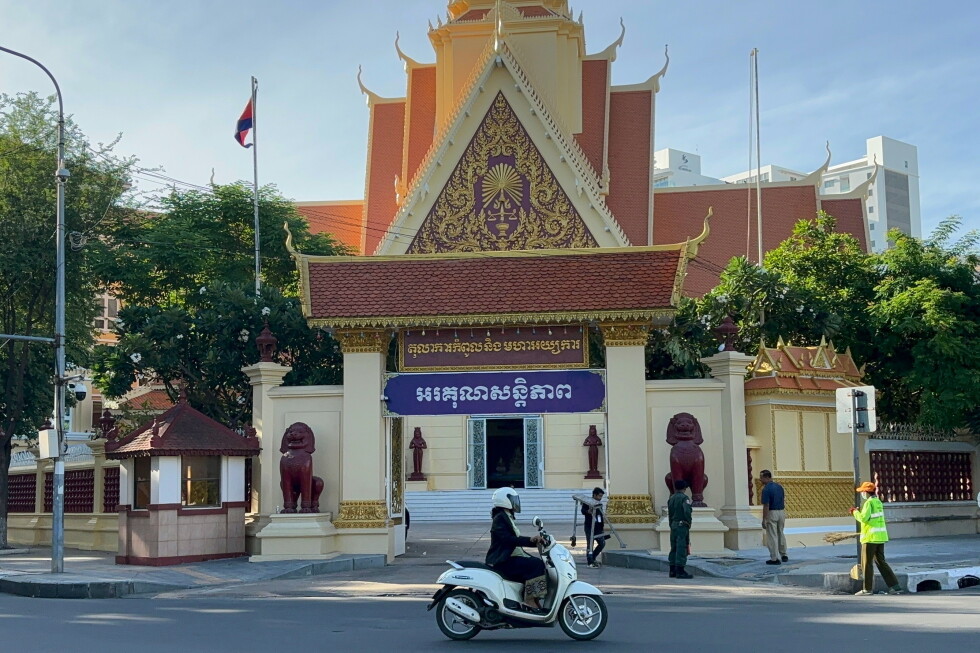
PHNOM PENH, Cambodia — A high-stakes legal decision on the appeal of two Cambodian journalists convicted of treason for their border clash reporting is slated for Thursday at the country’s Supreme Court, a ruling that comes amid intensifying scrutiny over the court’s political alignment.
Phorn Sopheap, a reporter with Battambang Post TV Online, and Pheap Pheara, of TSP 68 TV Online, were taken into custody last July following their reporting trip to the contested Cambodia-Thailand border. The pair stand accused of publishing photographs captured in a restricted military zone to Facebook, a charge they have repeatedly rejected. They maintain they received official authorization to access the area where they shot their imagery, and are now urging the Supreme Court to throw out their original convictions and 14-year prison sentences.
One of the images, which documented land mines in the border region, was widely shared by Thai media outlets and supported Bangkok’s claims that Cambodia had recently deployed new mines along the disputed frontier — mines that Bangkok said injured Thai soldiers patrolling the area. Cambodia has consistently denied the allegation, asserting it abides by international bans on land mine use and that any ordnance found in the area is likely leftover from decades of internal conflict that concluded in the late 1990s.
The border skirmishes, which erupted in two waves in July and December 2024, displaced hundreds of thousands of residents on both sides of the frontier and killed roughly 100 soldiers and civilians. While no new clashes have broken out since a ceasefire was reached in December, cross-border tensions remain elevated.
The case against the two journalists stems from a December 2024 conviction handed down by Siem Reap Provincial Court, which found them guilty of “supplying a foreign state with information prejudicial to national defense” and handed down the 14-year sentences. A lower appellate court upheld the convictions in March, prompting a joint open letter from more than a dozen domestic and international press freedom organizations urging Cambodian authorities to drop all charges.
Thursday’s hearing comes just days after the same Supreme Court upheld an incitement conviction against Rong Chhun, a high-profile opposition figure. That ruling has once again drawn international attention to the current government’s ongoing crackdown on dissent. The 56-year-old opposition leader was found guilty last year of inciting social unrest after meeting with villagers displaced by state-led infrastructure projects, a decision widely viewed as part of a broader pattern of legal action against government critics under Prime Minister Hun Manet’s administration.
Human Rights Watch has argued that recent rulings from the Supreme Court make clear that the judiciary remains tightly controlled by the ruling Cambodian People’s Party. Cambodian government officials have repeatedly pushed back against these claims, asserting that the court operates entirely independent of political influence.
The country’s political landscape has shifted little since Hun Manet, the American-educated son of long-time autocratic former Prime Minister Hun Sen, took office in August 2023. Under Hun Sen’s nearly 40-year rule, Cambodia faced widespread international condemnation for systemic human rights abuses, including harsh crackdowns on freedom of speech and association. To date, observers have documented almost no progress toward political liberalization under the new administration.
Earlier this year, the New York-based Committee to Protect Journalists accused the Cambodian government of leveraging broad, vague national security laws to criminalize routine, legitimate reporting in the case of Sopheap and Pheara. The 2025 World Press Freedom Index from Reporters Without Borders, a Paris-based press advocacy group, ranks Cambodia 161st out of 180 included countries and territories, placing it among the nations with a “very serious” press freedom situation.