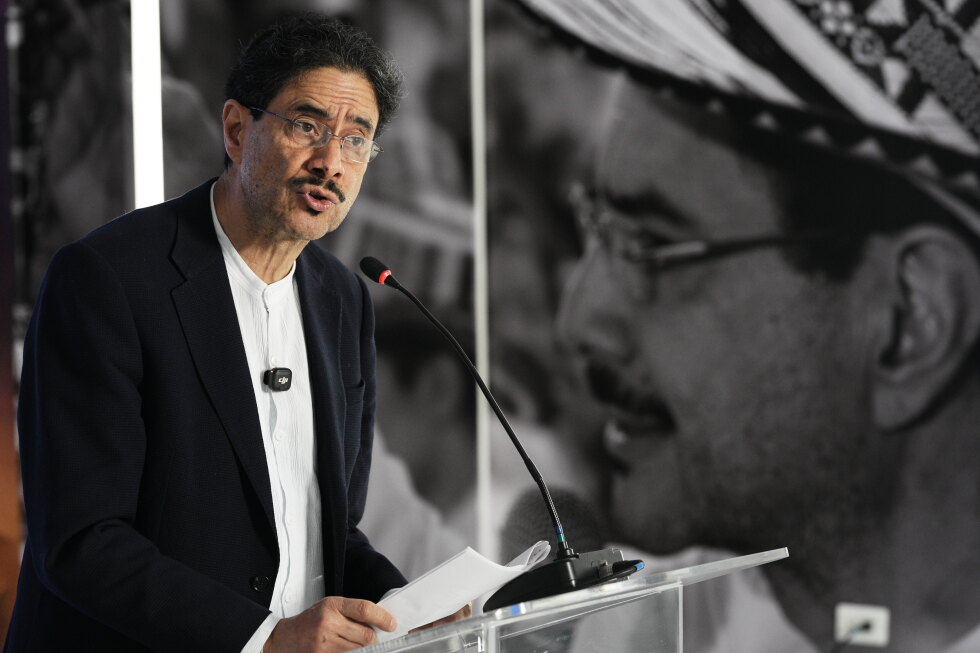
After days of post-election uncertainty following Sunday’s vote, progressive Colombian presidential candidate Iván Cepeda officially conceded defeat Wednesday to conservative political newcomer Abelardo de la Espriella, closing out a tightly contested race that shifts the South American nation sharply to the right. Endorsed by former U.S. President Donald Trump, the 47-year-old businessman and lawyer — who had never sought public office before this campaign — edged out Cepeda, a sitting progressive lawmaker, by a razor-thin 1 percentage point margin, equal to roughly 251,000 votes, according to official election tallies.
In a televised address to the Colombian people, Cepeda struck a measured but firm tone as he accepted the outcome. “We assume with serenity, responsibility, and absolute resolve — and let there be no doubt about it — the role that circumstances demand of us,” he said, confirming his bloc would operate as a “democratic, vigilant and constructive opposition” during de la Espriella’s incoming administration.
The election result marks a clear rejection of outgoing progressive President Gustavo Petro’s four-year term, a government whose policy agenda Cepeda had pledged to continue. That agenda’s centerpiece, Petro’s signature “total peace” initiative that sought to negotiate ceasefires and reconciliation with the country’s dozens of active armed groups, has struggled to deliver tangible gains in reducing violence, failing to meet core policy goals ahead of the election.
Electoral officials released nearly all vote tallies within hours of polls closing Sunday, but Cepeda and Petro refused to immediately accept the preliminary count, with the progressive candidate saying he would wait for a full official recount before conceding. That concession finally came this Wednesday, clearing the way for de la Espriella to take office on August 7 for a four-year presidential term. The president-elect’s campaign has not yet issued an official public response to Cepeda’s concession.
De la Espriella’s victory puts Colombia alongside a growing bloc of nations around the world that have turned to first-time political outsiders to address persistent gridlock around deep-rooted social, economic, and public safety challenges. Self-styling as a representative of “the never-before-seen” in Colombian politics, de la Espriella campaigned heavily to win over voters anxious about rising violence and the risk of renewed internal conflict. He pledged to adopt a hardline approach to combating violent organized crime, modeling his policy blueprint on the controversial strategy implemented by Salvadoran President Nayib Bukele. That plan, which includes the construction of massive mega-prisons to incarcerate tens of thousands of suspected gang members, has cut homicide rates dramatically in El Salvador but has drawn widespread international condemnation for documented human rights abuses.
Nicknamed “The Tiger,” de la Espriella holds dual Colombian-U.S. citizenship, is an open Trump ally, and holds official membership in the U.S. Republican Party, a connection that signals a likely major shift in Colombian foreign policy and bilateral relations with the United States moving forward.