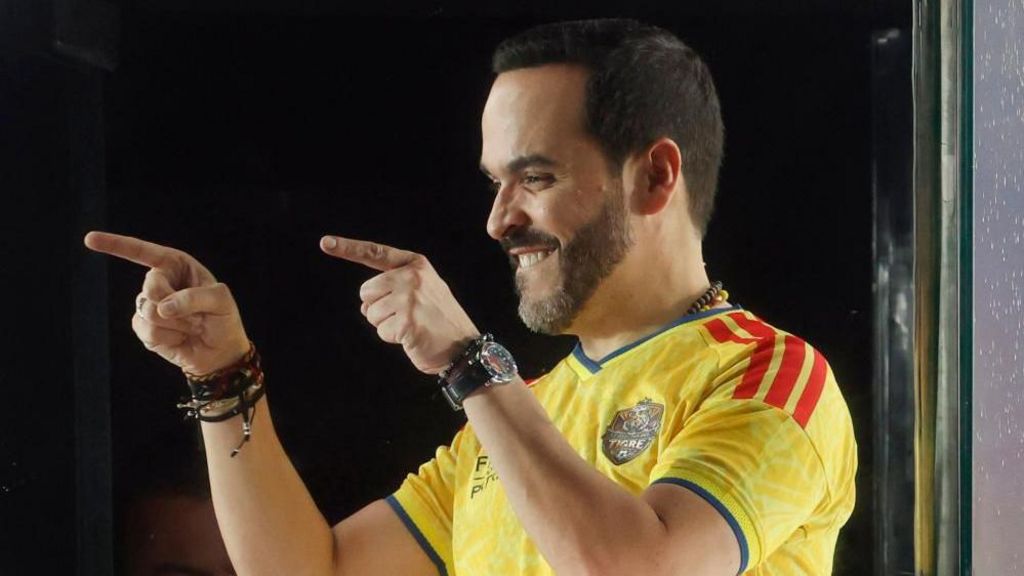
Colombia’s 2026 presidential run-off election has set the stage for a potential seismic shift in bilateral relations between the United States and the South American nation, after preliminary vote counts put right-wing contender Abelardo de la Espriella just ahead of his left-wing opponent, with former U.S. President Donald Trump already predicting a far warmer partnership between the two governments.
According to unofficial but widely cited preliminary official tallies, de la Espriella holds a slim lead of just 0.96 percentage points over left-wing candidate Iván Cepeda — a margin of roughly 250,000 votes that marks the closest presidential election outcome in modern Colombian history. Cepeda has not yet conceded defeat, noting he will await the completion of a mandatory full vote cross-checking process that typically takes multiple days to finalize.
Trump, who openly endorsed de la Espriella ahead of the run-off and previously labeled Cepeda a “radical Left Marxist”, has already moved to celebrate the preliminary result. Contradicting the narrow vote margin, Trump told reporters on Monday that de la Espriella had “won easily”, and later posted on his Truth Social platform that he is eager to collaborate with the president-elect to build a “powerful relationship” between the two nations.
The projected election outcome comes after years of sour relations between Trump and outgoing Colombian left-wing President Gustavo Petro. The two leaders have traded harsh public insults: Trump previously called Petro a “sick man” and baselessly labeled him a “drug-trafficking leader”, while Petro drew fierce pushback by comparing Trump’s immigration policies to those of Nazi Germany. Most recently, after a U.S. military operation targeting Venezuelan leader Nicolás Maduro in January, Trump sparked controversy by saying a military operation against neighboring Colombia “sounded good”.
When asked by a Colombian journalist how he expects bilateral ties to evolve following the election, Trump reaffirmed his optimistic outlook, saying “it’ll be better, he [de la Espriella] is going to be a great president”.
De la Espriella campaigned on a hardline platform focused on combating drug trafficking and organized crime — a persistent crisis in Colombia, which remains the world’s largest producer of coca, the base ingredient for cocaine. A core campaign pledge from the candidate is to bring Colombia into the Shield of the Americas, a U.S.-led alliance of Latin American nations formed to counter cartel activity. Outgoing President Petro had previously dismissed the alliance, criticizing its inaugural Miami summit in March by saying the gathered member states were “the least experienced in the fight against drugs in the Americas”.
De la Espriella has pledged deeper counter-narcotics cooperation with the United States, including proposals to launch airstrikes against drug trafficking groups and allow U.S. military bases to operate on Colombian soil. These plans have sparked concern among Cepeda’s supporters, who warn that a hardline security approach could lead to a resurgence of grave human rights abuses, echoing the country’s infamous “false positives” scandal. During Colombia’s decades-long internal armed conflict, over 6,400 civilians were killed by security forces and falsely presented as guerrilla combatants to inflate official kill counts.
Addressing these concerns in his preliminary victory speech, de la Espriella stressed that while he would take aggressive action against drug traffickers and criminal “bandits”, all operations would adhere to the bounds of Colombian law and the national constitution. The winning candidate will be formally sworn in as Colombia’s next president on August 7.