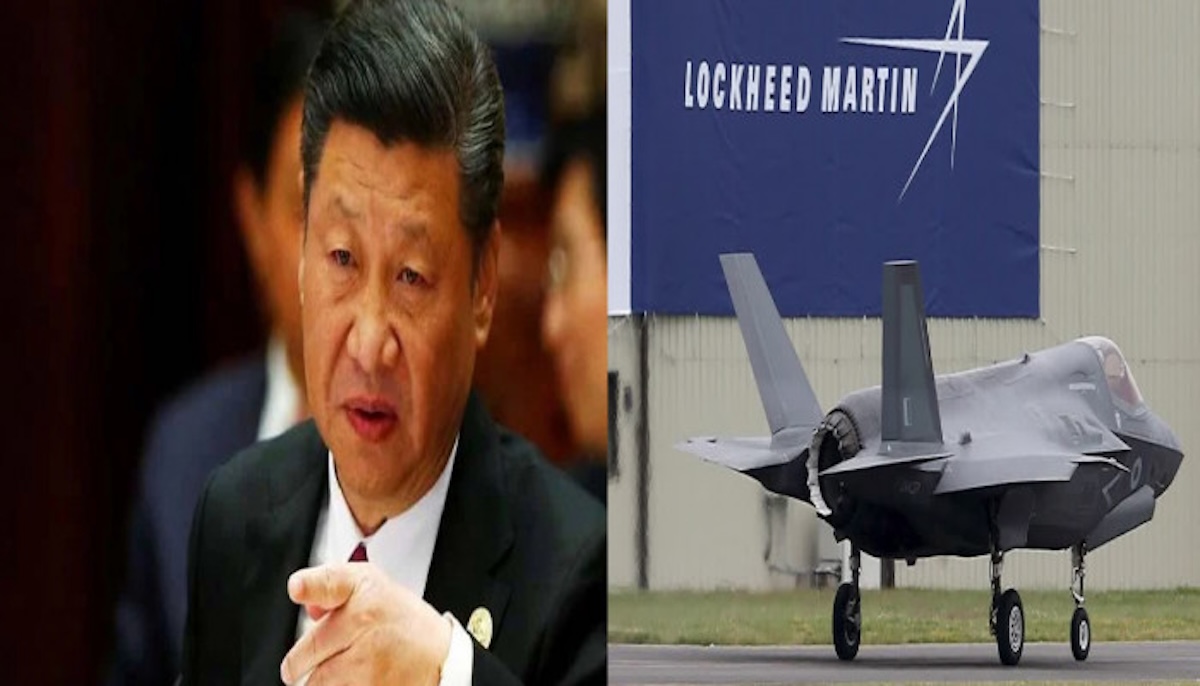
On Monday, China launched a coordinated, targeted retaliation against the United States, responding to Washington’s recent escalation of unilateral sanctions by rolling out two major restrictive measures targeting American defense and industrial entities. The actions come just weeks after a seemingly productive bilateral summit between U.S. President Donald Trump and Chinese President Xi Jinping in Beijing, where the two sides had announced agreements on increased Chinese purchases of U.S. agricultural goods and aircraft, highlighting how quickly diplomatic goodwill has evaporated amid escalating trade and tech tensions.\n\nFirst, China’s Ministry of Finance announced an immediate ban on all government procurement entities purchasing products from 46 U.S. defense contractors, led by industry giants Lockheed Martin Corporation and Raytheon Missiles & Defense. In a calibrated move to limit unintended spillover, the ban explicitly exempts U.S.-funded enterprises that operate production and commercial activities within China’s borders, leaving most U.S. commercial firms operating in the Chinese market unaffected.\n\nSimultaneously, China’s Ministry of Commerce added 10 U.S. entities to its official export control list under the country’s Export Control Law, barring all Chinese exporters from supplying dual-use technologies and materials to the blacklisted firms. The roster of restricted entities includes two of the United States’ most high-profile rare earth development firms, MP Materials Corp and USA Rare Earth, as well as leading U.S. drone and defense electronics manufacturers Red Cat Holdings, Teal Drones, and Ball Aerospace & Technologies Corp.\n\nA Commerce Ministry spokesperson clarified that the measures are a direct response to the U.S.’s recent expansion of its so-called Chinese military-industrial entity list, and are intended to safeguard China’s core national security interests and uphold international non-proliferation commitments. The context for the retaliation traces back to June 8, when the U.S. Pentagon carried out the largest expansion in the history of its blacklist of alleged Chinese military-linked companies, growing the roster from 134 to 188 entities. The update controversially included top Chinese civilian technology giants Alibaba, BYD, and Baidu, drawing outrage in Beijing for expanding the crackdown far beyond the defense sector to target China’s leading commercial technology firms. All three Chinese firms have rejected the U.S. designations as entirely baseless.\n\nLi Yong, an executive council member of the China Society for WTO Studies, framed the retaliation as a necessary check on Washington’s pattern of abusing unilateral sanctions and entity lists to suppress Chinese firms. “If such U.S. malpractices are left uncurbed, they will only escalate further,” Li told the Global Times in an interview Monday. He emphasized that China’s restrictions are narrowly tailored, targeting only items directly tied to military supply and manufacturing chains, a stark contrast to the U.S. approach of arbitrarily broadening its crackdown scope by fabricating false military connections for civilian firms with no military ties, as a pretense to hinder China’s high-tech sector development. Li added that the U.S.’s move to target leading Chinese firms across multiple sectors exposes its true goal: hindering the growth of China’s technology industry under a false veneer of national security concerns.\n\nChinese policy analysts note that Beijing designed the two retaliatory measures to maximize pressure on targeted U.S. sectors while avoiding broad damage to general foreign commercial activity in China. One Henan-based commentator writing under the pen name Sanding Sugar explained that the 10 blacklisted U.S. firms cover critical segments of the U.S. defense innovation ecosystem, from small drone manufacturing and aerospace payload supply chains to army tactical vehicle platforms and underwater surveillance systems. All of these sectors rely heavily on critical minerals that China dominates globally, including high-performance permanent magnets, high-purity indium coatings, and specialty ceramics — supply chains that cannot be reoriented or replaced overnight.\n\nOf particular note, the blacklisting of MP Materials and USA Rare Earth deals a major blow to Washington’s years-long effort to rebuild a domestic rare earth supply chain independent of China. “Blacklisting them does not stop them from mining raw rare earth ore, but it cuts off their access to China’s processed rare earth materials, separation products, and magnet precursors,” Sanding Sugar explained. “America’s plan to revive its domestic rare earth sector just hit a major compliance wall.”\n\nOn the Finance Ministry’s procurement ban covering 46 U.S. defense firms, analysts note the measure carries two clear signals. All 46 firms have been added to mandatory screening systems across every provincial finance department and central budget unit, turning the prohibition into an automatic check for all government purchase approvals. At the same time, the explicit exemption for U.S.-funded enterprises operating inside China means that U.S. commercial firms such as Apple’s component suppliers or U.S. medical equipment manufacturers operating in the Chinese market remain fully eligible for procurement, avoiding broad disruption to ordinary commercial activity.\n\nHunan-based political commentator Xi Kunlun argued that Beijing’s approach intentionally splits U.S. commercial and industrial interests, rewarding firms that maintain active, legitimate commercial operations in China while punishing those tied to the U.S. defense and competing rare earth sectors. “This retaliation carries a deeper message than simple payback. China is telling Washington that suppressing Chinese companies comes at a tangible price,” Xi said. “The U.S. targeted China’s drone industry, so China put American drone makers on its Entity List. The U.S. labels Chinese technology companies as military firms, so China blacklisted the equivalent American firms.”\n\nXi added that China is also leveraging its largest leverage: its massive domestic government procurement market, cutting off the access that allowed targeted U.S. firms to profit from Chinese public spending. “If Washington wants to talk, come with respect. If it wants to fight, China will oblige,” he summarized China’s position.\n\nStill, some independent observers have noted that the latest measures are more symbolic than a step toward full economic and technological decoupling between the two powers. They point out that most of the 10 blacklisted U.S. firms have very limited demand for Chinese-sourced raw materials and equipment, and Chinese government agencies had already largely halted purchases of U.S. defense products years before the ban. Some analysts also warn that Beijing must be cautious that retaliatory measures do not unintentionally deter the foreign direct investment that China continues to need for economic growth.\n\nRecent official data underscores this concern: China’s Commerce Ministry reported that inbound foreign direct investment fell 8.6% year-on-year in the first five months of the year, reaching 327.29 billion yuan, or approximately US$45.3 billion. While the ministry did not release a country-by-country breakdown, it confirmed that investment from Saudi Arabia, Malaysia, Switzerland, and the United States actually increased over the period, suggesting that inflows from most European and other Asian economies have declined.\n\nOne Shanxi-based commentator noted that some Chinese firms, including consumer electronics giant Xiaomi and semiconductor equipment manufacturer Advanced Micro-Fabrication Equipment Inc, have already successfully petitioned to be removed from the Pentagon’s blacklist through legal challenges. Still, he acknowledged the structural imbalance in the current standoff: “To be honest about the shortcomings, Washington still sets the tone on military and security affairs globally, and can pull its European and allied partners into lockstep. It is unrealistic for China to fully decouple with the West. Western markets cannot be replaced quickly, emerging markets cannot yet fill China’s export order gap, and many overseas trading partners will quietly avoid blacklisted Chinese firms rather than risk falling foul of U.S. rules.”’