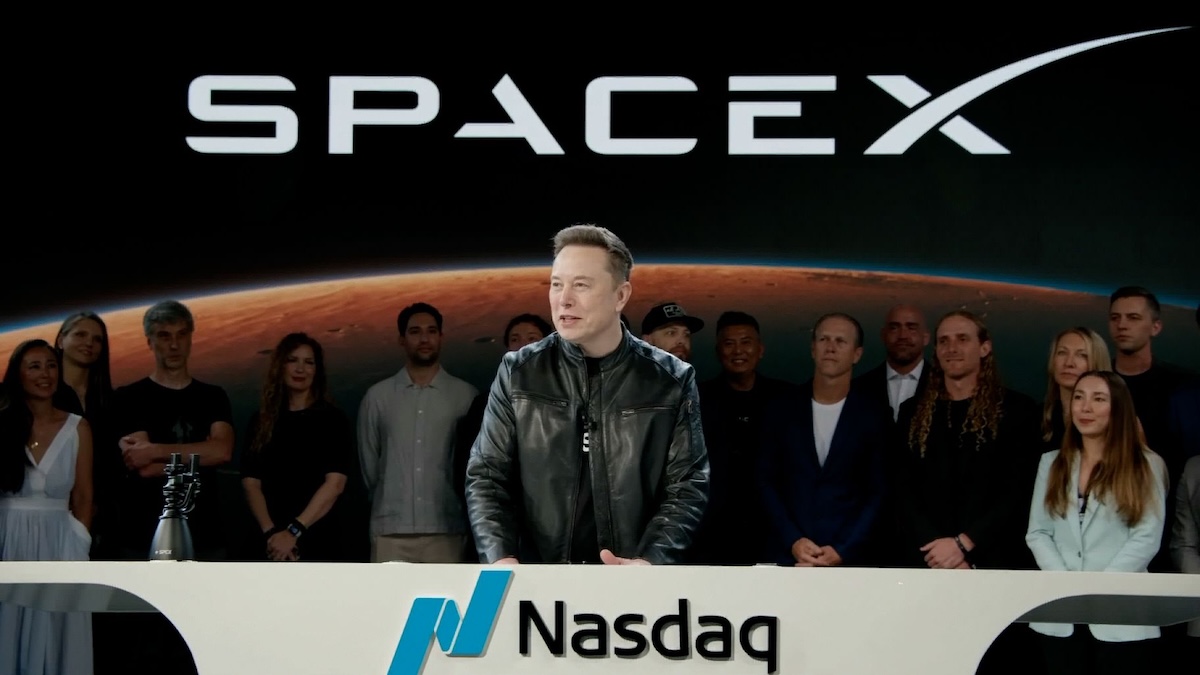
Newly unsealed court documents obtained by Pulitzer Prize-winning news organization ProPublica have pulled back the curtain on previously undisclosed pre-IPO foreign investments in Elon Musk’s SpaceX, bringing long-simmering U.S. national security concerns about foreign access to sensitive aerospace technology into sharp relief. The records, which emerged from a corporate legal dispute in Delaware after a court battle that ended in the Delaware Supreme Court ruling in favor of ProPublica’s request for public access, detail how a U.S.-based intermediary firm named Tomales Bay Capital connected more than a dozen investors based in mainland China, Hong Kong, and Russia to early SpaceX share purchases between 2018 and 2021, at a time when the rocket company remained privately held. SpaceX, which builds a substantial portion of its core business around classified U.S. government contracts including spy satellite development for the Pentagon, has long faced scrutiny over how it manages foreign investment, given Washington’s longstanding concerns that Beijing seeks to acquire cutting-edge U.S. aerospace technology for military and espionage purposes. Strikingly, the records reveal that one of the most high-profile investors linked to these pre-IPO deals is an entity controlled by David Su, co-founder of leading Beijing-based venture capital firm MPCi. Su’s entity invested $15 million into a SpaceX-focused fund managed by Tomales Bay in 2020, court records show. This is not Su’s only connection to the global space industry: MPCi has been a prominent backer of multiple Chinese aerospace companies that compete directly with SpaceX, and two of those satellite firms have been formally sanctioned by the U.S. government. One of the sanctioned firms was penalized for allegedly supporting Russia’s Wagner mercenary group, and hit with a second round of sanctions just last month for accusations that it assists Iran in targeting U.S. military forces. MPCi also maintains formal partnerships with Chinese state-backed investment initiatives: in 2025, China’s Ministry of Science and Technology listed the firm as a partner in a national government program to advance China’s domestic aerospace sector. Beyond the Chinese-linked investments, the records also confirm that an investment entity tied to Qatar’s royal family acquired an early stake in SpaceX, adding another layer of complexity to the rocket maker’s roster of foreign backers. Investment values in the early SpaceX stakes ranged from just $800,000 to a high of $40 million, making the total foreign holdings in the company extremely small as a percentage of overall equity. Even so, the revelations come as SpaceX wrapped up the largest initial public offering in U.S. history last week, a listing that catapulted Musk to become the world’s first trillionaire, and that saw the company explicitly bar investors from China and Hong Kong from participating in the IPO due to cited “regulatory and compliance risks,” according to prior reporting from Bloomberg. That decision to block Chinese and Hong Kong investors in the public offering underscores the company’s awareness of the sensitivity of foreign ownership, and aligns with longstanding U.S. government allegations that China uses outbound investment into sensitive American technology sectors to acquire proprietary information and support military modernization efforts. No evidence of improper activity by Su or any of the named investors has emerged from the released records. But foreign policy and national security experts warn that the connections raise legitimate red flags for U.S. national security. Sarah Bauerle Danzman, an Indiana University professor and former State Department official who specializes in foreign investment scrutiny, noted that the core outstanding question is whether any China-based investors gained access to nonpublic information about SpaceX’s proprietary technology or strategic planning. “If an investor has conflicts of interests with other companies in China – if they could feed that information to competitors – it could be a national security concern,” Danzman explained. All parties connected to the early investments have pushed back against any implication of wrongdoing. In an official statement, MPCi noted that Su “has not received any nonpublic information of SpaceX,” adding that Su is a Singapore citizen residing in Singapore and that he only manages U.S. dollar-focused funds for the firm. That said, a 2024 public profile of Su notes that he has spent nearly 100% of his time working in mainland China over the past two decades. Ryan Stonerock, a lawyer representing Tomales Bay Capital, also emphasized in a statement that his client “has not provided any non-public, sensitive information regarding SpaceX to investors.” Stonerock explained that all investors in the firm’s SpaceX funds are passive limited partners, and that the only information they receive is standard quarterly fund valuation updates, with no additional access to SpaceX internal data. The lawyer also pushed back on characterizations that most of the investors with listed addresses in China or Russia are aligned with adversarial foreign governments, noting that “the vast majority, if not all, of the investors included on the unsealed Tomales Bay investor list are not citizens of any foreign adversary, including Russia or China, and certainly none of them are agents of Russia or China, or any other foreign adversary.” He added that many investors with listed mailing addresses in those countries do not actually reside there, and are instead citizens and residents of the U.S. or other allied nations. SpaceX itself has not responded to multiple requests for comment on the newly revealed records, and one of the sanctioned Chinese space companies named in the documents has previously denied allegations that it supported the Wagner Group. Beyond Su and the Chinese-linked investors, the records reveal a range of other notable names on the Tomales Bay investor roster, including former U.S. Education Secretary Betsy DeVos, Indian politician Abhishek Singhvi, and a British Virgin Islands entity linked to Indonesian billionaires. The records also highlight connections to Russian interests: a $10 million 2020 investment by a shell Delaware company called HAL9001 Partners Fund I was signed by venture capitalist Roman Sobachevskiy, who co-owned a separate company that was recently fined hundreds of millions of dollars by the U.S. Treasury Department for managing investments on behalf of a sanctioned Russian oligarch. Sobachevskiy has not been personally accused of any wrongdoing in connection with the SpaceX investment, and a Tomales Bay spokesperson confirmed that the Russian oligarch “had no involvement with the investment.” Sobachevskiy has not responded to requests for comment on who provided the capital for the SpaceX stake. On the Qatari side, the records show that funds affiliated with Bracket Capital, an investment firm with offices in Los Angeles, London, and Doha, invested roughly $48 million in SpaceX stock across multiple transactions between 2017 and 2020. An email from Tomales Bay founder Iqbaljit Kahlon to SpaceX CFO Bret Johnsen confirms that Bracket Capital manages capital on behalf of the Qatari royal family. The records also list a $10 million 2020 investment from AM FIG Cayman Limited, an entity with a listed address in Doha. It remains unclear whether the Bracket investments were made directly on behalf of the royal family or another client, and Bracket Capital has not responded to requests for comment. Kahlon, who has longstanding close ties to SpaceX leadership – with Johnsen testifying that Kahlon “has been with the company in one form or fashion longer than I have” during Johnsen’s 15-year tenure at the firm – built a lucrative business brokering pre-IPO SpaceX shares for outside investors. His model involved Tomales Bay purchasing SpaceX stock directly, packaging the shares into investment funds, and selling limited partnership stakes in those funds to outside investors for fees. In a 2021 pitch meeting with a potential Chinese investor, meeting minutes later entered into court records show Kahlon promised special access to SpaceX leadership, including quarterly business updates, on-site visits to SpaceX facilities, and opportunities to hold direct interviews with the company’s CFO. Prior reporting had already confirmed the existence of Chinese pre-IPO investors in SpaceX, but most individual identities have been closely guarded for years. The unsealed Tomales Bay investor list adds hundreds of new names to the public record of SpaceX ownership, offering the most detailed snapshot to date of the company’s pre-IPO shareholder base. While the early stakes held by foreign investors represented tiny fractions of SpaceX’s total equity, they have already generated massive windfalls: SpaceX’s valuation surged from $33.3 billion in 2019 to $2.7 trillion following last week’s IPO, turning even small early investments into substantial returns. A 2025 ProPublica report also previously revealed that SpaceX explicitly allowed Chinese investors to acquire pre-IPO stakes as long as investment capital was routed through offshore secrecy jurisdictions including the Cayman Islands, a practice laid out in court testimony from the Delaware corporate dispute. Musk also maintains extensive separate business interests in China, where his electric vehicle firm Tesla operates multiple large manufacturing facilities that produce the majority of the company’s global output.