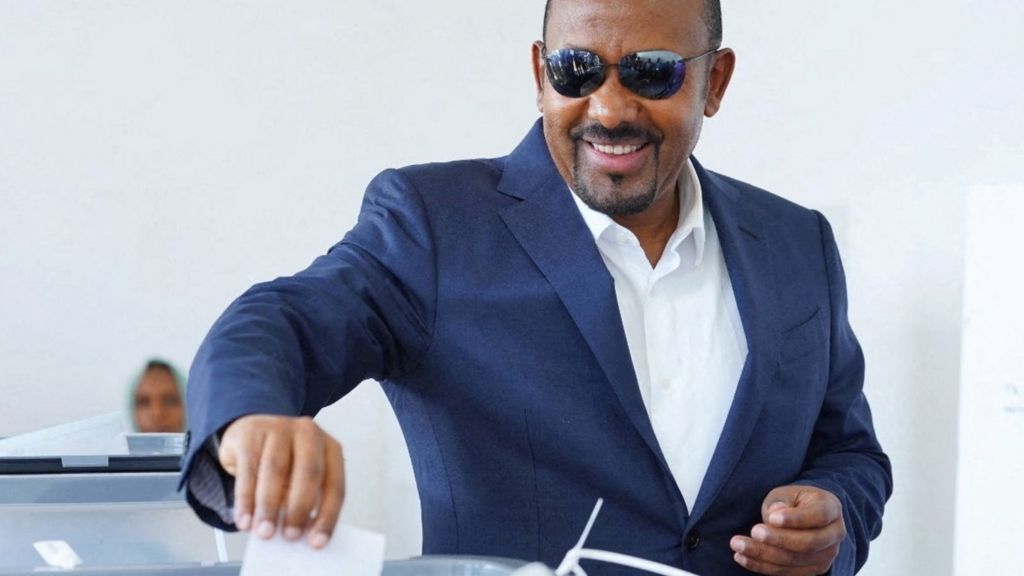
Ethiopia’s recent general election has delivered a resounding victory to Prime Minister Abiy Ahmed and his ruling Prosperity Party, cementing the incumbent’s hold on power for another five-year term as the country grapples with deep-seated security challenges and regional instability. With 438 of 501 declared parliamentary seats already secured by the Prosperity Party, Abiy is set to be sworn in for a new term in early October. Supporters of the prime minister point to his pledges to continue driving economic transformation across Africa’s second most populous nation, where the capital Addis Ababa has already seen widespread rapid infrastructure development in recent years. But critics and regional analysts warn that the lopsided election result, overshadowed by widespread opposition boycotts, ongoing insurgencies and broken peace accords, could deepen divisions and push the country back into large-scale conflict. Abiy first rose to power in 2018, amid widespread anti-government protests that shook the long-standing ruling coalition. Initially celebrated for his promises of national reconciliation and democratic opening, he quickly drew backlash from politicians of the northern Tigray region, which had dominated Ethiopian national politics for more than 20 years. Just one year after taking office, Abiy was awarded the 2019 Nobel Peace Prize, primarily for his diplomatic efforts to end two decades of hostilities with neighboring Eritrea. That breakthrough has since unraveled, however, creating a dangerous new web of regional alliances that threaten stability across the Horn of Africa. The 2020-2022 Tigray civil war, which killed an estimated 600,000 people and pushed millions to the brink of famine, formally ended with a November 2022 peace deal brokered by the African Union. But tensions have remained high, and the entire Tigray region – home to six million people across 36 electoral constituencies – was completely excluded from the recent general election, as fears of renewed fighting grow. Both sides have repeatedly accused one another of violating the terms of the 2022 peace accord. In the weeks leading up to the election, Tigray’s dominant Tigray People’s Liberation Front (TPLF) restored its pre-war regional administration, disbanding an interim body appointed by Abiy’s government. Local reports have emerged of forced recruitment of young Tigrayan men to rearm, claims that TPLF-aligned local authorities deny, saying civilians are only receiving voluntary self-defense training. But regional analysts note that the rising tensions are driven by actions from both Abiy and TPLF leadership. Cameron Hudson, an Africa analyst and former U.S. State Department official, explained that Abiy’s government has stepped back from the terms of the peace deal and made threatening military moves toward Tigray, while TPLF actions have stoked fears of preparations for renewed conflict. The regional dynamic has been further complicated by a dramatic shift in alliances along the Ethiopia-Eritrea border. When the Tigray war broke out, Eritrean troops fought alongside Abiy’s federal forces against the TPLF, with widespread allegations of atrocities against Tigrayan civilians that Eritrean and Ethiopian authorities have denied. Today, Abiy’s repeated public calls for Ethiopia to regain access to a Red Sea port – lost when Eritrea gained independence in 1993 – have pushed relations between Addis Ababa and Asmara to a breaking point. Eritrea now accuses Ethiopia of imperial ambitions, and Asmara has formally aligned with the TPLF, raising the prospect that any new conflict in Tigray would draw in a neighboring sovereign state. Ongoing insurgencies in two of Ethiopia’s most populous regions, Amhara and Oromia, have further disrupted the election process. On voting day, 143 polling stations failed to open in the two regions due to safety threats from anti-government armed groups: the Fano militia in Amhara and the proscribed Oromo Liberation Army (OLA) in Oromia, both of which demand greater regional autonomy and rejected the election and its final results. Beyond Ethiopia’s borders, the country is also embroiled in the ongoing civil war in neighboring Sudan. Multiple international reports have accused Addis Ababa of providing support to the Rapid Support Forces (RSF), one of the main warring factions in Sudan’s conflict, claims that the Ethiopian government has repeatedly denied. Eritrea and the TPLF, meanwhile, are known to maintain close ties with the Sudanese military, which is fighting the RSF, creating a connected web of conflict that analysts warn could spill across regional borders. The international community has already begun to sound the alarm over rising tensions. The European Union has called for immediate de-escalation in northern Ethiopia, while the United States – a key broker of the 2022 Tigray peace deal – recently announced targeted visa restrictions on hardline TPLF members and their immediate families, citing their role in undermining efforts to resolve the regional crisis. While many analysts do not expect an immediate return to full-scale civil war, they warn that the ongoing low-level polarisation and tension creates a dangerous powder keg. Magnus Taylor, a Horn of Africa analyst at the International Crisis Group, explained that the current dynamic leaves the door open for miscalculation: with the federal government in Addis Ababa convinced the TPLF is aligned with Ethiopia’s foreign enemies, even small clashes could escalate into a full regional conflict centered on Tigray. Opposition figures in Tigray echo that concern, noting that both sides have refused to return to negotiated talks to resolve outstanding differences. For the upcoming months following the election, analysts say the path Abiy chooses will shape the entire future of Ethiopia. While some observers worry the prime minister will use his newly consolidated political power to attempt a military solution to the ongoing Tigray conflict, his supporters maintain he will focus on delivering the economic transformation he has promised to a country that has long struggled with poverty and instability.
Nobel Peace Prize winner triumphs at Ethiopian polls but fears grow of new conflict