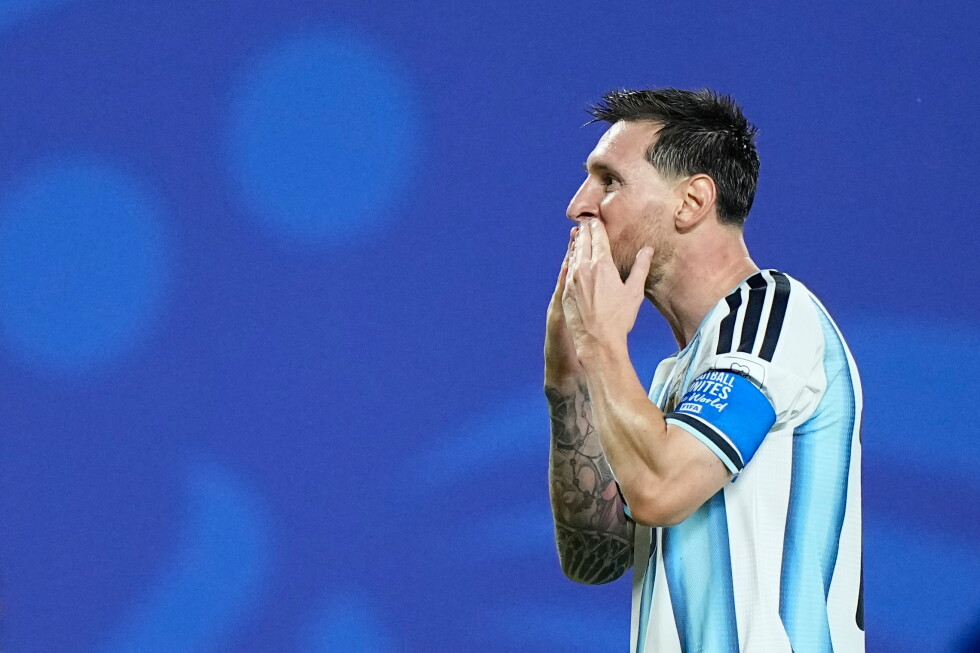
As the FIFA World Cup kicks off, soccer legend Lionel Messi’s 2023 decision to leave European top-flight football for Major League Soccer’s Inter Miami is emerging as a potential game-changer for Argentina’s quest to secure back-to-back World Cup titles. Already, the move has delivered sweeping benefits across the board: it has supercharged the growth of soccer in the United States, delivered a first major title for Inter Miami, and opened a vibrant new late-career chapter for the eight-time Ballon d’Or winner. But if Argentina lifts the trophy this year, the South American nation will stand as the move’s biggest beneficiary, with the 38-year-old arriving at what is widely expected to be his final World Cup still playing at an otherworldly peak of form.
Argentina manager Lionel Scaloni has long defended his star’s enduring dominance, noting, “Leo will be the best for as long as he wants; he has been doing it every single match for the last 20 years.” That form was on full display in Argentina’s opening warm-up match against Algeria, where Messi netted a hat trick that left soccer icon-turned-pundit Thierry Henry stunned. Henry told Fox Sports after the match: “He is on the moon. Leo is just different. It’s just a different topic.” That hat trick pushed Messi’s World Cup goal total to 16, tying the all-time tournament record set by Germany’s Miroslav Klose.
Critics once questioned whether Messi could retain his sharpness after stepping away from the relentless intensity of European top leagues to join MLS, where the competitive standard is lower. The 2022 World Cup was billed as his final tournament, and few expected the 38-year-old to still be the central creative and attacking force of the national side four years on. But what critics misread is the strategic benefit of the move for the star’s longevity. In an era when elite players across the globe increasingly warn of crippling burnout from soccer’s overcrowded annual fixture list, Messi’s move to Inter Miami has reduced his match load: he now plays far fewer games per season than he did at the peak of his Barcelona tenure, when he often featured in more than 50 matches a year. Even without weekly matchups against the world’s top defenders, his opening World Cup form confirms his sharpness remains fully intact.
Messi himself framed his preparation as a continuation of the work ethic that has defined his 20-plus-year career. “I tried to prepare myself in the best possible way to feel good physically, to feel useful, and to be able to help the group,” he said. “I love to play, to compete. And no matter where it is, today I find myself at another World Cup, which brings extra happiness, but I prepare myself just as I have done throughout my entire career.”
This is not the first time a late-career step down in club competition has set Messi up for World Cup glory. After leaving Barcelona, where he won four Champions League titles and set countless scoring records but repeatedly fell short of international glory with Argentina, he joined Paris Saint-Germain ahead of the 2022 Qatar World Cup. While domestic competition in France’s top flight did not demand the same weekly intensity as Spain’s La Liga, that reduced pressure allowed him to peak for the global tournament. He went on to score seven goals in Qatar, including a brace in the final against France, leading Argentina to a dramatic penalty shootout win and claiming the only major trophy that had previously eluded him—an achievement that cemented his reputation as the greatest men’s soccer player of all time.
Today, that pattern is repeating itself. For the 2026 cycle, Messi has leaned into extra preparation alongside Inter Miami and Argentina teammate Rodrigo De Paul to reach peak physical condition for the tournament. “We killed ourselves to, physically, arrive in the best way,” De Paul explained. Messi added that he has drawn extra inspiration from tennis legend Rafa Nadal’s recently released Netflix docuseries, which chronicles the Spaniard’s relentless drive to compete at the top despite his advancing age. “I am very similar in that sense. I always want to feel good. As long as I can and I am well, I will be there,” Messi said.
For his teammates and coaching staff, Messi’s impact extends far beyond goals and records. Scaloni summed up the irreplaceable influence the captain has on the national squad, saying: “What Leo transmits is spectacular, it is hard to explain. His teammates view him both as a God and as a kid from the neighborhood. Honestly, you just run out of words. Beyond the goals he scores, it is what he transmits—both to his teammates and to the fans. We will miss him.” US soccer analyst Alexi Lalas echoed that sentiment after the Algeria win, noting, “If you ever needed any more confirmation that when it comes to Argentina, Messi is the system, he is the tactic, he’s the formation, he’s the identity and he is the heart. It was something to behold.”
As the tournament progresses, all eyes will remain on Messi: if he can lead Argentina to back-to-back titles, his move to the United States will go down as one of the most brilliant career decisions in soccer history.