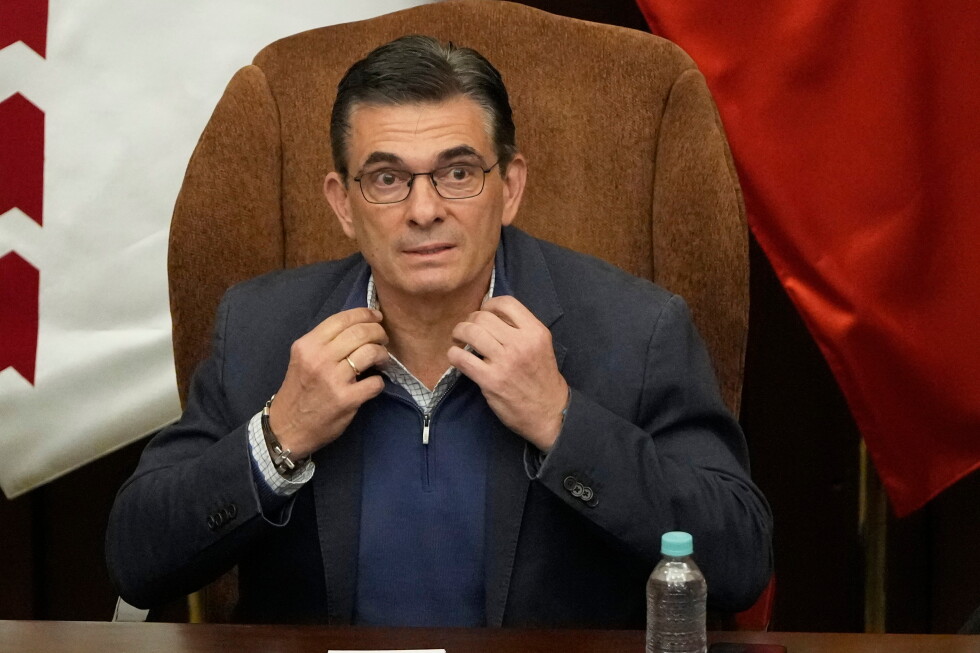
Five weeks of mass anti-government protests have pushed Bolivia into a deep political and humanitarian crisis, prompting President Rodrigo Paz to issue a 90-day national state of emergency that grants the military sweeping authority to clear road blockades that have paralyzed supply chains across the country’s major urban centers, including the administrative capital La Paz.
The demonstrations, led largely by highland Indigenous and rural worker groups that helped elect Paz to office last November, were triggered by the president’s sweeping austerity reforms — most notably the controversial cancellation of decades-long national fuel subsidies. Protesters have demanded Paz’s immediate resignation, arguing his administration has abandoned the working-class and rural communities that form the backbone of Bolivia’s population.
What began as peaceful demonstrations has devolved into repeated violent clashes between demonstrators armed with dynamite and national riot police. Official government data confirms at least 365 people have been arrested and 37 others injured since the protests began. Independent human rights groups and Bolivia’s national ombudsman’s office have recorded at least 17 fatalities linked to the unrest, the vast majority of which stem from blocked access to emergency medical care. Government figures add that at least seven of those deaths occurred when critically ill patients were unable to reach hospitals across barricaded routes.
Key arterial roads connecting La Paz to the rest of the country have been completely blocked by protester-erected barricades, cutting off the capital of 1.8 million people from critical fuel and food shipments. Supermarket shelves have been emptied as local businesses shuttered operations amid unrest, hospitals have reported critical shortages of medical oxygen, and all ground transportation across the region has been paralyzed.
In a live nationally televised address Saturday, Paz framed the emergency declaration as a measure to protect, rather than restrict, public freedom. “This is not a state of emergency to restrict people’s lives. It is a state of emergency to give people back their freedom,” he said.
The official decree bans all public blockades of streets, avenues, and highways that disrupt transportation and essential supply flows, and authorizes the armed forces to provide temporary support to national police to re-open critical routes and restore public safety. The text of the order explicitly states that no constitutional due process rights or fundamental guarantees will be suspended during the emergency, and that ordinary daily activities will remain unaffected. While the state of emergency is set to run for 90 days, government officials note it could be lifted early if all violent unrest and blockades are ended.
Late Friday, Paz secured a breakthrough with one major labor union, whose leadership agreed to call on its members to lift their blockades. But hardline core protest groups have rejected all negotiations and maintained their demand that Paz resign immediately.
Paz’s election last November ended nearly two decades of uninterrupted rule by the left-wing Movement Toward Socialism (MAS) party, which left Bolivia grappling with the worst economic crisis the country has seen in a generation. A centrist candidate who defeated more hardline conservative challengers, Paz campaigned on a pledge to resolve chronic national fuel shortages, refill the nearly depleted central bank reserves, and preserve the popular social welfare programs that made MAS a dominant political force for decades.
However, his austerity agenda has sent already high inflation soaring across the country. While the administration succeeded in ending widespread fuel shortages, it was forced to sell low-quality gasoline that damaged thousands of civilian vehicles, sparking further public anger. Proposed pro-market reforms designed to attract foreign investment and boost economic growth have also been stalled in Congress, where opposition parties hold a majority.
The current political landscape leaves Paz squeezed between two opposing forces: the hard-right faction that controls Congress, and the ousted left-wing MAS. Former MAS President Evo Morales, who is currently evading an arrest warrant on statutory rape charges from a hideout in Bolivia’s coca-growing tropical lowlands, has publicly backed the protests and called for an immediate new national election.
International backing for Paz’s government has come from the United States, which saw relations with Bolivia restored after years of anti-Western policy under the Morales administration. Last week, U.S. Secretary of State Marco Rubio spoke with Paz to confirm that Washington is ramping up emergency assistance and logistical support to help alleviate the supply shortages caused by road blockades.
U.S. Secretary of Defense Pete Hegseth went further, publicly denouncing the protests as a deliberate attempt to overthrow Bolivia’s democratically elected legitimate government. In a post on the social platform X, Hegseth issued a sharp warning to groups he accused of profiting from death and destruction in the Western Hemisphere, writing: “The United States is watching.”
Reporting from Buenos Aires, Argentina, Isabel Debre contributed to this story.