Every June 16, the bustling city streets of Dublin trade their modern, 21st-century vibe for the charming atmosphere of early 1900s Ireland, all in honor of one of the most celebrated works of 20th-century literature: James Joyce’s *Ulysses*. This beloved annual tradition, known as Bloomsday, invites literary lovers from across Ireland and beyond to step directly into the pages of Joyce’s epic novel, which unfolds across a single 24-hour period in the city. Named for Leopold Bloom, the book’s iconic protagonist, Bloomsday draws fans who lean into the spirit of the occasion with full period immersion.
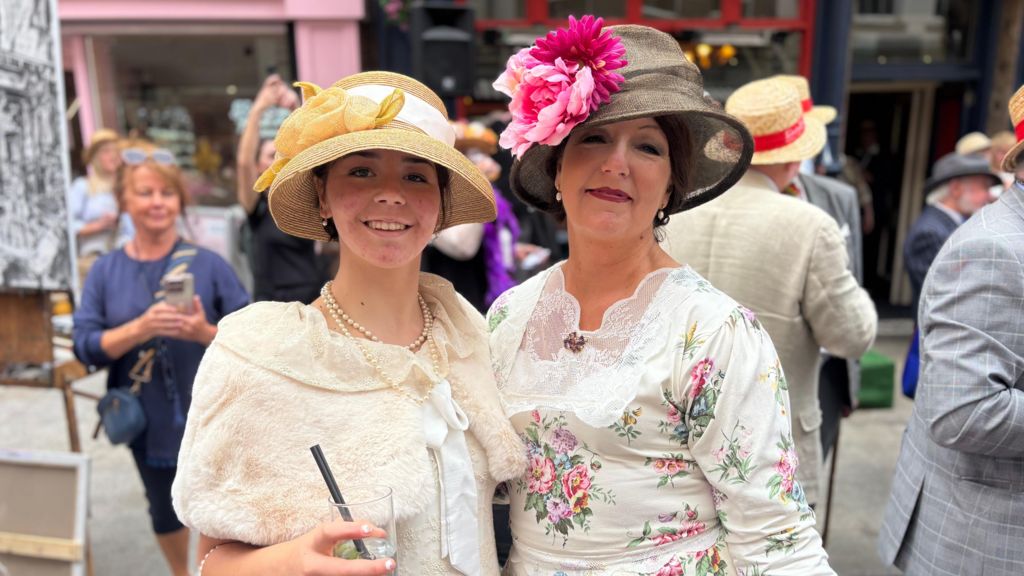
Attendees don Edwardian-era attire to match the novel’s 1904 setting: men don crisp three-piece suits and classic bowties, while women adorn themselves with elaborate, flower-draped hats and flowing, bold-hued gowns. The unofficial signature of any Bloomsday enthusiast, however, is a woven straw hat trimmed with colorful ribbons – a detail that makes celebrating fans easy to spot as they traverse the city’s real-life locations that feature in the novel’s plot. From the former Sweny’s Pharmacy (now a beloved independent bookstore) on Lincoln Place to Davy Byrne’s pub on Duke Street – a venue that has operated continuously in the same spot for more than a century – fans retrace Bloom’s journey across Dublin, reciting passages from the book and reenacting famous scenes at every stop.
For first-time participant Michelle O’Toole, the celebration is equal parts personal creativity and literary tribute. O’Toole crafted her Edwardian-style dress entirely from repurposed household materials: an old curtain she had stored for years formed the base of the garment, while a second net curtain provided the delicate lace trim. She updated a pre-owned hat with fresh floral accents to match her handmade gown and paired the look with a vintage parasol she originally brought to a horse racing event years prior, bringing her young daughter Amelie O’Toole Driuex along for her very first Bloomsday.
A short distance away, outside the doors of Davy Byrne’s pub, where free straw hats were handed out to new attendees, long-time Joyce fans Jennifer Whelan and Claire Devlin shared their experience working through *Ulysses* over nine months in their local book club. For Devlin, engaging deeply with the novel completely transformed her relationship with her home city: “It changes the whole experience of living in Dublin because now I walk around and I think, oh, ‘Bloom did that there’ and ‘that’s where he ate’. It feels so real, and if you dress up and get really involved in the festivities, it feels even more real.” Whelan echoed the joyful community spirit of the day, noting that she and Devlin had crafted their own event hats, shaping the bases with chicken wire before attaching large, dramatic red and white roses.
While Bloomsday is now one of Dublin’s most iconic annual cultural events, its origins stretch back almost a century to the years immediately following *Ulysses*’ 1922 publication. The earliest written record of the celebration appears in a 1924 letter from Joyce himself, where he referenced a small group of fans already marking “what they call Bloom’s day”. As Andrew Basquille, a volunteer with the Joyce Tower and Museum in Sandycove, explains, Joyce’s choice to set the entire novel on June 16, 1904, holds deeply personal meaning: that date marked Joyce’s very first romantic date with Nora Barnacle, the woman who would later become his wife.
This year, Basquille joined participants at Dublin’s historic Glasnevin Cemetery – the final resting place of more than one million people, including Irish revolutionary leaders Michael Collins, Arthur Griffith, and Countess Constance Markievicz – for a traditional reenactment of the novel’s famous funeral scene for fictional character Paddy Dignam, a key early episode that Leopold Bloom attends. For Blaise Reid, a decades-long Joyce fan who took part in the reenactment, *Ulysses* remains a work that rewards lifelong engagement. “I was given *Ulysses* for my 21st birthday and I am now 54 and still working through it,” Reid said. “It’s an incredible read and it’s very complicated in a lot of ways.”
Across the city, from cemetery reenactments to pub readings to street performances of songs tied to the novel, Bloomsday continues to serve as a joyful bridge between Ireland’s literary legacy and modern Dublin life, bringing together new and long-time Joyce fans to celebrate the work that turned the city’s streets into immortal art.