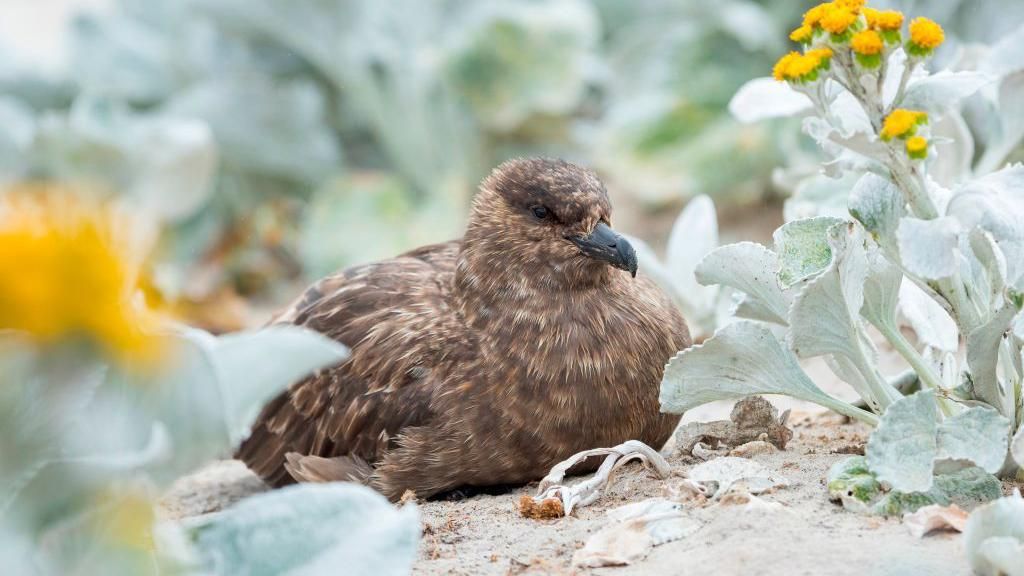
In a landmark development that marks the global reach of one of the world’s most persistent avian viral threats, Australia’s Ministry of Agriculture has formally confirmed the first detection of the highly pathogenic H5N1 bird flu strain on the country’s mainland. This detection closes the final geographic gap in the virus’s global spread, meaning the contagious variant has now been identified on every continent on Earth.
Agriculture Minister Julie Collins announced Saturday that the virus was isolated from a brown skua, a migratory seabird discovered on a beach in Western Australia’s remote Cape Le Grand National Park. The park lies roughly 700 kilometers southeast of Perth, near the coastal town of Esperance. A second suspected case is also under investigation: a southern petrel found weakened on the same Esperance coastline, though officials stressed that no evidence of large-scale wildlife mortality has been recorded to date.
Australia was long the final continent without confirmed H5N1 detection on its mainland, though the virus was previously identified on Australia’s remote southern Indian Ocean territories of Heard Island and McDonald Islands back in October 2024. A new study released earlier this week revealed the devastating impact of that outbreak: it estimates that more than 75% of the baby seal population on Heard Island – around 13,000 out of a total 17,000 pups – have died from H5N1 infection since last August. Researchers also recorded abnormally high mortality rates among local penguin populations on the territory.
Scientific analysis points to migratory wild birds from the French-administered Crozet Islands, located roughly 1,800 kilometers from Heard Island, as the likely source that introduced the virus to the remote territory last August. That same pattern of migratory spread is what Australian officials believe led to the new detection on the mainland.
H5N1 first emerged in southern China in the late 1990s, and has since become the dominant strain of bird flu circulating in wild bird populations globally. The virus spreads rapidly through both wild avian populations and domestic poultry flocks, and in rare cases has expanded to infect other mammal species including seals, otters, and foxes. While human infections are extremely uncommon – almost all tied to direct close contact with infected animals – global public health authorities have long monitored the strain’s spread closely for its potential to mutate into a form more transmissible to humans.
Australian authorities have emphasized that they were prepared for this detection. National Chief Veterinary Officer Beth Cookson noted that emergency planning for an H5N1 incursion has been underway for years, and the national emergency animal disease committee convened immediately on Saturday to coordinate response efforts. Threatened Species Commissioner Fiona Fraser told ABC that initial testing results to confirm whether the virus has spread to other local animal populations are expected within the next few days. “We all knew we couldn’t remain bird flu-free forever,” Collins told reporters at Saturday’s press conference, framing the detection as an expected event that the country was equipped to manage.