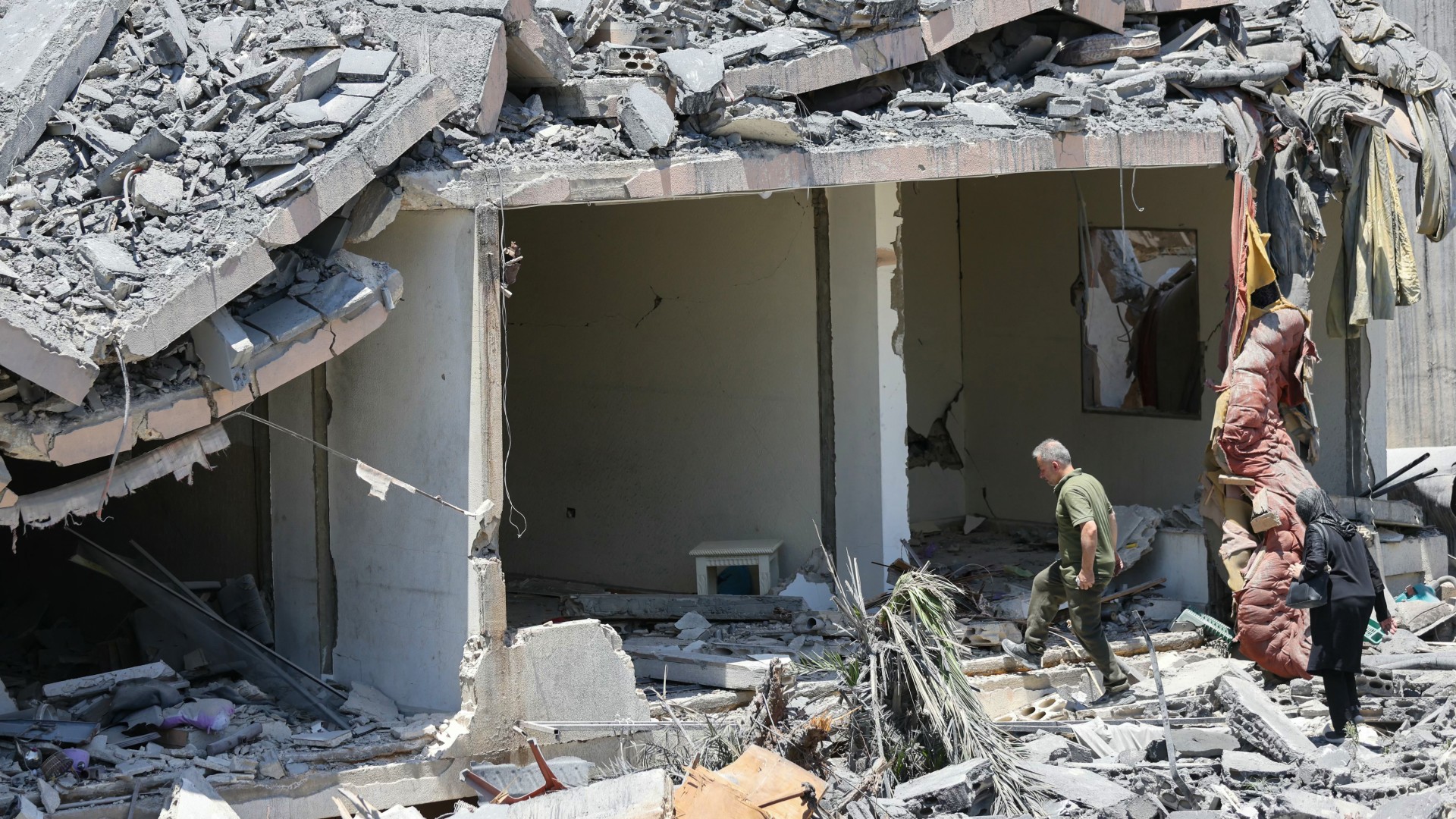
A fresh wave of Israeli airstrikes on southern Lebanon has sent shockwaves across the Middle East, killing at least 21 people and injuring more than 39 others since Thursday night, according to an official announcement from Lebanon’s Ministry of Public Health. The attack has already derailed planned follow-up negotiations between the United States and Iran aimed at cementing a region-wide ceasefire, triggering harsh condemnation from Lebanese leadership and sharp, bellicose threats from top Israeli officials.
Lebanese President Joseph Aoun labeled the strikes a “dangerous and reprehensible escalation” that has claimed the lives of dozens of innocent civilians, among them women and children. In a formal statement, Aoun emphasized that the aggression undermines every ongoing effort to solidify a ceasefire and end broader regional conflict, coming just days after the US and Iran signed a landmark memorandum of understanding (MoU) designed to end more than 100 days of cross-border fighting that has devastated Lebanon.
The Israeli military, for its part, confirmed that Hezbollah fighters had killed four of its soldiers in southern Lebanon on Friday, including a senior battalion commander. Hezbollah issued its own statement confirming the attack, explaining that its fighters targeted Israeli forces that were attempting to advance into sovereign Lebanese territory. The militant group detailed that it lured an Israeli military unit into a pre-planned “kill zone” near the southern Lebanese area of Ali al-Tahir, destroying three Merkava tanks in the engagement. When a second Israeli unit moved in to recover the first, fighters hit it with concentrated rocket barrages and mortar fire.
Israeli Prime Minister Benjamin Netanyahu quickly issued a vow of retaliation in a social media statement Friday, promising Hezbollah would pay a “heavy price” for the attack. He reiterated that Israeli forces would maintain a presence in a self-declared “security zone” in southern Lebanon for as long as necessary to protect Israeli communities in the country’s north. Israeli Defense Minister Israel Katz echoed Netanyahu’s hardline stance, stating that the Israeli military would not tolerate attacks on its soldiers and civilians, and any ceasefire violation by Hezbollah would be met with overwhelming force. Katz also confirmed the security zone extends from Lebanon’s Mediterranean coastline all the way to the Beaufort Heights, formalizing Israel’s expanded military footprint in the region.
The rhetoric grew even more extreme from far-right members of Netanyahu’s governing coalition. National Security Minister Itamar Ben Gvir, who has a long track record of inflammatory rhetoric against Lebanese people, called for a drastically more aggressive military response. “For every tear shed by an Israeli mother, a thousand Lebanese mothers should cry,” Ben Gvir wrote on the social platform X, adding that “all of Lebanon should burn” and emphasizing that Israel must make clear “the blood of our sons and the security of our citizens are not up for grabs.” This is not the first time Ben Gvir has made extreme remarks: just one week prior, he publicly called for the kidnapping of Lebanese women and youth to pressure Hezbollah.
Shortly after Ben Gvir’s comments, Israeli Finance Minister Bezalel Smotrich, another far-right member of the coalition, echoed the rhetoric, calling on Israel to “open the gates of hell” for Hezbollah – a phrase he previously used to describe Israel’s military campaign in Gaza that has been widely labeled genocidal by international bodies and human rights groups.
The latest escalation comes at a critical diplomatic juncture: US and Iranian officials had been scheduled to meet in Switzerland this week to continue negotiating the terms of the MoU signed in Paris Wednesday. That agreement requires an immediate end to fighting on all regional fronts, including Lebanon, and Iranian officials have repeatedly warned that any continued Israeli military presence or operation inside Lebanese territory counts as a direct violation of the deal. Crucially, the Israeli government is not a signatory to the MoU and has openly opposed its provisions for Lebanon. Since the agreement was signed, the Israeli military has released a new official map outlining plans for expanded military occupation and operations across southern Lebanon.
In response to Israel’s new strikes, Lebanon-based broadcaster Al Mayadeen reported Thursday that the Iranian delegation had postponed its planned talks with US officials in Switzerland. The Swiss foreign ministry confirmed the postponement Friday, officially putting the diplomatic process on hold amid the new violence.
Even before this latest wave of violence, Lebanon has already suffered staggering human cost since cross-border fighting resumed on March 2. The new strikes bring the total death toll across the country to at least 3,915, a figure that stands despite a formal ceasefire agreement between Israel and Hezbollah signed back on June 2.