MIAMI (AP) — Near the entrance of a new Miami art exhibition, a striking photograph captures Brazilian star Vinícius Júnior mid-goal celebration, one fist raised high in triumph. It hangs adjacent to a vivid acrylic work by Tasanee Durrett, depicting a Black woman heading a soccer ball, her dreadlocks floating mid-air. A glass-cased replica of the FIFA World Cup trophy anchors the nearby display space, encircled by an array of photographs, paintings and national flags that weave together the untold stories of generations of African footballers and their soccer dreams.
This immersive collection, titled *Art and the Beautiful Game: Africa on the World Stage*, is the work of AfriKin, a foundation dedicated to amplifying African and African diaspora art. Curated by Alfonso D. Brooks, a former longtime sound engineer turned arts organizer, the exhibition opened in Miami in advance of the World Cup, drawing together works from more than 50 creators spanning 25 countries. The show traces soccer’s deep embedded role in African history, while honoring the sport’s most globally influential figures — from the late Brazilian legend Pelé to contemporary French star Kylian Mbappé.
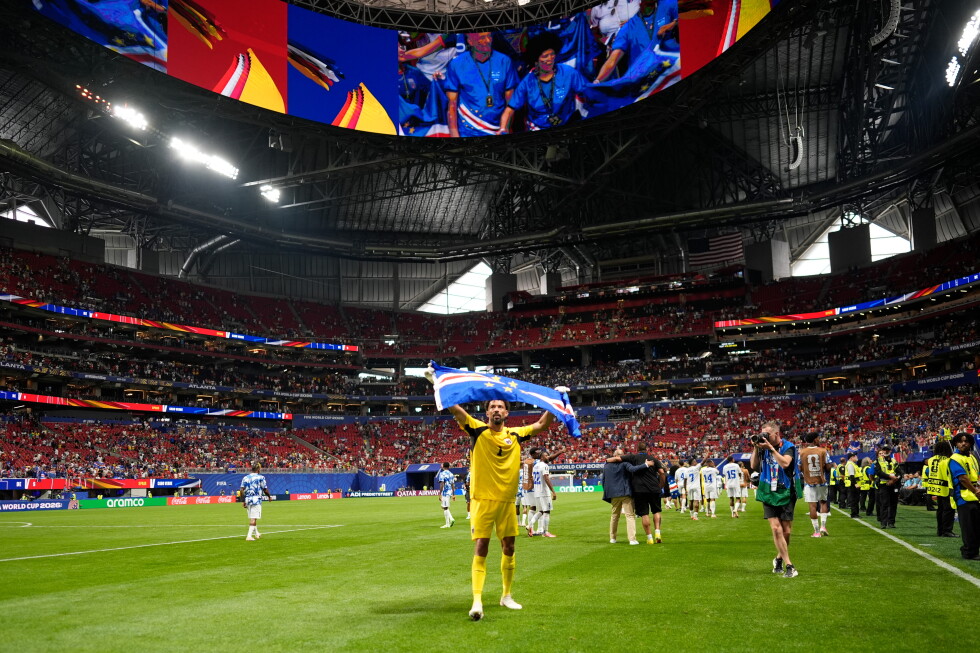
Every one of the 10 African nations qualifying for the World Cup is highlighted and celebrated in the exhibition, with a special tribute reserved for Cape Verde. The tiny island nation off West Africa pulled off one of the tournament’s most surprising upsets in its World Cup debut, securing a historic draw against European powerhouse Spain. AfriKin is scheduled to host an official honorary ceremony for Cape Verde on Saturday evening, ahead of the team’s group stage match against Uruguay.
As the World Cup draws tens of thousands of global football fans to Miami, Brooks and participating artists set out to create a welcoming communal space where the African diaspora can gather, connect and celebrate its distinct cultural legacy throughout the tournament. “Miami is a huge melting pot,” explained Durrett, a 31-year-old Orlando-based artist and licensed architect. “We have Latin residents, Haitian communities, Caribbean communities, so many different cultural influences. Now that we have this platform and this voice, why not lift that story up?”
Brooks, who was born in the Dutch Caribbean territory of St. Maarten and relocated to Miami in 2008, developed his love for soccer from its humble grassroots origins across the African continent. He recalls growing up watching young children kick makeshift soccer balls — or any round object they could find — down school hallways, in living rooms, across uneven concrete streets. “This is where you get the term ‘the beautiful game,’” he said. “Because it required nothing but a beautiful spirit.”
That joyful simplicity runs through the entire exhibition, which offers intimate glimpses into neighborhood pick-up pitches while also highlighting the sport’s unique global power to unite people across differing backgrounds, races and languages.
Columbus-based artist Bamazi Talle, a native of the West African nation of Togo, explores this unifying theme through paintings of the calabash — a large, woody gourd that holds deep cultural meaning across many African communities. Beyond its practical uses, from serving meals to being hardened into water-carrying vessels, the calabash stands as a cultural symbol of community connection and hospitality. Talle paints the gourds floating against the backdrop of flags of all competing World Cup nations, drawing a parallel between the fruit’s cross-cultural history and the unifying spirit of the global tournament. “Calabash became one thing that united all of us,” Talle said. “And this cup, this World Cup is, I think, this celebration of all of us coming together.”
Durrett, whose acrylic work greets visitors at the entrance, uses her art to lift up the underrepresented stories of Black women in soccer. She first took up drawing as a therapeutic practice years ago, and has centered her work on highlighting marginalized communities, often creating full canvas pieces in a single continuous line. “I hope that visitors see the unique stories that we as artists are telling,” she said. “And I hope they see themselves reflected in these stories.”
The exhibition also highlights what Brooks terms “Hidden Africa” — a section focused on European national teams including France, Belgium and England that field numerous players of African heritage, who were either born or developed their football skills in European countries. Through this framing, Brooks aims to highlight the far-reaching connections of the African diaspora across the entire World Cup field, while opening up conversations around identity, immigration, and the complex factors that shape a player’s choice of which nation to represent internationally.
“I’m not just showing a football and hanging up pretty pictures or highlights of goals,” Brooks emphasized. “We want to tell a real story that people can walk into, engage with, and leave saying ‘Wow, I didn’t know that.’ People need to learn from this exhibition.”