Just 48 hours after world powers and Tehran signed a groundbreaking 60-day negotiating framework for a permanent Iran nuclear deal and a commitment to restore pre-war oil transit through the strategically critical Strait of Hormuz, a high-stakes U.S. plan to launch immediate technical talks has been derailed.
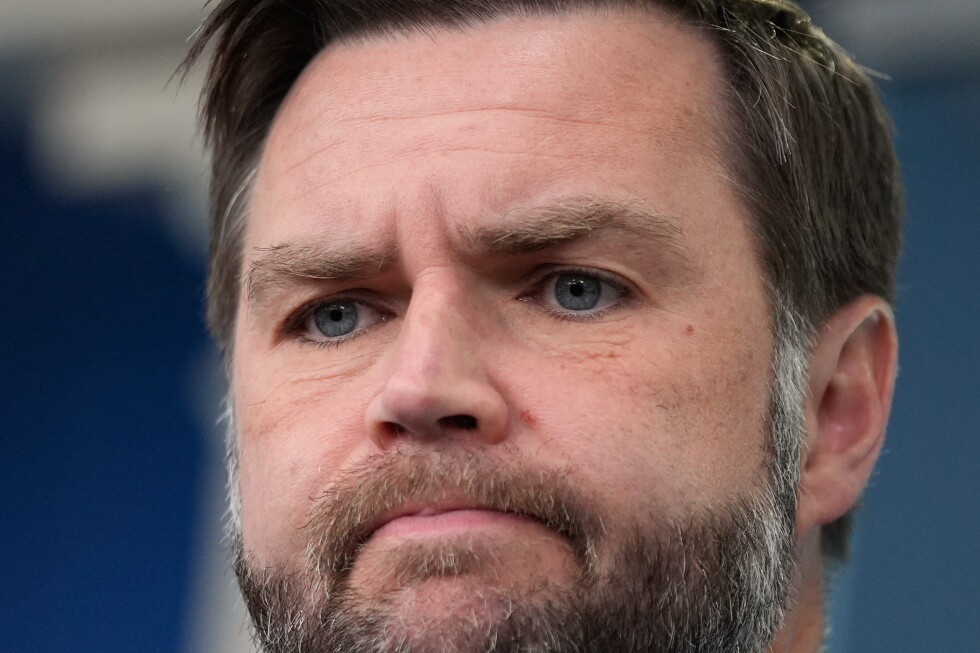
U.S. Vice President JD Vance, tapped by President Donald Trump to lead the American negotiating delegation, had been scheduled to depart on an overnight flight Friday for a secretive mountainside resort in the tiny Swiss village of Obbürgen, where the opening round of talks was set to be held. By Thursday afternoon, Vance’s staff, a pool of traveling reporters, had already assembled at Joint Base Andrews outside Washington D.C. ahead of departure, while dozens of White House advance personnel and additional press had already arrived in Switzerland to prepare for the vice president’s visit. But in a sudden announcement Thursday evening, the trip was postponed indefinitely.
In an official statement, the White House confirmed that while Vance and his full delegation were fully prepared to begin negotiations, last-minute logistics hurdles prevented the plans from being finalized, forcing the vice president to remain in Washington. “The logistics of these negotiations have never been simple or predictable,” the statement read.
The cancellation came shortly after Pan-Arab satellite network Al-Mayadeen, which has close political ties to Iran-backed Lebanese militant group Hezbollah, reported that Iran was delaying its own delegation’s travel to Switzerland in response to Israel’s ongoing military offensive in Lebanon. Earlier the same day, Vance had already signaled the uncertain state of plans during a White House press briefing, telling reporters he could not guarantee talks would kick off as scheduled this weekend. “Our plan is to go to Switzerland, I don’t know exactly when,” Vance said. “We think these technical negotiations start sometime this weekend. That’s still the plan. But that could change.”
Despite the last-minute delay, Iran’s top leadership had signaled tentative approval for direct talks just hours before the cancellation. Iran’s Supreme Leader Ayatollah Mojtaba Khamenei issued a brief, formal statement carried by state media endorsing the first round of direct negotiations with the U.S., clearing a key domestic political hurdle for the process to move forward. “It is obvious that the face-to-face negotiations that will be held in the future will not mean accepting the enemy’s opinion,” Khamenei emphasized in the statement. The endorsement grants Khamenei, who assumed the supreme leadership role after his father Ali Khamenei was killed in a U.S. airstrike on February 28, critical domestic political maneuvering room. Hardline factions within the Iranian government have long opposed direct bilateral talks with the U.S., a position hardened after Trump withdrew from the 2015 multilateral Joint Comprehensive Plan of Action (JCPOA) during his first term.
The preliminary framework signed this week was the product of a last-minute change of plans: Vance was initially scheduled to travel to Switzerland for a formal public signing ceremony, but instead President Trump signed the document during a high-profile dinner at the Palace of Versailles alongside French President Emmanuel Macron, with Iranian President Masoud Pezeshkian signing the agreement separately. Under the terms of the 60-day framework, Iran must dilute its existing stockpile of highly enriched uranium — much of which remains buried under rubble from U.S. military strikes on Iranian nuclear sites last year — under international supervision, and reaffirm its longstanding commitment not to acquire or develop nuclear weapons. All other core details of a permanent agreement remain to be negotiated in the coming weeks.
Regional policy analysts note that Tehran enters the upcoming talks with a heightened sense of leverage, after its temporary shutdown of the Strait of Hormuz sent shockwaves through global energy markets. “Iran believes it’s in a strong negotiating position,” explained Rosemary Kelanic, director of the Middle East Program at Washington-based think tank Defense Priorities. After Tehran effectively closed the strategic waterway, triggering global economic disruption, Kelanic said the U.S. is now “essentially trying to negotiate our way back to the prewar status quo.”
Neil Quilliam, associate fellow with the Middle East and North Africa Program at London-based Chatham House, added that Khamenei’s public endorsement of talks is designed to reinforce domestic messaging that the regime holds equal standing with the global superpower. From the Iranian leadership’s perspective, Quilliam argued, “Trump has gone from calling for regime change on Feb. 28 to this: Now they’re going to sit down with us directly and talk about these big issues.” The endorsement, he said, is largely for domestic consumption, sending a message that “We are firmly in control of this. There can be no protests, no revolution: We are a new regime and we’re staying put.”
President Trump has also made a notable shift in public tone in recent weeks. For months, Trump insisted that the financial cost of the conflict with Iran was secondary to eliminating Tehran’s nuclear program, and he angered some members of his own party by saying he was unconcerned about any economic impact on upcoming November midterm elections. But speaking at this week’s G7 summit in Evian-Les-Bains, France, Trump acknowledged for the first time that a prolonged conflict would have triggered “economic catastrophe” for the U.S., noting that domestic oil reserves would have been depleted in roughly four weeks. “And the one president I did not want to be was the late, great Herbert Hoover,” Trump said, referencing the 31st U.S. president whose tenure was defined by the Great Depression.
For Vance, who is widely viewed as a potential 2028 Republican presidential contender, the outcome of these negotiations will have major implications for his political future. Vance built his early political brand around public skepticism of foreign intervention, but now he is tasked with defending a negotiated end to a conflict that congressional Democrats have universally dismissed as reckless. Even within the Republican Party, hawkish lawmakers have openly criticized the framework, arguing it concedes too much to Tehran and would unlock massive economic benefits for Iran.
Senator Roger Wicker, Republican chairman of the Senate Armed Services Committee, said Thursday he is deeply concerned that the draft agreement “negotiates away the victories” won by the U.S. air campaign against Iran, adding that key provisions are “completely out of step” with Trump’s stated original goals. Wicker specifically targeted a proposed $300 billion fund for Iranian reconstruction and economic development included in the 14-point framework, arguing it “would make Iran’s payoff under Obama’s 2015 deal look like a pittance by comparison.” Trump and Vance have pushed back on these criticisms, stressing that no U.S. taxpayer funds would contribute to the fund, and any economic relief would only be released in exchange for concrete concessions and nuclear reforms from Tehran.
Trump has long attacked the 2015 JCPOA, the original multilateral nuclear agreement negotiated by the Obama administration, arguing it failed to curb Iran’s nuclear progress and handed unfettered access to billions of dollars in sanctions relief to Tehran. He withdrew the U.S. from the pact in 2018. Today, Trump rejects comparisons between his new framework and the 2015 deal, arguing he negotiated from a position of strength after a year of military pressure on Iran, while Obama merely paid off Tehran to secure weak, unenforceable commitments.