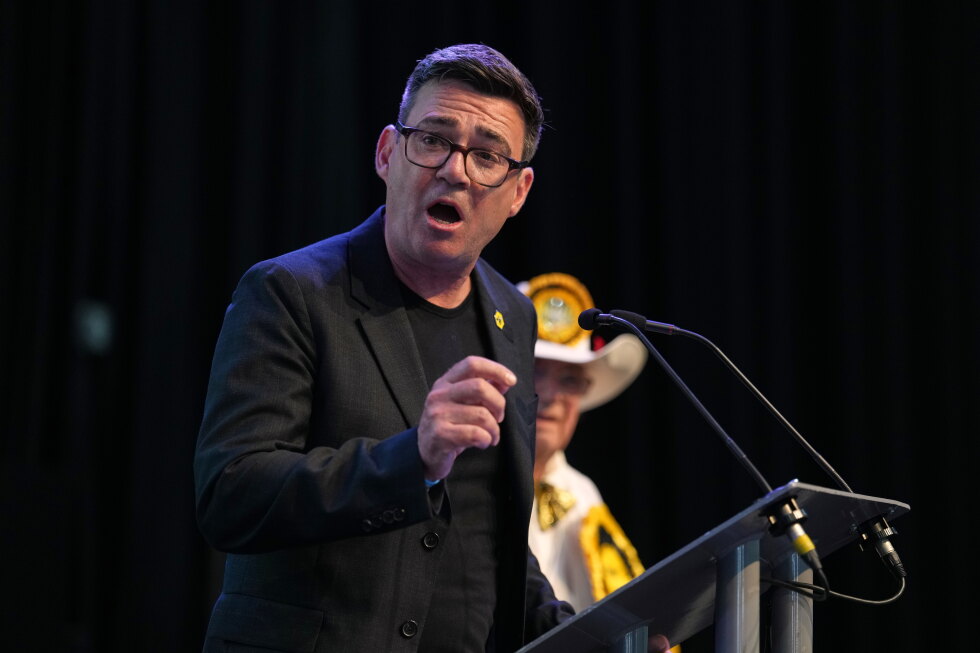
LONDON – In a political upset that has reshaped the UK’s domestic political landscape, Greater Manchester Mayor Andy Burnham has secured a decisive win in the Makerfield constituency special election, cementing his position as the leading challenger to embattled incumbent Prime Minister and Labour Party leader Keir Starmer.
Burnham, a 56-year-old centrist politician widely nicknamed the “King of the North” for his enduring popularity across northern England, crushed his closest competitor, Rob Kenyon from the right-wing anti-immigration Reform UK, by a margin of more than 9,000 votes. Final vote counts released early Friday show Burnham captured nearly 55% of the 45,510 ballots cast, a clear mandate that sets the stage for an imminent leadership showdown within the ruling Labour Party.
The special election was deliberately triggered when sitting Labour MP Josh Simons resigned from his seat, clearing a path for Burnham – who had served outside Parliament as metro mayor since 2017 – to return to Westminster. Since taking office as Greater Manchester’s mayor in 2017, Burnham has overseen a sweeping urban regeneration transformation of the region, the historic birthplace of the Industrial Revolution, building a broad popular base around his pragmatic, region-focused policy brand he calls “Manchesterism.” He has now pledged to scale this model nationwide if he takes the top job.
In his victory address, Burnham left no ambiguity about his political ambitions, rejecting the idea that he would settle for a backbench role in the 650-seat House of Commons. “Everyone knows that politics isn’t working,” he told supporters. “Everyone can feel that the country isn’t where it should be. Tonight could, just could, be the turning point.” He emphasized that the Labour Party now holds a final opportunity to rebuild public trust, calling for a new, unifying political project rooted in hope that rejects the divisive, polarizing politics that has come to define U.S. political discourse. “The name Makerfield will forever be synonymous with bringing about the change this country needs,” he added.
The leadership challenge comes amid a historic collapse in Starmer’s approval ratings, just months after he led the centre-left Labour Party to a landslide general election victory in July 2024. Since taking office, Starmer has failed to deliver on key campaign pledges: he has been unable to jumpstart promised economic growth, repair overstretched and underfunded public services, or ease the ongoing UK cost of living crisis. His position has been further weakened by a string of high-profile missteps, most recently the controversial appointment of scandal-tarnished former minister Peter Mandelson – a known associate of convicted sex offender Jeffrey Epstein – as UK Ambassador to the United States. A dismal performance in May 2025 local elections already prompted dozens of Labour MPs to publicly call for Starmer’s resignation, and while he has refused to step down, senior party figures have openly pushed for a leadership change. Already, former Health Secretary Wes Streeting resigned from Cabinet in May, criticizing the government for a “vacuum of vision,” and has announced he will run for leader if a contest is called.
Under UK parliamentary rules, the governing party can replace its leader and prime minister mid-term without holding a snap national election. Current Labour Party rules stipulate that a leadership challenge can be triggered if a challenger secures backing from at least one-fifth of the party’s sitting Commons MPs – a threshold of 81 signatures in the current parliament.
Senior party figures have already begun openly calling for an orderly transition. Culture Secretary Lisa Nandy acknowledged that Burnham and Starmer would hold urgent talks “about what comes next” in the coming days. Louise Haigh, a senior Labour MP and close Burnham ally, urged Starmer to “do what’s best for both the country and the Labour Party” and “consider an orderly and managed transition.” Haigh told Sky News that “Andy won’t be doing anything rash or hasty. I’m really hopeful the prime minister and Andy can come to an agreement.”
Starmer has thus far dug in, insisting he has no intention of resigning. Speaking from the G7 summit in France this week, he said, “I will fight if there’s a challenge. We won a significant general election result in 2024, with a mandate to bring about change. I’m not going to walk away from that.” Ahead of the election, Starmer suggested he would be open to giving Burnham a senior Cabinet post to keep him within the government, but allies of Burnham have made clear he has no interest in a secondary role.
Political analysts agree that the pressure on Starmer is now nearly impossible to ignore. Rob Ford, a professor of political science at the University of Manchester, noted that “the pressure on Starmer will be very hard to resist” now that Burnham holds a seat in Parliament. Burnham is set to be sworn in as an MP as early as next Monday, and is expected to request a formal meeting with Starmer to push for a graceful exit and a clear timetable for a leadership transition.
While Starmer remains defiant, his position could collapse rapidly if multiple Cabinet members resign or threaten to resign in unison to force his hand. Depending on the level of support for Burnham among the parliamentary party, the race could either become a contested leadership election or Burnham could take the position unopposed in a quick “coronation.” Ford added that Burnham’s defeat of Reform UK in a seat the right-wing party targeted heavily strengthens his argument that he is Labour’s strongest electoral asset. “The narrative he can bring is, ‘No one else could have won that seat. I won that. I bring something unique. I bring an ability to renew our appeal,’” Ford explained.