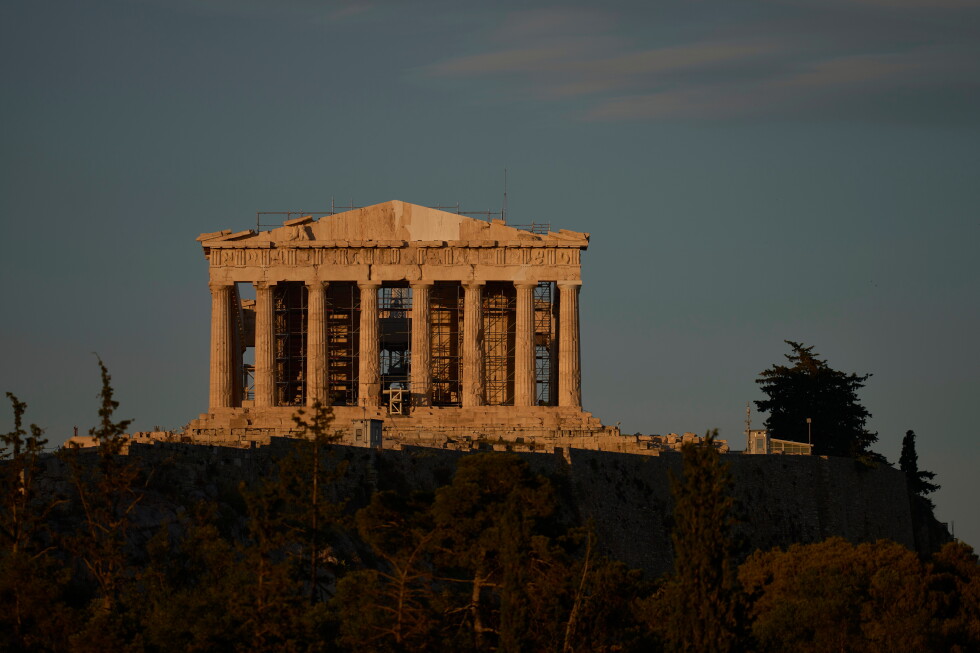
ATHENS, Greece — For travelers approaching the Acropolis for the first time, a long-lost piece of ancient history is once again visible: the western side of the iconic Parthenon, now whole for the first time in more than two centuries. This milestone in decades-long preservation work was formally presented to the public on Thursday, when conservation experts fitted two custom-carved marble blocks into empty gaps that have marred the temple’s entrance-facing end for generations.
Standing atop the hill overlooking the Greek capital, the 2,500-year-old architectural masterpiece is the country’s crown jewel of cultural heritage, drawing roughly 4.6 million tourists from across the globe each year. Centuries of conflict, natural weathering, and historical looting have left the structure with widespread damage, including the fragmented outline of its western facade that visitors have encountered since the early 1800s.
Greek Culture Minister Lina Mendoni called the newly restored view “truly stunning” during the unveiling. She emphasized that the project achieves far more than simply filling physical gaps in the stone. Beyond structural integrity, the addition of the new marble blocks lets modern visitors experience the full, harmonious proportions and precise geometric symmetry that the Parthenon’s ancient designers intended for its most visible face.
This latest phase of work was financed through a European Union cultural grant program, and it fits into a far larger, ongoing restoration initiative that first launched at the Acropolis site back in 1975. The decades-long project continues to address cumulative damage and preserve the monument for future generations of visitors.