Diplomatic breakthroughs between the United States and Iran have sparked cautious hope for an end to regional conflict, but stark disagreements over core terms, unresolved tensions in Lebanon, and competing domestic political pressures leave the final outcome far from certain. As of June 16, 2026, leaders from both nations have confirmed a preliminary memorandum of understanding aimed at de-escalating ongoing hostilities, with a formal signing ceremony scheduled to take place in Geneva this Friday.
US President Donald Trump confirmed the framework agreement during remarks alongside French President Emmanuel Macron at the G7 summit in France, noting that the virtual memorandum had already been signed electronically by himself, Vice President JD Vance, and Iranian Parliament Speaker Mohammad Bagher Ghalibaf. Trump added that the Strait of Hormuz, a critical global energy chokepoint that had been closed to commercial traffic for much of the conflict, is already partially open, and will be fully accessible to all vessels by the end of this week. He also announced he would not attend the Friday signing ceremony, and that Vance would travel to Geneva to sign the final document on Washington’s behalf.
Despite the optimistic messaging from Trump, public statements from Iranian officials reveal significant gaps between the two sides’ interpretations of the framework. Iranian President Masoud Pezeshkian called the memorandum an important incremental step toward ending hostilities and opening full negotiations, but emphasized that no binding final agreement has been completed. He added that Iran remains prepared for all potential outcomes, and that the government’s core priority will continue to be serving the Iranian people regardless of whether negotiations succeed. On the subject of the Strait of Hormuz, Iranian foreign ministry spokesperson Esmaeil Baghaei clarified that while Iran does not intend to impose arbitrary transit tolls on commercial shipping, it will charge standard fees for maritime services provided in the waterway, a detail that has yet to be addressed in US public statements.
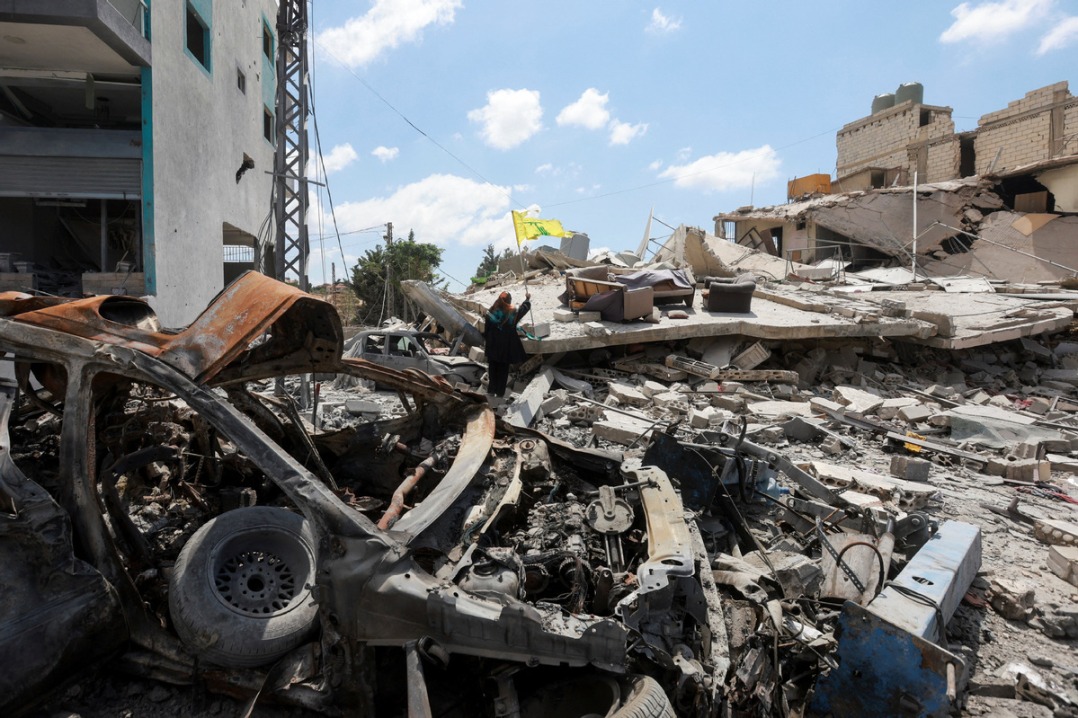
Unresolved tensions also extend to the Israel-Hezbollah front in southern Lebanon, where clashes between Israeli forces and the Iran-backed militant group continued on Monday despite the announced framework. Tehran claims the agreement includes a provision to end the Lebanese conflict, but Israeli Defense Minister Israel Katz rejected any call for withdrawal from occupied security zones in southern Lebanon, stating that Israel will not compromise on its national security interests. Katz warned that if Iran targets Israel over the situation in Lebanon, Israeli forces will respond with overwhelming force. Multiple hardline ministers in Prime Minister Benjamin Netanyahu’s far-right government have even gone as far as saying Israel will not be bound by any deal reached between Washington and Tehran. Trump was previously reported to be angered by Netanyahu’s decision to launch a major strike on Beirut ahead of the framework’s announcement, and Netanyahu acknowledged the rift in a Monday press conference, noting that the two long-time allies “sometimes agree and sometimes disagree” on policy.
Another major sticking point remains the status of billions of dollars in Iranian sovereign assets frozen in overseas bank accounts. Tehran has prioritized regaining access to these funds as a core condition for any final agreement, but Vance confirmed Monday that Washington has not agreed to release any frozen assets during the proposed 60-day ceasefire period outlined in the framework.
On Capitol Hill, prominent Republican and Iran critic Senator Lindsey Graham echoed widespread skepticism, noting that he is concerned by the clear disconnect between US and Iranian descriptions of the deal. Graham added that any permanent nuclear agreement with Iran will require full congressional review and an up-or-down vote before it can take effect.
Global energy markets reacted positively to the news of the framework, with oil prices dropping to their lowest levels since early March on Monday. Brent crude fell 4.8% to settle at $83.17 per barrel, while West Texas Intermediate crude dropped 4.9% to close at $80.75 a barrel, as investors bet that a de-escalation would reopen critical energy supply routes from the Middle East.
Mehran Kamrava, a professor of government at Georgetown University in Qatar, described the framework as a promising but incomplete step forward. “This is certainly a hopeful start and an indication that things are moving in the right direction. What we have is an agreement on a framework for further negotiations on some of the thorniest issues, particularly the nuclear program that Iran has had,” Kamrava told China Daily. He added that both sides faced significant pressure from domestic hardliners to avoid negotiations entirely, making the framework a breakthrough in its own right, even as the final outcome remains undetermined.
As the signing ceremony approaches, key questions remain unaddressed: whether the deal will meet Trump’s original war aims of preventing Iran from developing a nuclear weapon and eliminating its long-range missile arsenal, and whether domestic political pressures — including Trump’s need to end US involvement in the conflict ahead of November’s midterm elections — will push the administration to accept a flawed agreement that fails to resolve long-standing regional tensions.