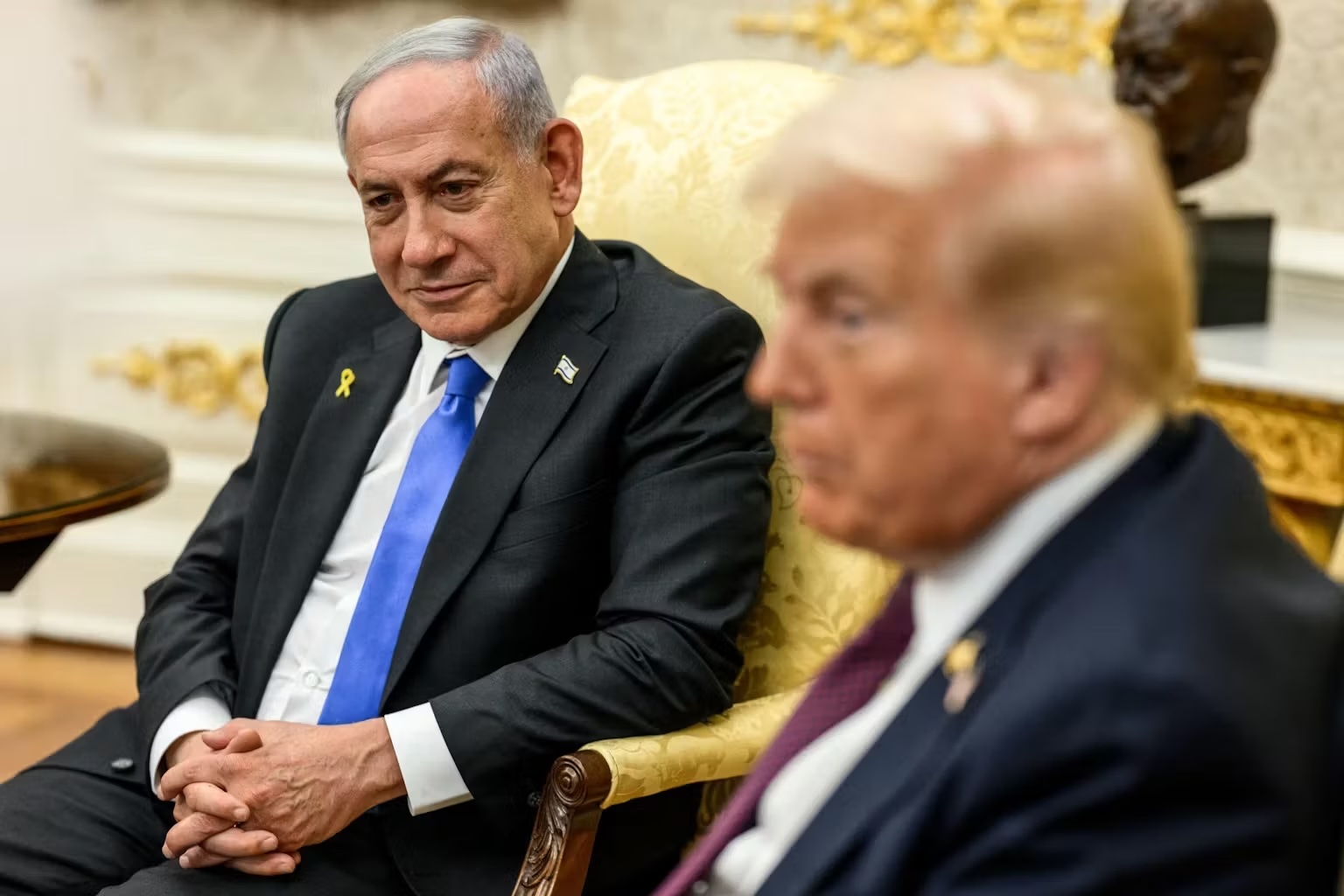
For nearly 30 years, Israel’s longest-serving prime minister Benjamin Netanyahu has built a legacy of clashing with sitting U.S. presidents, leaving even the most powerful leaders in the world reaching for expletives to express their frustration. A candid new analysis traces this long-running pattern of tension, revealing how Netanyahu’s strategic choices and the unique structure of U.S.-Israel relations have repeatedly put the two allies at odds – with escalating consequences that now threaten Israel’s long-standing bipartisan support in America.
The string of high-profile friction stretches back to 1996, when Netanyahu met newly elected U.S. president Bill Clinton for the first time. After Netanyahu delivered a lengthy, unsolicited lecture on the history of the Arab-Israeli conflict, an exasperated Clinton turned to his aides afterward asking, “Who the fuck does he think he is? Who’s the fucking superpower here?”
Relations between Netanyahu and Barack Obama were hostile from the start, and deteriorated rapidly after Obama launched negotiations for a landmark nuclear deal with Iran. In a 2011 open-mic incident years before the deal was finalized, then-French president Nicolas Sarkozy described Netanyahu to Obama as “a liar,” to which Obama replied: “You may be sick of him, but me, I have to deal with him every day.” Journalist Jeffrey Goldberg later documented that Obama’s senior staffers privately referred to Netanyahu with the scathing insult “chickenshit.”
Most recently, the pattern repeated with Donald Trump in June 2024, after Netanyahu ordered a military strike on Beirut, the capital of Lebanon. Concerned the attack would upend a fragile pending agreement to end escalating conflict with Iran, Trump lashed out publicly, saying Netanyahu has “no fucking judgment.” Even current president Joe Biden has joined the long list of frustrated leaders, with reports indicating Biden called Netanyahu a “fucking liar” over his management of the devastating post-October 2023 war in Gaza.
While many observers attribute this repeated friction to Netanyahu’s stubborn, single-minded personality, the analysis argues there is a deeper structural explanation rooted in the unique nature of U.S.-Israel relations. Unlike other foreign leaders who clash with U.S. presidents, sitting American chief executives cannot simply dismiss Netanyahu or cut off U.S. military and diplomatic support for Israel, thanks to the powerful, well-organized pro-Israel constituencies that exert major influence over U.S. domestic politics.
Netanyahu has actively leveraged this dynamic to advance his own policy goals, mobilizing U.S. domestic pro-Israel groups to pressure sitting presidents when their priorities diverge from his. In 1998, for example, when Clinton pressured Netanyahu to cede territory in the Israeli-occupied West Bank during a Washington visit, Netanyahu spoke the night before his meeting with Clinton to 1,000 members of the pro-Israel Christian right, a core constituency that openly opposed Clinton’s agenda, and held separate meetings with top Republican leaders. When Clinton met him the next day, he dryly noted, “I know where you were last night.”
This strategy reached new heights during the Obama administration, when Netanyahu rallied broad opposition within U.S. political circles to derail Obama’s Iran nuclear deal. Whenever Obama pressured Netanyahu to curb settlement expansion in the West Bank, Netanyahu stoked domestic U.S. political backlash that ultimately forced Obama to back down rather than absorb the political cost of confrontation.
In recent years, Netanyahu has doubled down on this approach by making a deliberate strategic choice to align himself closely with the U.S. Republican conservative right. This partisan alignment has amplified tensions with Democratic presidents, who have historically been more willing to challenge Israeli policy, and has turned U.S. support for Israel into an increasingly divisive partisan issue – a shift that critics warn has already eroded support for Israel among the American left.
The 2024 clash with Trump marks a major turning point, however: it is the first time a sitting Republican president has openly and harshly criticized Netanyahu, undermining the core of his long-standing partisan strategy. The analysis argues that over the past year, Netanyahu overextended his influence, pushing aggressively to draw the U.S. into a direct military confrontation with Iran, a goal he has pursued for decades. From Trump’s perspective, Netanyahu maneuvered the U.S. into a costly, intractable conflict that damages U.S. economic and global interests, and Netanyahu refuses to prioritize a quick cease-fire that would ease global economic pressure.
Today, the consequences of Netanyahu’s decades-long strategy are playing out against a dramatically shifted backdrop. Broad public support for Israel across the U.S. political spectrum has collapsed amid mounting casualties from the Gaza war, and even traditionally pro-Israel conservative voters are growing frustrated over the economic harm of the escalating regional conflict. Netanyahu now finds that his partisan alignment has left his country with no solid base of bipartisan support in the U.S. The article concludes that future Israeli leaders will likely look back at Netanyahu’s approach and share the frustrated assessment that led Trump to reach for a curse word – that the long-serving prime minister lacked the judgment to protect Israel’s most critical alliance.