Six decades of brutal armed conflict have left indelible, raw scars on the bodies and psyches of Colombians, and that unresolved trauma has taken center stage in the South American nation’s highly contested 2025 presidential runoff, where deep divisions over how to secure lasting peace have split even those who have suffered the most from violence.
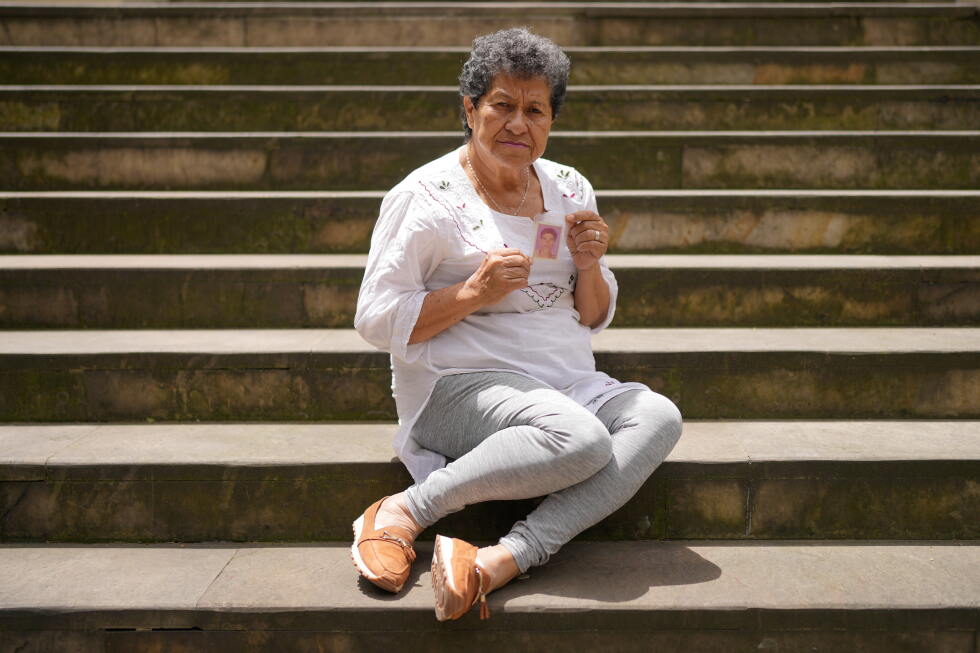
For 67-year-old Blanca Nubia Monroy, the trauma lives on in a black-and-white tattoo of the scales of justice etched into her forearm—an exact copy of the tattoo that helped identify the body of her 19-year-old son, Julián Oviedo Monroy, after he was kidnapped and extrajudicially killed by Colombian soldiers in 2008. For Sigifredo López, a 62-year-old former politician and FARC kidnapping survivor, it surfaces in unbidden flashbacks to the seven years he spent captive in guerrilla-held jungle, and the echoing gunshots that still haunt him from the 2007 massacre of his 11 fellow captive lawmakers.
These two conflict victims hold diametrically opposing views on who should claim the Colombian presidency in Sunday’s vote, yet they share one overwhelming core fear: that the outcome will drag the nation back to the dark, violent days of its past.
“Every bit of this leaves a mark, on your body and your mind,” López explained. “Emotionally, there’s a fear that simmers deep below the surface, something you don’t talk about openly—the fear that everything we’ve already survived could happen all over again.”
This election marks the most polarized political contest Colombia has seen in decades, pitting two candidates with fundamentally clashing visions for ending persistent violence against one another. Official government records show the 60-year armed struggle between Marxist guerrillas, state military forces, and right-wing paramilitaries has left more than 10 million Colombians—one in five people across the nation—victimized by killings, kidnappings, forced displacement, and other atrocities. Though a landmark 2016 peace accord with the Revolutionary Armed Forces of Colombia (FARC) brought a formal end to that group’s insurgency, low-intensity conflict continues to rage across large swathes of the Andean nation, making the future of peace the defining issue of the 2025 campaign.
Elizabeth Dickinson, deputy Latin America director for the International Crisis Group based in Bogotá, noted that societal polarization over how to address Colombia’s violence has been building for generations. “Increasingly, both sides see the conflict as an ‘us vs. them’ dynamic,” she said. “That’s extraordinarily dangerous in a country like Colombia with a long history of political violence. A spark could ignite at any moment.”
On the left stands Iván Cepeda, a longtime peace activist who has pledged to continue outgoing President Gustavo Petro’s “total peace” agenda. This framework centers on negotiating formal peace agreements with all active armed groups, from insurgent factions to drug trafficking organizations, in a radical departure from decades of military-first policy. But the strategy has failed to deliver on its promises: armed groups have exploited ceasefires to expand their territorial control and recruiting, driving a sharp rise in national violence that has fueled widespread public backlash.
On the right is Abelardo de la Espriella, a lawyer endorsed by former U.S. President Donald Trump, who has promised an all-out, countrywide military offensive against criminal groups, modeling his plan on Nayib Bukele’s controversial gang crackdown in El Salvador. While Bukele’s policy has drawn regional attention for cutting national homicide rates dramatically, it has also sparked widespread allegations of systemic human rights abuses and arbitrary detentions.
Monroy, who supports Cepeda, is reminded every day of the human cost of unaccountable military offensives. Her son, a young man who dreamed of joining the military to lift his working-class family out of poverty, was one of more than 6,400 civilian victims of the “false positives” scandal, one of the worst atrocities of Colombia’s long conflict. Between 2002 and 2008, under the administration of ex-President Álvaro Uribe, Colombian military officers systematically extrajudicially executed innocent poor civilians, then falsified records to label the victims as enemy combatants killed in combat with FARC. A dozen senior security officers later admitted their role in Monroy’s son’s death and apologized before the special peace tribunal established after the 2016 accord to uncover the truth of the conflict—a court de la Espriella has openly promised to dismantle.
While Monroy has criticized the rising violence that has occurred under Petro’s administration, and acknowledges Cepeda will need to take firmer action against criminal groups, her decision to back Cepeda is driven by a fear of what a de la Espriella presidency would bring. De la Espriella has publicly vowed to wipe out his declared enemies “like cockroaches, like rats,” language that echoes the rhetoric of the Uribe era that led to her son’s death.
“God willing, this man doesn’t come to power, because ‘false positives’ will become a reality again,” she said.
For López, the danger runs in the opposite direction. A self-identified leftist who survived seven years of FARC captivity between 2002 and 2009, he supports de la Espriella out of his own fear of a return to the jungle “hell” he endured. López was a local assemblyman in western Colombia when FARC, which had labeled politicians legitimate military targets, kidnapped him and 11 other lawmakers. He was in solitary confinement in 2007 when he heard the gunfire that killed all of his companions, a memory that still haunts him decades later. He survived to become a national symbol of the trauma of FARC kidnappings, which victimized more than 21,000 people over five decades of conflict. Today, he lives in Cali, the city where he was abducted, under constant state-provided security due to ongoing threats against his life.
Watching rising violence over the past four years has convinced López that the current negotiation-first approach has failed. In the past year alone, armed groups have deployed drones to carry out attacks, bombings have killed dozens of civilians, and one presidential candidate was assassinated in June 2025. In May 2025, the International Committee of the Red Cross reported that the impact of armed conflict on Colombian civilians had reached its worst level in a decade. This week, the National Liberation Army (ELN), Colombia’s largest remaining guerrilla group, announced a temporary ceasefire to avoid disrupting the election—but other active criminal and insurgent groups made no such promise.
“Colombia is being kidnapped,” López said. “I’m with Abelardo because his priority is to restore safety to Colombians. He understands that ‘total peace’ isn’t won by negotiating with criminals, but by exercising the legitimate force of the state.” López notes that under the current approach, victims of violence are being re-victimized over and over, and he fears for the next generation if current policies continue. “My fear is for the new generation, that the same thing that happened to me could happen to them if the country keeps being handed over to guerrillas and organized crime,” he said.
Just as Monroy fears the return of state-sponsored extrajudicial violence and López fears the continued spread of armed group power, both victims agree that the legacy of six decades of war hangs over this election, with the very future of peace in Colombia hanging in the balance.