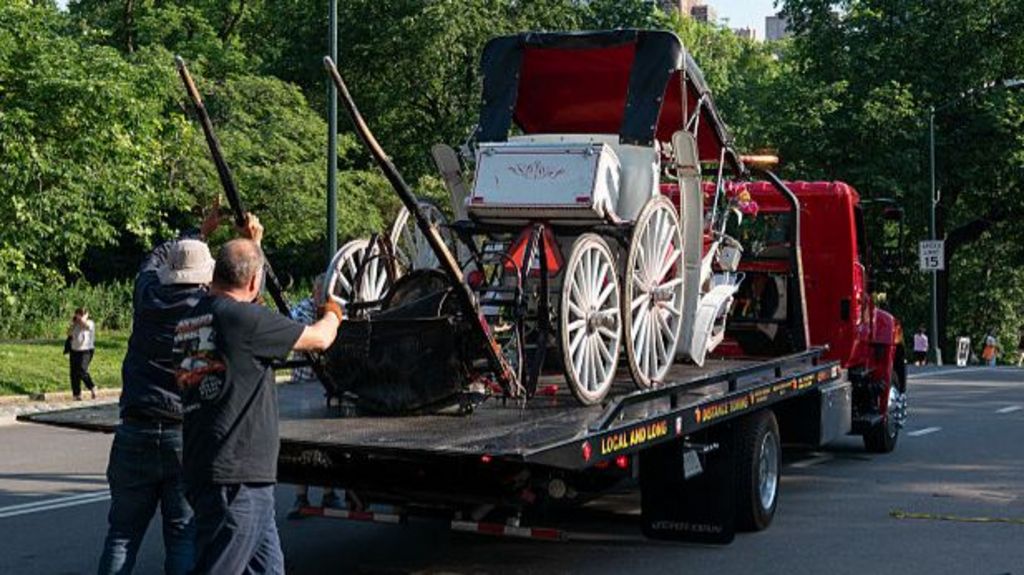
A devastating accident in New York’s iconic Central Park has claimed the life of an 18-year-old Indian tourist, who died after being thrown from a spooked horse-drawn carriage this week, NYPD officials have confirmed.
The young man was traveling on the carriage with three other companions when the licensed driver left his post to snap a photo of the group, law enforcement sources told national media outlets. Surveillance footage captured by witnesses shows the unattended horse bolted suddenly, collided with a second stationary carriage, and toppled the vehicle the tourist was riding in.
Emergency crews rushed the critically injured teenager to a nearby hospital, where he was pronounced dead shortly after arrival. The three other passengers escaped the incident without physical injury and did not need medical intervention, first responder reports confirm.
The tragedy comes exactly one week after a separate incident in the same popular tourist destination: a carriage horse named Deniz died after ingesting a toxic plant, according to preliminary autopsy results. The string of major incidents has thrown the decades-old debate over Central Park’s horse-drawn carriage industry back into the center of New York City politics.
Central Park’s horse-drawn carriage rides have long been a top draw for out-of-town visitors, but animal welfare and public safety advocates have fought for years to shut down the industry, warning that crowded urban conditions put both humans and horses at unnecessary risk. Newly elected Mayor Zohran Mamdani has repeatedly stated his support for removing the carriages from the park entirely.
In the wake of the fatal crash, local elected officials have doubled down on their push for legislative action to phase out the industry. City Council member Shahana Hanif called the two back-to-back incidents “heartbreaking reminders that horse-drawn carriages are unsafe for both horses and people” in a post on X, formerly Twitter.
Hanif emphasized that these tragedies are not one-off events, urging colleagues to advance Ryder’s Law, legislation that would end the tourist attraction over a two-year transition period and provide support for workers moving to new roles. “These incidents are not isolated. We must pass Ryder’s Law, end this outdated industry, and ensure a just transition for workers. New York can and must do better,” Hanif wrote.
Fellow Council member Harvey Epstein echoed that call, saying he was “horrified” by the “tragic accident.” “Time and again, we are seeing both horses and people suffer the consequences of an industry that poses serious risks to public safety and animal welfare,” Epstein said in a statement. “New York City can’t continue to ignore these tragedies.”
Union leaders representing carriage drivers also condemned the driver’s choice to leave the carriage unattended. Alexander Kemp, vice president of Transport Workers Union Local 100, told local media that “It appears the driver was at least at arm’s length from his horse. This is unacceptable. A driver is not supposed to leave the carriage to take photos – ever. We support a full investigation.”
Ryder’s Law, if passed, would see the city halt the issuance of new carriage licenses and wind down existing operating permissions over a two-year period, bringing the industry to a permanent close.