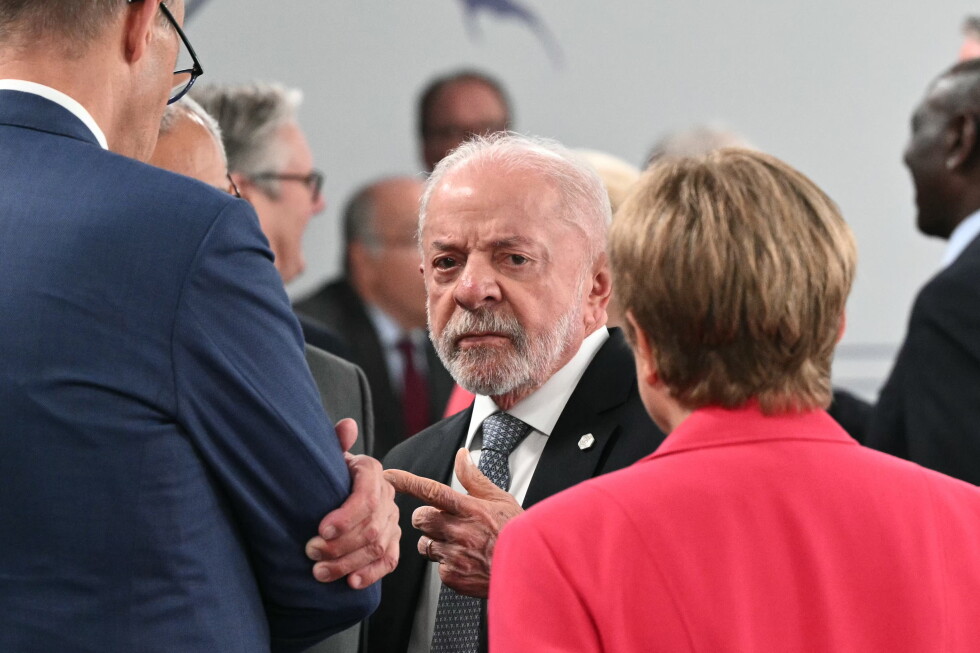
Following the recent conclusion of the G7 summit in Evian-les-Bains, France, a sharp exchange of words between Brazilian President Luiz Inácio Lula da Silva and former U.S. President Donald Trump has brought simmering cross-border tensions to a head, with Lula issuing a clear rebuke of U.S. interference in Brazil’s domestic political affairs ahead of the country’s October presidential vote.
The confrontation was triggered by fresh comments Trump made this Wednesday, in which he claimed Brazil had grown “politically dangerous” and alleged the Lula-led government was seeking to arrest a member of the Bolsonaro family who is performing strongly in pre-election polling. While Brazil’s Supreme Court convicted former lawmaker Eduardo Bolsonaro — one of ex-President Jair Bolsonaro’s sons — on Tuesday of coercive actions tied to his father’s 2023 coup trial, sentencing him to four years and two months in prison, Trump’s comment was widely interpreted to reference Flávio Bolsonaro, Jair Bolsonaro’s eldest son, who is Lula’s main challenger in the upcoming presidential race and has not faced arrest warrants. The court found Eduardo Bolsonaro guilty of illegally meddling in his father’s trial by lobbying U.S. officials to pressure Brazilian judicial bodies into halting proceedings.
When a journalist shared Trump’s remarks with Lula during a post-summit press conference, the Brazilian leader pushed back firmly. Lula argued that Trump’s comments revealed a fundamental lack of understanding of his country, rooted in his close ties to the Bolsonaro family. “If he knows Brazil through his relations with the Bolsonaro family, he doesn’t know Brazil,” Lula stated. “He can go on liking Bolsonaro — the father, the son, the grandson — that’s not my problem, it’s his. (…) But don’t interfere in Brazil’s elections, because Brazil’s elections are Brazil’s business.”
This public clash is the latest in a series of growing rifts between the Lula administration and the Trump-led U.S. government that stretch back more than a year. Shortly after Eduardo and Flávio Bolsonaro traveled to Washington D.C. for meetings with Trump and other U.S. officials, the Trump administration took two controversial steps that Lula has openly opposed. First, it designated two of Brazil’s largest drug trafficking organizations, First Command Capital and Red Command, as foreign terrorist groups. On Wednesday, Lula repeated his criticism of this designation, noting that while the groups do inflict violence on Brazilian communities, their core goal is illicit profit rather than ideological political change, disqualifying them from the terrorist label.
Second, the Trump administration has proposed imposing a new 25% tariff on Brazilian imports, basing the move on unsubstantiated claims that Brazil — the world’s 10th largest economy — engages in unfair trade practices. Lula even traveled to Washington earlier this year in a diplomatic push to convince Trump to abandon the tariff plan, making the final proposal all the more disrespectful in his view. Lula restated his grievance over the tariff this week, saying “I think what he did was disrespectful toward Brazil. He knows that. That’s why I said he still behaves like an emperor. We were negotiating an agreement.”
Additional longstanding tensions stem from U.S. sanctions imposed on Brazilian Supreme Court Justice Alexandre de Moraes, a move the Trump administration justified by claiming the judge’s prosecution of Jair Bolsonaro was politically motivated. Bolsonaro, who lost the 2022 Brazilian presidential election to Lula, was convicted of orchestrating a coup attempt to remain in power, a process Lula has repeatedly defended as a legitimate part of Brazil’s judicial system. Lula has repeatedly framed U.S. actions, from the tariffs to the sanctions, as violations of Brazil’s national sovereignty, dating back to last year when Trump first imposed trade restrictions and called Bolsonaro’s prosecution a “witch-hunt trial.”
As Brazil heads toward a highly competitive presidential election, the open confrontation between Lula and Trump underscores the deepening divide between the two countries and the growing risk of external interference in Brazil’s democratic process.