EVIAN-LES-BAINS, France – U.S. President Donald Trump has long been known for his skepticism of large-scale international leader summits, even cutting his 2023 G7 appearance short to return to Washington early just one year prior. But at this year’s gathering held in the scenic French Alpine resort of Evian-les-Bains, Trump emerged with a far more enthusiastic posture – buoyed by widespread backing from fellow G7 leaders for his newly struck tentative agreement with Iran to end ongoing hostilities.
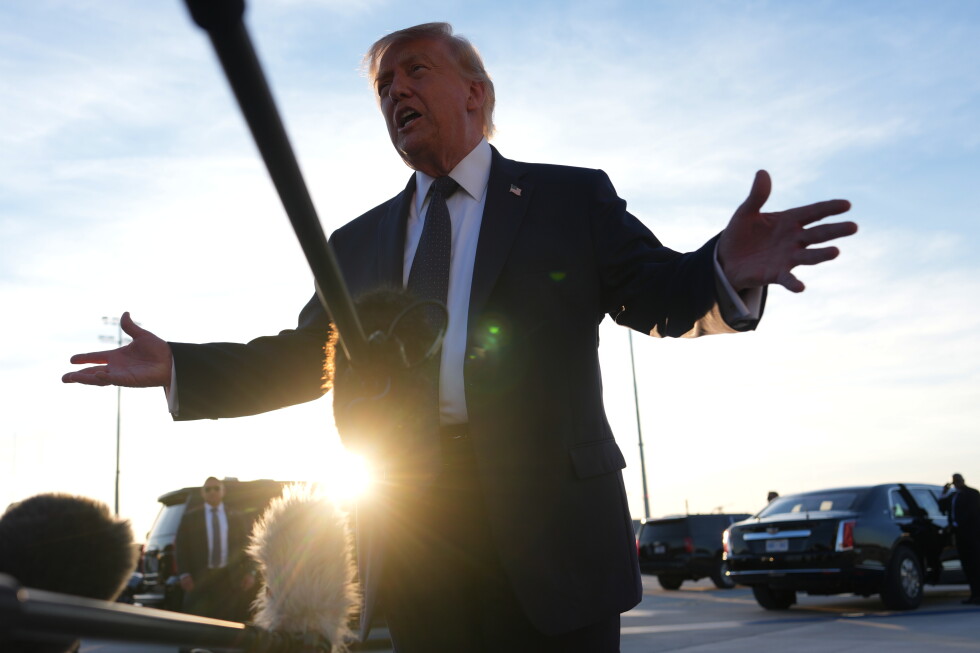
The shift marked a stark reversal from just weeks earlier, when Trump had openly lambasted U.S. allies for refusing to join Washington and Tel Aviv in launching bombing campaigns against Iran to force the rollback of its nuclear program. Now, standing before reporters at the close of the three-day summit, Trump struck a unifying tone. “We found a great deal of unity here at the G7,” he told the press corps, adding that he had received nothing but positive feedback from other leaders, who share Washington’s goal of lowering volatile global oil prices in the aftermath of the Iran conflict. “This meeting could not have come at a better time.”
Beyond the Iran deal, the summit delivered a series of notable shifts and outcomes across key global issues, from the ongoing war in Ukraine to economic tensions with China, and even the format of the summit itself. Here are the major takeaways from Trump’s trip to France:
### A Clear Blame-Shifting Strategy for the Iran Deal
True to his long-documented pattern of claiming credit for successes while deflecting responsibility for setbacks, Trump has positioned Vice President JD Vance as the party on the hook if the Iran agreement fails. Vance, who took a leading role in negotiating the deal, has spearheaded a cross-country media push to promote the agreement while Trump attended the G7, and is set to represent the United States at a formal ceremonial signing in Switzerland scheduled for Friday.
When a reporter asked if Trump’s plan was to claim credit as a political “genius” if the deal succeeds, while pinning blame on his second-in-command if it collapses, Trump did not shy away from the framing. “I like that idea, sure,” he said. “This way, if it works out, I’m going to take the credit. If it doesn’t work out, I’m blaming JD. You better be careful, JD.”
### Unlikely Unity Emerges on Two Long-Divisive Issues: Iran and Ukraine
For months, G7 leaders have been deeply at odds with Trump over both Iran and Ukraine, with European leaders openly criticizing Trump’s decision to launch hostilities against Iran without any prior consultation with allies. But by the final day of the summit, the bloc had closed ranks: in an official joint statement, all seven leaders welcomed the tentative Iran deal and explicitly acknowledged that “the strong leadership of President Trump” was instrumental to reaching the agreement.
The gathering also delivered a breakthrough on Ukraine, another issue where Trump had long clashed with European allies. Trump has repeatedly claimed Ukraine holds “no cards” in its war against Russia and that Kyiv must make territorial concessions to Moscow to reach a negotiated end to the conflict. But after three days of closed-door talks, Trump agreed to join his fellow leaders in reaffirming “unwavering support for Ukraine.”
The joint statement called on all nations to ramp up deliveries of air defense systems, interceptors, and long-range military capabilities to Ukraine, and commended Kyiv for “its resilience and progress on the battlefield in recent months.” European leaders, who have become the largest providers of military and financial aid to Ukraine, said they made meaningful progress in convincing Trump that Ukraine is capable of holding its own against Russia – contradicting the hardline position Trump laid out to Ukrainian President Volodymyr Zelenskyy in 2023. Macron also invited Zelenskyy to participate in portions of the summit to make his case directly to leaders.
### Contradictory Messages on China Undermine Bloc Unity
While G7 leaders presented a united front on Iran and Ukraine, cracks emerged on economic policy toward China. The bloc centered its discussion on what leaders describe as China’s practice of flooding global export markets with heavily subsidized goods, a trend they say has eroded manufacturing jobs across G7 economies.
French President Emmanuel Macron opened the discussion by arguing that Beijing’s trade practices are a core driver of global economic imbalance, pointing specifically to what he called China’s systemic industrial overcapacity, excessive state subsidies for manufacturing, and chronically weak domestic consumer demand. In their closing joint statement, G7 leaders affirmed shared concern: “We seek to deter and stand ready to take actions, where necessary in a coordinated manner, against economic coercion,” the statement read.
But Trump immediately undercut the bloc’s unified message with his own closing remarks, where he thanked both China and Russia – which has long aligned politically with Iran – for remaining neutral during the Iran conflict. Trump noted that Chinese President Xi Jinping and Russian President Vladimir Putin “could have made it much more difficult for us” if they had chosen to intervene on Iran’s side, and specifically thanked Xi for refusing to supply or sell weapons to Tehran. “I just want to thank them, because they made it a lot better,” Trump said.
### The Enduring Value of In-Person Diplomatic Dialogue
As with all G7 summits, the 202X gathering faced criticism for its significant carbon footprint from the travel of dozens of leaders and their large delegations, the massive security deployment that disrupted daily life for local residents, and widespread public protests against the bloc’s policy priorities. But the informal, dialogue-focused format that has defined G7 summits since their launch in 1975 proved its value at this year’s meeting, giving U.S. allies nearly three full days to engage directly with Trump and advance their policy priorities.
That engagement paid particular dividends on the Ukraine war, European officials said, after months of growing rifts between Washington and the bloc over Kyiv’s future.
### Macron Secures a Full Summit Stay: A Versailles Dinner Wins Out
Last year, Trump left the G7 summit in Canada early, before the official closing of the gathering. To avoid a repeat snub, Macron turned to a time-tested diplomatic tool: an invitation to a private dinner at the opulent Palace of Versailles, located just southwest of Paris. The gambit worked.
Trump, who has openly spoken of his appreciation for grand historic architecture and luxury properties, agreed to stay through the entire summit. The 18th-century royal palace carries deep symbolic weight for U.S.-French relations: it was at Versailles that King Louis XVI pledged French military support to Benjamin Franklin and the American revolutionary movement in 1778, a turning point in the U.S. war for independence. More recently, Macron hosted King Charles III and Queen Camilla at the palace in 2023 to mark the 400th anniversary of the palace’s construction, with a state dinner held in the iconic Hall of Mirrors, one of the most famous spaces in the palace’s 2,300-room complex. Macron described the 202X dinner for G7 leaders as a “convivial” occasion meant to celebrate the long-standing friendship between the United States and France.
Superville reported from Geneva. Associated Press writer Collin Binkley in Washington contributed to this report.