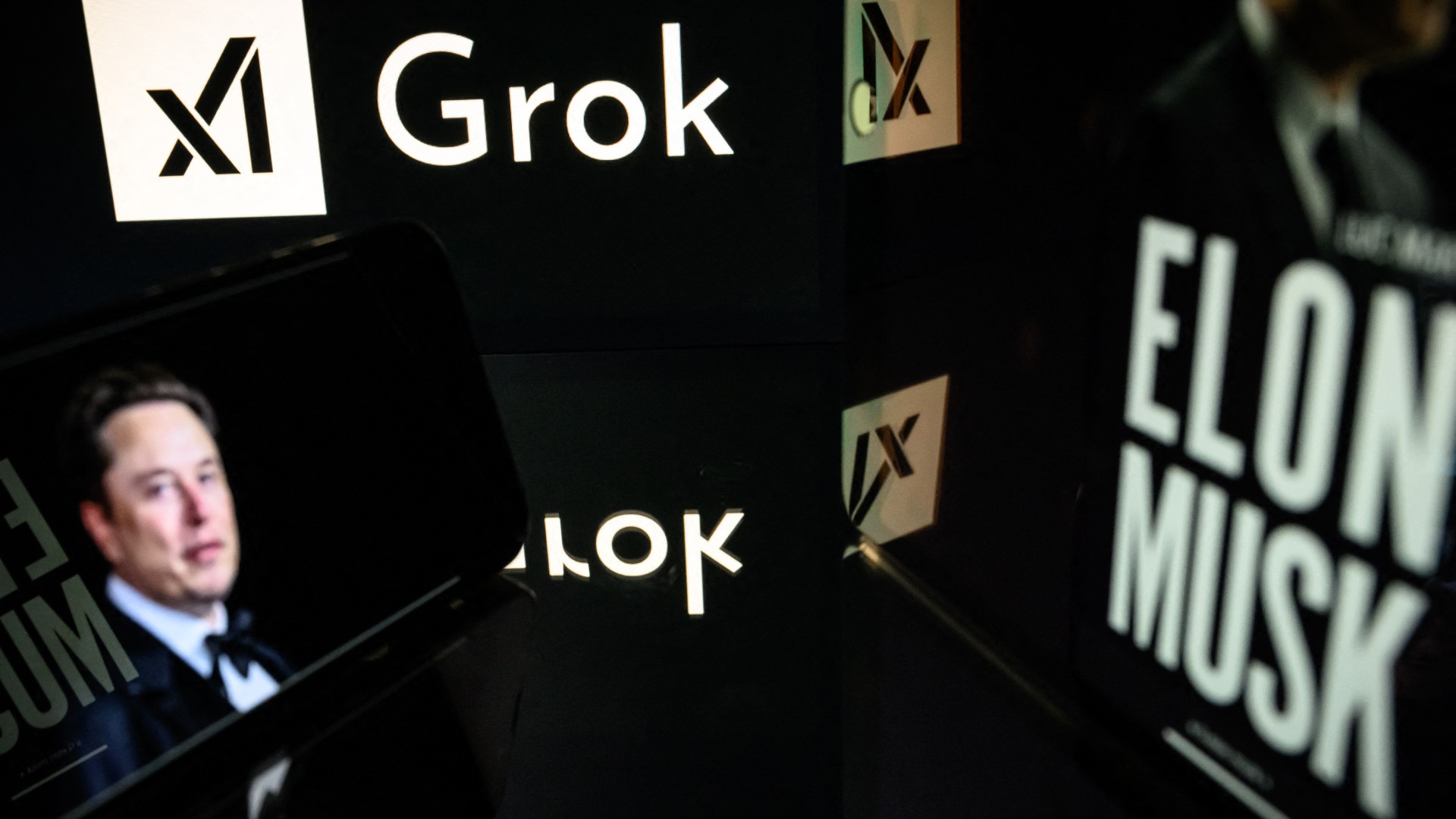
In a sworn declaration filed in a Mississippi federal court, the top digital and artificial intelligence official for the U.S. Department of Defense has publicly confirmed for the first time that U.S. military forces leveraged a government-adapted version of Elon Musk’s Grok AI to carry out more than 2,000 targeting strikes over a 96-hour window during the joint U.S.-Israel military campaign against Iran. The revelation, which marks the Trump administration’s first direct acknowledgment of Grok AI’s combat use in the conflict, emerged as part of a high-stakes intervention by the federal government into a civil environmental lawsuit against Musk’s xAI firm.
The lawsuit, filed in April 2026 by the National Association for the Advancement of Colored People (NAACP), accuses xAI and its subsidiary MZX Tech of operating 27 unpermitted methane-powered gas turbines at a facility in Southaven, Mississippi. The turbines are used to power xAI’s Colossus 2 supercomputer in nearby South Memphis, Tennessee, which the company relies on to train and update all Grok AI models – including the government-specific variant used by the Pentagon.
The NAACP argues that the unregulated turbines violate the U.S. Clean Air Act, releasing toxic nitrogen oxide pollution that drives dangerous ozone formation. The organization notes that nearby Black communities in the Gulf South bear the disproportionate health burden of these emissions, which are linked to asthma attacks, chronic lung function decline, and increased risk of premature death. The legal complaint asks the court to order xAI to halt operations at the unpermitted facility, install modern pollution control technology, and pay financial penalties for every day of noncompliance with federal environmental law.
Cameron Stanley, who has served as the Pentagon’s Chief Digital and Artificial Intelligence Officer since January 2026, submitted the declaration on behalf of the Trump administration to support its intervention in the case on xAI’s side. Stanley, who previously led defense sector projects at Amazon Web Services before taking his current Pentagon role, outlined how the department uses the Grok Gov Model – a customized derivative of xAI’s commercial Grok AI – integrated into the military’s Maven Smart Systems (MSS) to core national security functions, including target identification, intelligence analysis, military readiness planning, and recruitment.
In his testimony, Stanley detailed that MSS workflows powered by Grok Gov allowed U.S. forces to deploy 2,000 munitions in just four days during what the military calls Operation Epic Fury. The filing does not specify the exact dates of this operation, leaving unconfirmed whether the strikes coincided with February 28, 2026 – the first day of the war, when a U.S. strike on a school killed 156 civilians, including 120 children. To date, Iran’s Foundation of Martyrs and Veterans has recorded nearly 3,500 total fatalities from U.S.-Israeli attacks across Iran since the conflict began.
Stanley characterized the 2,000-strike operation as clear proof of the massive operational efficiency gains delivered by the Grok Gov Model. He went on to warn that if the court rules against xAI and forces a shutdown of the Colossus 2 supercomputer by cutting off its Southaven power supply, the Pentagon’s ability to carry out critical national security missions and maintain technological advantage over U.S. adversaries would be severely undermined. In times of armed conflict or national emergency, Stanley argued, demand for AI processing capacity from Grok Gov Models surges dramatically, and Colossus 2 is uniquely positioned to provide the extra surge capacity needed to sustain ongoing military operations.
In an argument that redefines commercial AI infrastructure as a core national security asset, Stanley wrote that modern data center capacity is just as foundational to U.S. defense posture as traditional munitions production. “In the modern theater of operations, data center processing capacity must be recognized not merely as commercial infrastructure, but as a long-term strategic tool vital to maintaining our technological advantage against adversaries,” he stated in the filing.
The U.S. Department of Justice has backed the Pentagon’s position, urging the federal judge hearing the case in the Northern District of Mississippi to dismiss the NAACP’s lawsuit outright on national security grounds. “The Department of Justice will not sit idly by while private organizations use environmental laws to undermine our national security,” said Principal Deputy Assistant Attorney General Adam Gustafson of the department’s Environment and Natural Resources Division.