In the bustling open-air bars of Kinshasa, the capital of the Democratic Republic of Congo, Prosper Mbumba and his wife Régine Ntumba sit together reflecting on a years-long journey shaped by centuries-old cultural tradition. When the pair married, they planned for just two children — but unyielding custom demanded one of those children be a son. Four daughters later, they continued trying, only breathing a sigh of relief when their first son finally entered the world. For Mbumba, a human rights activist from the Luba ethnic group, raising only daughters once carried the weight of social shame. “In my tribe, in my culture, that was like an insult,” he explained. “I should do my best to get more children, expecting to have a boy.” Today, after welcoming two sons, Mbumba says he finally feels a quiet sense of completion.
This personal story is far from unique across sub-Saharan Africa, a region grappling with the world’s highest rate of maternal mortality. Home to the planet’s fastest growing population, sub-Saharan Africa accounts for 70% of all global maternal deaths, with roughly 180,000 preventable pregnancy-related deaths recorded across the continent each year, according to World Health Organization data. While global maternal mortality rates have declined gradually over recent decades, multiple interconnected forces keep the death toll stubbornly high in this region — from underfunded healthcare systems and widespread shortages of skilled medical personnel, to limited access to contraception, and deep-seated cultural pressure that forces women into repeated, dangerous pregnancies in pursuit of male heirs.
Across much of sub-Saharan Africa, entrenched social norms frame sons as the only acceptable heirs to preserve clan lineage and family legacy, since daughters typically join their husband’s clan after marriage. This belief is so deeply woven into the social fabric that many women themselves internalize it, accepting repeated risky pregnancies as an unavoidable part of married life. Congo exemplifies this crisis: UN data puts the country’s total fertility rate at 5.9 children per woman, one of the highest in the world, driven both by cultural preference for large families, early marriage, and systemic barriers to contraception access.
Patrick Djemo, a medical doctor who leads MSI Reproductive Choices in Congo, says the pressure to produce sons disproportionately harms women. “A lot of pressure is exerted on couples, and, as you know, mostly it is the woman who is blamed for giving birth to a girl,” Djemo explained. He added that men often use their traditional decision-making power to block their partners from accessing contraception, even when women want to stop having children. MSI Reproductive Choices operates in seven of Congo’s 26 provinces, providing contraception, reproductive counseling, and legal safe abortion to women across rural and urban areas.
Current data from the UN Population Fund shows that roughly 29% of Congolese women of reproductive age have an unmet need for family planning — meaning they want to stop having children or space out their pregnancies but lack access to effective contraception. Congolese authorities have recognized the scope of the crisis and launched a five-year strategic plan aimed at guaranteeing universal access to affordable, high-quality family planning services for all women of childbearing age by 2026. But delivering on that promise remains an enormous, uphill challenge: Congo covers an area roughly the size of Western Europe, with cripplingly poor infrastructure and ongoing armed conflict in its eastern regions that disrupts access to healthcare for millions.
Annie Tshiamala, head of Congo’s national association of midwives, has witnessed the human cost of this pressure first hand for more than 30 years. She still recalls one particularly harrowing case: a 40-something woman, bloodied after a difficult ninth delivery, who immediately asked if the newborn was a boy. The woman already had eight daughters, and her marriage hung in the balance over her failure to produce a male heir. When a colleague revealed the baby was another girl, Tshiamala says the woman broke down in despair: “Oh, my Lord. Why?” Tshiamala herself has faced similar pressure from her own mother-in-law, who demanded she have more children after she gave birth to four sons. Refusing the demand, she says, was only possible because her husband supported her choice.
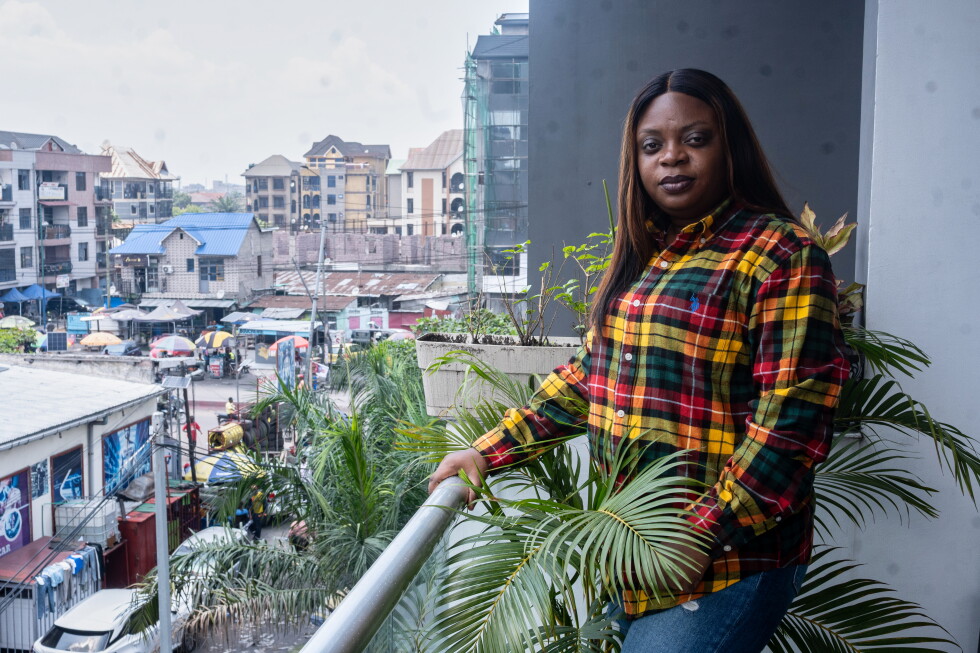
Even educated, professional women in urban Kinshasa are not spared this social coercion. Gloria Masanka, a radio presenter for the country’s national broadcaster, is mother to two young daughters after a decade of marriage. She has already suffered two miscarriages and develops dangerous high blood pressure during pregnancies, but her in-laws still demand she keep trying for a son. “When you don’t have boys, you are not worth respect,” Masanka said, explaining that without a male heir, the family name is seen as lost. The pressure has sparked repeated family conflict: her husband has even openly threatened to take a girlfriend to father a son if she cannot.
This investigation into maternal mortality in Africa is supported by the Gates Foundation, with The Associated Press retaining full editorial control over all content.