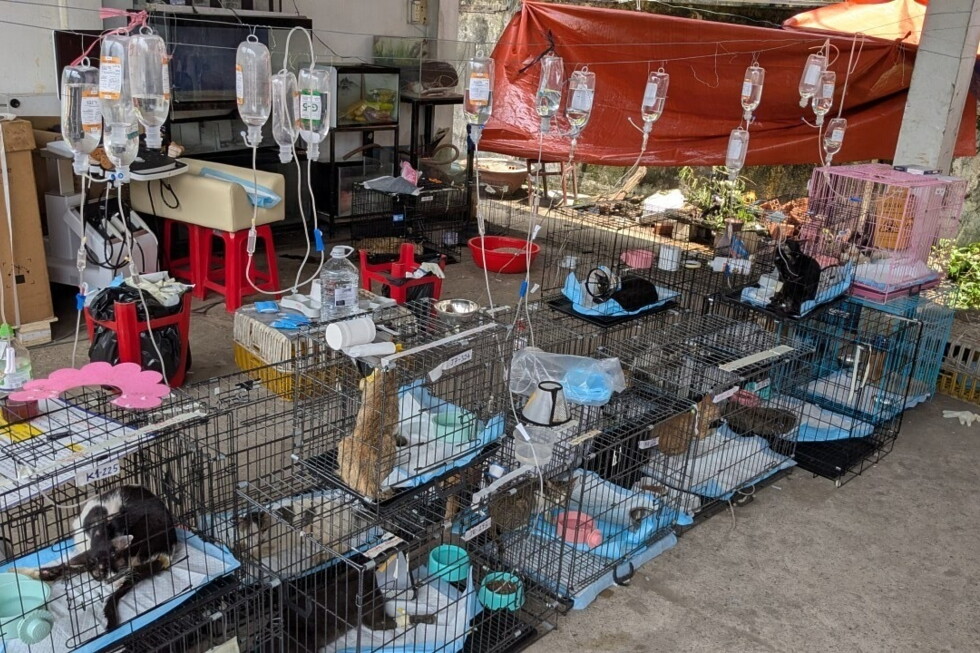
In a landmark crackdown on the illegal cat meat trade in southern Vietnam, law enforcement in Ho Chi Minh City have broken up a large-scale criminal ring, seizing more than 500 cats in what animal welfare advocates call one of the country’s biggest cat rescue cases in recent years. The multi-day operation, launched last week in response to a growing wave of reported pet thefts across the city, has ended a three-year run of illicit activity for the criminal network, with nine suspects taken into custody, local law enforcement confirmed.
According to official statements from the Ho Chi Minh City Criminal Police Division, officers uncovered 45 cages holding roughly 400 live cats at the ring’s main operation site, plus four foam containers packed with ice that held around 80 dead cats. An additional 21 live cats were recovered from a secondary storage location, bringing the total number of seized cats to more than 500. The suspects have reportedly confessed to trapping and stealing cats across three southern Vietnamese provinces — Ho Chi Minh City, Tay Ninh, and An Giang — over the past three years, supplying the animals to the commercial cat meat trade.
Despite the successful bust, the outcome carries a heavy toll for the rescued animals. Animal welfare groups report that around 100 of the seized cats have already died from neglect, due to the extreme overcrowding and unsanitary conditions the ring kept them in. So far, just over 40 of the surviving cats have been reunited with their heartbroken owners who reported them stolen. Chris Gindelhumer, a representative of the local nonprofit Vietnam Cat Welfare who is supporting emergency care for the surviving animals, described the emotional weight of the aftermath of the bust.
“It’s really beautiful to see how many Vietnamese families are coming, looking for their cats,” Gindelhumer said. “But it’s also heartbreaking because many families were looking for their cats and didn’t find them.” He added that dozens of veterinarians and community volunteers have been working around the clock to provide medical care and shelter to the surviving cats, a response that has drawn widespread public support.
Karanvir Kukreja, who leads the global campaign against dog and cat meat consumption for the international nonprofit Humane World for Animals, called the bust a sobering wake-up call about the massive scope of the unregulated cat and dog meat trade in Vietnam. Kukreja noted that millions of companion animals fall victim to theft rings each year, with stolen pets and stray animals alike slaughtered for human consumption.
Currently, the commercial sale and consumption of cat and dog meat remains legal in Vietnam, requiring only official permits to verify animal origins. But shifting policy winds are already underway: the central tourist city of Hoi An has already partnered with international welfare organizations to phase out the trade entirely within city limits. And following South Korea’s national ban on dog meat implemented in 2024, Vietnamese national officials have announced plans to revise the country’s existing animal and pet protection legislation to strengthen legal safeguards for pets and their owners.
For local cat lovers like An Pham, a Ho Chi Minh City-based graduate student and animal welfare advocate, the high-profile bust has already shifted public conversation around the cat meat trade. “This event surprised a lot of people and has raised awareness among many to stop consuming cat meat,” Pham said. Advocates hope the case will build momentum for broader national reform to end the illicit trade that targets millions of beloved pets each year.