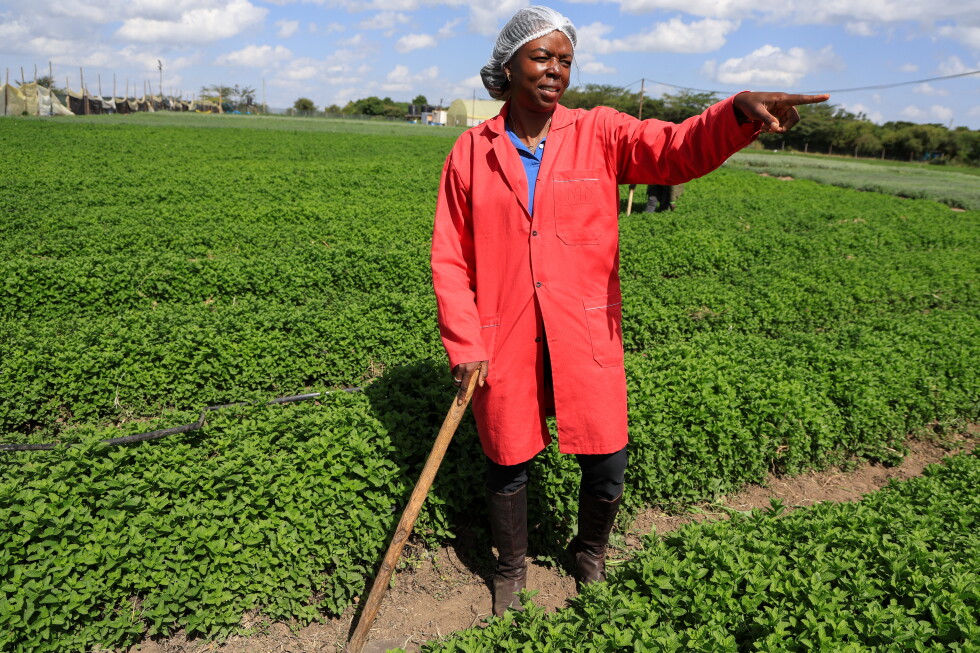
On a crisp early morning in Kenya, smallholder farmer Yvonne Anyonyi Mumiah walks between neat rows of aromatic rosemary, fragrant basil and other fresh produce bound for grocery store shelves across Europe. Not long ago, her livelihood hung on a knife edge: a single transport delay or unseasonable heatwave could turn an entire season’s hard work into spoiled, unsellable waste. Today, that uncertainty has been replaced by security, thanks to an accessible solar-powered cold storage service that keeps her harvest fresh until it is ready to ship.
Mumiah’s new solution comes from SoKo Fresh, a Kenyan cold-chain enterprise that offers a flexible pay-per-use model, billing farmers only for the volume of produce they store. This innovative approach is part of a rapidly growing movement across Africa that leverages renewable energy to solve one of the continent’s most persistent agricultural crises: widespread post-harvest food loss.
According to estimates from the United Nations Food and Agriculture Organisation, as much as 40% of all food grown across Africa goes to waste between the moment it is harvested and the moment it reaches consumers. The root cause of this crisis is not poor farming practice, but gaping holes in infrastructure: insufficient, inadequate storage, transportation and processing systems that leave perishable goods vulnerable to spoilage.
Unlike traditional cold storage, off-grid solar-powered cold rooms, cooling hubs and warehouses do not require connection to Africa’s often unreliable and expensive main electricity grids. This model is already gaining traction across multiple sub-Saharan nations, including Kenya, Nigeria, Ethiopia, Rwanda and South Africa.
For millions of smallholder farmers like Mumiah, purchasing a personal standalone solar cold storage unit – which costs roughly $30,000 upfront – is entirely out of reach. That makes shared pay-per-use models transformative. “You can do everything right on the farm, but if the produce is not stored properly, you lose both the product and income,” Mumiah explained. “We are no longer forced to sell immediately because we fear the produce will spoil. We can wait for collection and still maintain quality.” This flexibility alone has boosted both the quality of her harvest and her overall income.
As climate change drives rising global temperatures and disrupts supply chains around the world, reliable cooling infrastructure has become more critical than ever. Across major agricultural nations like the United States, China, Japan and the Netherlands, sophisticated, extensive cold-chain networks keep fresh produce marketable for weeks after harvest. But for most of Africa, this essential infrastructure has long been a missing link in the agricultural value chain.
Rising temperatures have only worsened the crisis: extreme heat speeds up spoilage for perishable goods from leafy greens and fruits to dairy and fresh fish. Meanwhile, inconsistent grid power makes traditional electric or diesel-powered refrigeration prohibitively expensive and impractical for most rural farming communities.
“Cold storage remains one of the missing links in Africa’s agricultural value chains,” said Emmanuel Aziebor, regional director for Africa at CLASP, a non-profit organisation that supports the deployment of energy-efficient, productivity-driving technologies. “When farmers can store produce for longer, they gain access to better markets, reduce waste and increase incomes.”
Early data from on-the-ground projects already confirms this impact. SoKo Fresh reports that it has cut average post-harvest spoilage for participating farmers from as high as 50% to less than 2%, while helping producers boost their per-kilogram earnings by up to 50%.
The model is being adapted to fit local agricultural needs across the continent. In Nigeria, leading firm ColdHubs has installed solar-powered walk-in cold rooms in major agricultural hubs, allowing farmers and local traders to rent space by the day instead of taking on the cost of buying their own equipment. In Rwanda, solar refrigeration supports dairy cooperatives, streamlining milk collection and cutting waste for small-scale dairy farmers. In Ethiopia, cold-chain investments are expanding rapidly to support the country’s fast-growing horticultural export sector.
Analysts note that these solar-powered innovations deliver two key public benefits at once: they strengthen African food security at a time of growing climate risk, and they cut greenhouse gas emissions compared to traditional cold storage solutions. Most legacy cold storage systems in off-grid areas rely on diesel generators, but solar alternatives eliminate fuel costs, reduce operating expenses, and cut the carbon footprint of agricultural supply chains.
Yet experts argue that the most transformative impact of these projects is economic, not just environmental. For decades, international development efforts across Africa have prioritized expanding household electricity access, but far less attention has been paid to how that power can be used to generate income for rural communities. “We have neglected the conversation around how people can turn electricity into opportunity,” Aziebor noted. “We keep extending electricity infrastructure, but unless people can use that power productively, the economic benefits never fully materialize.”
Cold storage is just one of many solar-powered productivity tools transforming African agriculture. Solar-powered irrigation systems now enable year-round farming instead of relying on erratic seasonal rains, while solar milling and processing equipment allow rural communities to add value to their crops close to the farm, cutting transport costs and increasing earnings.
Despite the clear success of pilot projects, widespread scaling across the continent faces one major barrier: access to affordable funding. “The challenge today is not demonstrating that these systems work,” said Carol Koech, vice president for Africa at the Global Energy Alliance for People and Planet. “It is building enough bankable projects that can attract larger pools of investment and scale across countries.”
While grants, low-interest loans and donor support can help cover the high upfront capital costs of building new cold storage hubs, industry leaders note that attracting large-scale commercial investment remains challenging. Most African agricultural markets are fragmented, and the sector is dominated by millions of small-scale producers, which many institutional investors see as a high-risk profile. “These investors see emerging technologies as high risk because we lack enough proven business models with reliable returns,” SoKo Fresh CEO Denis Karema said. “That makes funding for our type of projects expensive.”
This reporting on climate and the environment from The Associated Press is supported by funding from multiple private foundations, and AP maintains full editorial control over all content. Details of AP’s standards for working with philanthropic partners, a full list of supporters, and an overview of funded coverage areas are available at AP.org.