Against a backdrop of widespread loss and death in the Democratic Republic of the Congo’s Ituri province, moments of joy have broken through at local Ebola treatment facilities — moments that could turn the tide in the fight against the unfolding outbreak.
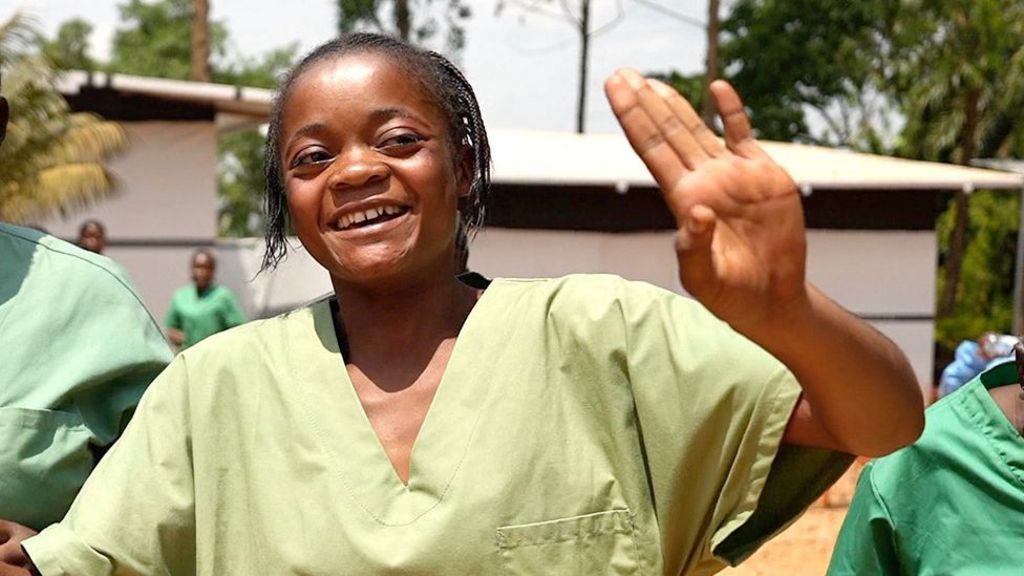
On a Friday just after noon, a dozen frontline healthcare workers in green scrubs formed two lines along the marked exit path of Mongbwalu’s Ebola treatment center, singing hymns of gratitude as they escorted 49-year-old Daniel Kitambala out of the facility. Two consecutive negative diagnostic tests confirmed he had cleared the rare Bundibugyo Ebola strain after three weeks of care, bringing the subsistence farmer his long-awaited discharge.
“That disease is terrible. I was feeling very ill when I came here. But God is great, I am well now,” Kitambala told the BBC, beaming with relief as he carried a bag of his sterilized personal items. Raising his hands three times in a victory salute, he urged community members to seek prompt care if they develop Ebola symptoms, echoing a message that has slowly started to shift local skepticism of treatment facilities.
Ituri province was declared the epicenter of the new Ebola outbreak just over a month ago, but health officials now confirm the virus has likely spread undetected in the region for months. To date, more than 140 confirmed deaths have been recorded from the Bundibugyo strain, which kills roughly one in five people it infects. Five frontline health workers have already died from the virus, with several more still undergoing treatment, though updated infection prevention protocols and personal protective equipment have lowered risk for care teams since the outbreak was formally declared. A new on-site laboratory installed at Mongbwalu’s hospital two weeks ago also cut wait times for test results from more than a week to just 24 hours, speeding up care and contact tracing.
For months, dangerous misinformation and local myths have undermined response efforts. The most widespread belief, dubbed the “coffin curse,” blames a series of early deaths on the burning of a broken coffin that carried a deceased person from the provincial capital Bunia for burial in Mongbwalu, rather than the virus itself. Long before the outbreak was confirmed, false rumors that treatment centers spread disease circulated through communities. In May, attackers set fire to an Ebola treatment tent at Mongbwalu hospital, and a treatment center in the second outbreak epicenter of Rwampara was burned two days later, mirroring attacks on care facilities during the 2018-2020 Ebola outbreak in neighboring North Kivu.
But a string of recent recoveries has begun to turn public opinion. Deogratias Kasereka, a 55-year-old pastor, became the first patient to be discharged from the Mongbwalu center a week before Kitambala, and his safe return home has already driven more community members to seek care voluntarily.
“We have seen a huge difference in the community since the first patient recovered and returned home. More people are coming here now seeking treatment,” said Dr. Richard Lukodu, medical director of Mongbwalu hospital. Lukodu added that he remains optimistic that these success stories will help rebuild trust in local healthcare, a critical shift after years of violence fueled by misinformation around Ebola response.
Mongbwalu mayor Sesereki Mandro Israel confirmed that the situation is gradually improving, after early misdiagnosis slowed response — initial tests targeted more common Ebola strains, not Bundibugyo, delaying confirmation of the outbreak. Community leaders have since been mobilized to educate residents on Ebola symptoms and direct suspected cases to treatment centers.
In Rwampara’s reopened treatment center, where strict safety protocols separate patients from visitors via glass barriers, 2-meter gaps, and isolated cubicles for severe cases, Mireille Gahindo is already looking ahead to her discharge. Both Gahindo and her 11-month-old child tested positive for Ebola after the infant developed a fever that failed to respond to initial local care, and both are now recovering. “I feel very happy. I’m looking forward to going back home,” she said, eager to reunite with her two other young children and her husband.
For many local families, the pain of the outbreak has already been profound. Eli Asimwe Bawere, who came to the Rwampara center to visit his sister, brother, and stepmother, told the BBC he had already lost his mother and sister-in-law to the virus. “We have mourned a lot. We don’t want to mourn any more,” he said.
Every patient recovery brings a small, vital wave of hope to a region grappling with widespread death, but health officials warn major gaps remain in the response. To fully stop transmission, every contact of a confirmed Ebola case must be traced and monitored — officials confirm many exposed people are still missing, meaning the fragile optimism of recent weeks could quickly fade if the virus continues to spread undetected.