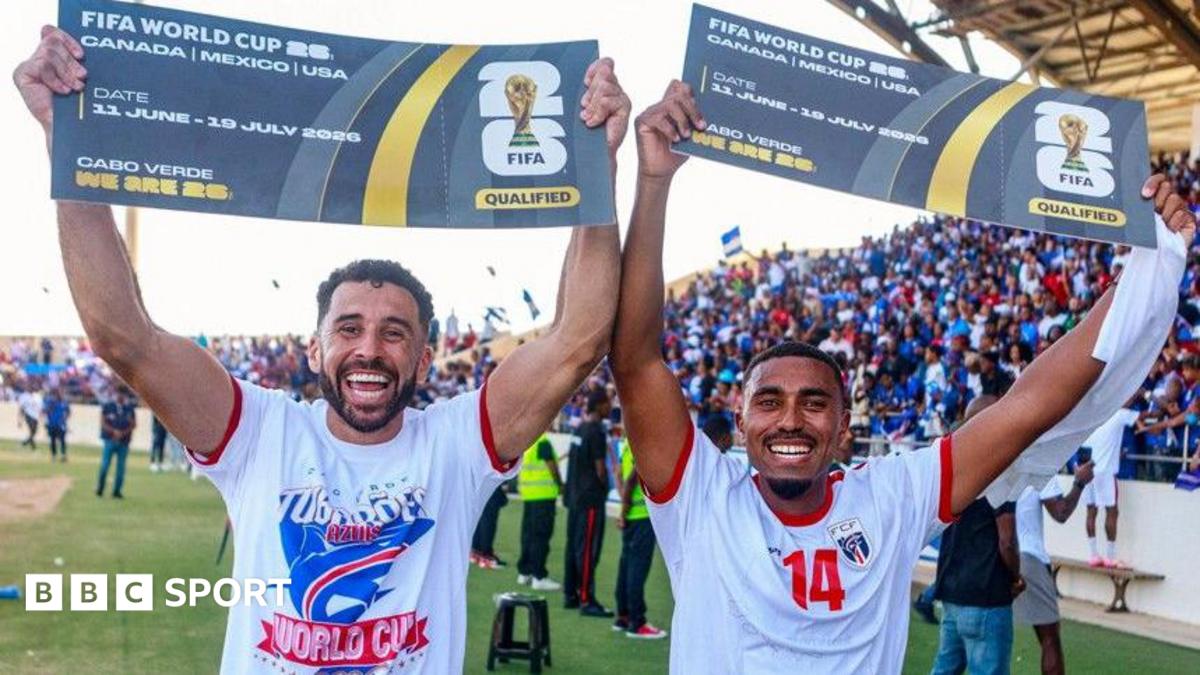
The 2026 FIFA World Cup will bring one of its most extraordinary underdog stories to the global stage when tiny Atlantic island nation Cape Verde makes its first ever tournament appearance, headlined by the incredible journey of defender Roberto Lopes, who went from a part-time footballer working a Dublin desk job to starting against 2010 champions Spain.
At 33, Lopes’ path to the world’s biggest sporting stage reads like a Hollywood script. A decade ago, he was a newly certified mortgage adviser grinding through a 9-to-5 office job he disliked, turning out part-time for Irish side Bohemians after work. It was not until 2017 that Dublin rivals Shamrock Rovers gave him the life-changing chance to pursue football full-time, a gamble he took without hesitation.
The next twist in his journey came through an unlikely channel: LinkedIn. In 2019, then-Cape Verde head coach Rui Aguas discovered Lopes’ father was born in the African island nation, and reached out to invite him to join the national side nicknamed the Blue Sharks. Lopes, who had previously represented Republic of Ireland at under-19 level, initially mistook the Portuguese-language message for spam and ignored it for nine months. When Aguas followed up, Lopes translated the message and jumped at the opportunity immediately.
“From when I was a young child, and I imagine every aspiring footballer when they were young, they wanted to play at the highest level possible and, for me, it doesn’t go any further than the World Cup,” Lopes told BBC Sport. “Being able to represent my family playing for the national team and being able to put our family name out there at one of the biggest sporting events in the world fills me with great pride.” Just days after helping Cape Verde secure World Cup qualification, Lopes welcomed his first child, son Diego, with wife Leah, capping off a whirlwind period of achievement.
Lopes’ story is just one part of Cape Verde’s decades-long climb to global football prominence. The nation of just 525,000 people, a former Portuguese colony that gained independence in 1975 and only joined FIFA in 1986, has shocked the global football community to reach the tournament. For generations of Cape Verdean footballers, this moment was once unthinkable.
Anselmo “Jair” Ribeiro, who played for the Blue Sharks in 2000 when the side was ranked 182nd in the world, recalled the challenges of that era: when he played, he had to pay for his own plane tickets to represent the national team, and even many people he met had never heard of his country. Today, the Blue Sharks sit 67th in the FIFA rankings, have qualified for four Africa Cup of Nations tournaments, and will become one of the smallest nations by population to ever compete at a World Cup. Locals call the qualification the biggest moment for the country since independence, a staggering rise for a football association that employs only seven full-time staff and sells match tickets out of local bakeries and petrol stations.
For the large Cape Verdean diaspora in the United States, the team’s first World Cup match – to be held in Atlanta, just a 1,000-mile trip from the U.S.’s largest Cape Verdean community in Massachusetts – is a moment of unprecedented national pride. At Thony’s Barbershop in Boston’s Dorchester neighborhood, owned by Cape Verdean immigrant Antonio Alves, the shop is decked out in Blue Sharks colors, and every conversation for months has revolved around the tournament. Alves, who will attend the opening match in person, has set up the shop’s large television to broadcast the game live for local fans, complete with free snacks and drinks.
Massachusetts is home to between 70,000 and 90,000 Cape Verdean residents, whose ancestors first arrived as whalers in the 1850s. Alves, who left Cape Verde for the U.S. at 18 and has funded tickets for local children to attend Cape Verde’s home matches, says the unlikelihood of the Blue Sharks’ run has united the entire community. Alves was in Praia, Cape Verde’s capital, when the team beat Eswatini to secure qualification, and recalls fans crying with joy as the historic result sank in.
“The rest of the world said, ‘No chance, no way are Cape Verde getting this close’. But here we are,” Alves said. “This is the power of sport. There are a lot of people in this community who don’t follow football, but they’ve been coming into the shop to ask questions. When’s the game? Where’s the game? Can I watch? This is the power of sport, getting people together.” Cape Verde kicks off its historic Group H campaign against Spain on Monday, with matches against Saudi Arabia and Uruguay to follow, as the Blue Sharks aim to become the first African debutant since Ghana in 2006 to advance to the knockout stage.