It has been nearly three years since that iconic sunny winter afternoon at Qatar 2022’s Lusail Stadium, when Saudi Arabia pulled off what remains one of the most shocking upsets in men’s FIFA World Cup history. Trailing Argentina by a single goal at the halftime break, the Green Falcons roared back with two quick second-half strikes to secure a 2-1 win over the side that would eventually lift the tournament trophy. For Saudi football, that result erased the painful memories of past World Cup humiliations: the 8-0 rout by Germany in 2002 and the 5-0 opening-match defeat to Russia in 2018 were no longer the first story the world associated with the kingdom’s national side. Instead, global attention turned to Saudi Arabia’s passionate fanbase and its rapidly evolving football culture.
Buoyed by the global hype generated by the Argentina upset, the Saudi Pro League (SPL) moved quickly to capitalize on its newfound momentum. Within months, top-flight club Al-Nassr secured the high-profile signature of Portuguese icon Cristiano Ronaldo. Six months after the World Cup, Saudi Arabia’s sovereign wealth vehicle, the Public Investment Fund (PIF), acquired controlling stakes in the kingdom’s four biggest clubs and began bankrolling the signings of dozens of global football superstars.
Three years on from that massive cash injection, the transformation of Saudi domestic football is impossible to ignore. SPL sides now consistently dominate Asian club competition, and the starting lineups of the kingdom’s top clubs feature some of the biggest household names in the global game. The gap between the SPL and established top European leagues was highlighted last year when Riyadh powerhouse Al-Hilal pulled off a stunning 4-3 upset over European champions Manchester City in the Club World Cup round of 16.
Yet for all the glitz, success and global attention the SPL has earned, one gaping hole remains: the massive investment has yet to translate to any tangible improvement in the performance of Saudi Arabia’s national men’s team.
Many long-time observers and fans remain optimistic that change is on the horizon, especially with the 2034 FIFA World Cup set to be hosted on Saudi soil. “It is great that we have some of the best players and coaches now in Saudi Arabia. It has only been a couple of years [since PIF invested], but maybe we will see a jump by the time we host the World Cup,” Nasser Khalfan, an Al-Hilal supporter who plans to attend the club’s pre-season tour matches in the U.S. this summer, told Middle East Eye.
In many ways, the legendary 2022 win over Argentina covered over deep structural flaws in Saudi football. When the Saudi football authorities increased the foreign player quota from five to eight then 10 per starting lineup, requiring just three domestic Saudi players on the pitch at any time, the crisis for the national side only deepened. The stark disconnect between big-spending domestic club investment and stagnant national team performance has drawn widespread comparisons to China’s failed top-flight experiment a decade earlier.
Back in 2017, the Chinese Super League (CSL) outspent the English Premier League in the transfer market, with total expenditure crossing €1 billion. The big-money project ultimately failed to lift the quality of China’s national team, and authorities abandoned the approach in favor of financial sustainability, introducing a 600 million yuan (€76 million) annual cap on total club football spending and strict salary limits for both domestic and foreign players.
To avoid falling into the same unsustainable debt trap, PIF has actively sought outside investment to reduce the kingdom’s financial exposure. Already, a 70% stake in Al-Hilal has been sold to prominent Saudi investor Prince Al-Waleed bin Talal, and a number of smaller top-flight clubs including Al-Riyadh, Abha, Al-Fateh, Al-Tai and Al-Shoulla have been listed for sale to private investors. The move comes after Saudi football required a $333 million government bailout in 2018, and policymakers have made clear they have little appetite for repeating that exercise.
Despite the structural concerns, most Saudi fans remain enthusiastic about the transformation of their domestic game. Khalfan argues that even with the slow progress on the national side, the investment has already changed football for the better in the kingdom. “Yes, the government spent a lot of money, but I think it is changing sport in Saudi Arabia for the better. I remember before the 2018 World Cup we sent players to Spain [on loan] and they did not play for their clubs. Now Saudi players have some of the best players in the world as their teammates,” he explained.
Tangible results for the national team have yet to materialize, and the Green Falcons’ recent competitive record remains underwhelming. Just days after the historic 2022 win over Argentina, Saudi Arabia lost consecutive group-stage matches to Poland and Mexico, crashing out of the tournament in the opening round. The team has also struggled in continental Asian competition.
For long-time Saudi football fans, top-tier success is not an unrealistic dream: the kingdom made its Asian Cup debut in 1984 and won the tournament in its first appearance, before going on to reach five more finals and claim two additional titles between 1988 and 2007. That run of success captured the imagination of football fans across the Arab world, so much so that when the iconic Japanese football anime *Captain Tsubasa* was dubbed into Arabic, it was renamed *Captain Majed* in honor of legendary Saudi striker Majed Abdullah. But today, these historic triumphs are largely lore for most Saudis: the kingdom’s median age sits just under 24, meaning the majority of the population was not alive the last time the national side won a knockout-stage match at the Asian Cup, two decades ago.
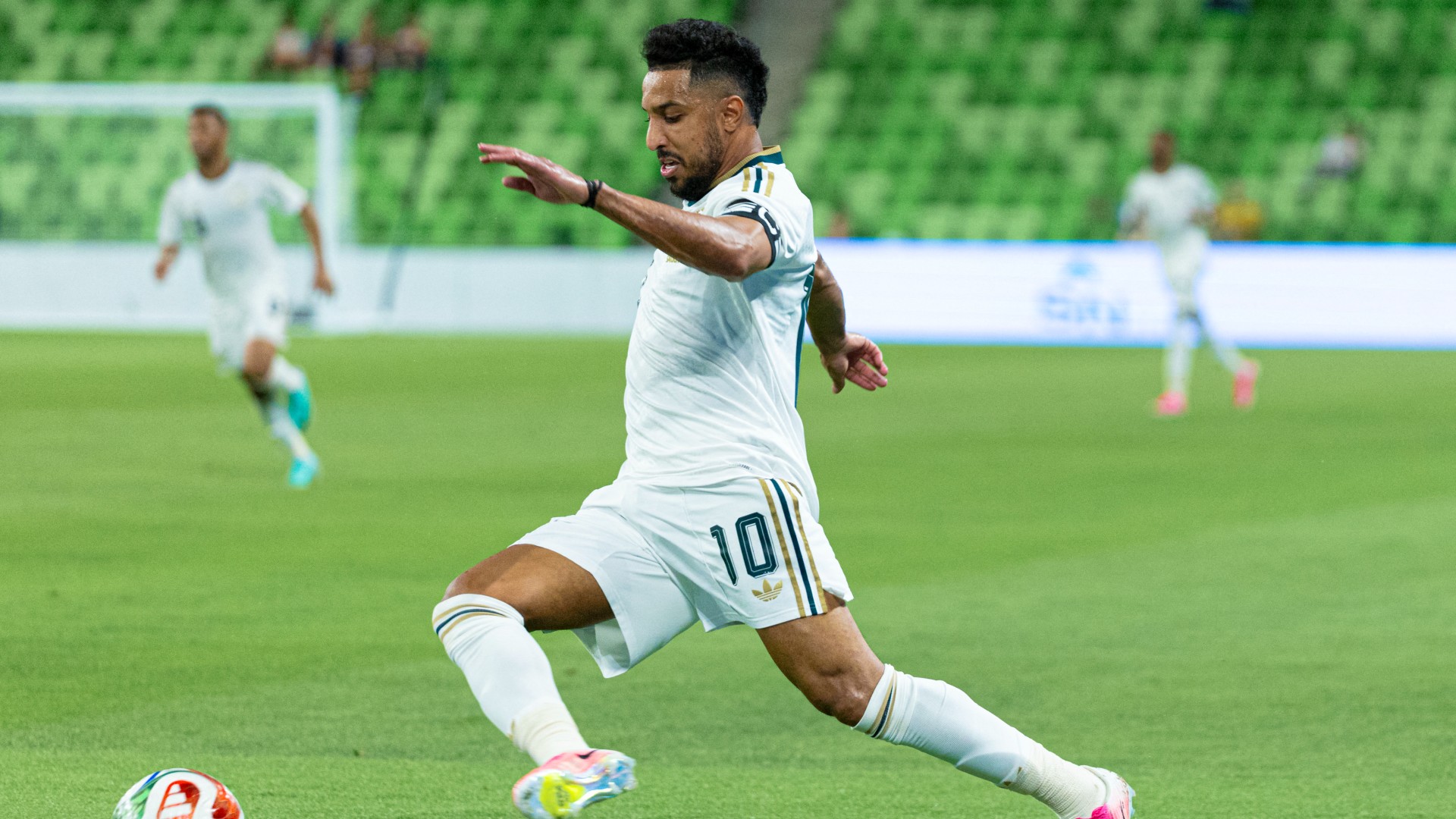
The road to 2026 World Cup qualification has been fraught with turmoil. In a high-profile hire, the Saudi Football Federation poached manager Roberto Mancini from the Italian national team in August 2023, luring the coach who led Italy to a surprise 2020 European Championship title with a four-year contract worth $100 million. Mancini’s remit was simple: replicate his Italian magic with the Green Falcons and turn them into a global contender. But the Italian manager lasted just 14 months in the role, leaving the side stuck in mid-table of World Cup qualifying with just five points from four matches. In his final press conference, he publicly blamed star player Salem al-Dawsari for missed penalties in disappointing draws against Indonesia and Bahrain.
Facing the very real prospect of missing out on 2026 World Cup qualification, the federation turned to a familiar face, reappointing former manager Herve Renard. Renard steadied the ship just enough to secure qualification, but was dismissed shortly after a lopsided 4-0 defeat to Egypt in March 2025. His replacement, Giorgios Donis, was hired specifically for his experience coaching in the SPL, but has been given less than six weeks to prepare the side for its 2026 World Cup opener.
This year marks Saudi Arabia’s seventh appearance at the FIFA World Cup, where it has been drawn into a tough group with European powerhouse Spain, South American giant Uruguay and African contender Cape Verde. The national side’s most pressing flaws are visible at both ends of the pitch: despite billions in investment, the Green Falcons have struggled to find goals, managing just 10 strikes in their last 12 World Cup qualifying matches.
“I would be more concerned if they weren’t creating chances,” Paul Williams, founder of Asian football outlet *The Asian Game*, told Middle East Eye. “The issue comes down to finishing … and you can’t fix finishing in a week. That’s going to be an issue.” At the other end of the pitch, none of the three goalkeepers called up to the 2026 World Cup squad is a regular starter for their SPL club, raising serious questions about the side’s ability to withstand the high-powered attacks of Spain and Uruguay.
Williams remains cautiously pessimistic about the team’s 2026 chances: “I’m not downbeat on their chances. I’m not bullish on their chances, either. They have the talent. Let’s see if they can deliver.”
With the 2027 Asian Cup set to be hosted in Saudi Arabia in just six months’ time, and the 2034 World Cup just nine years away, Saudi fans are hoping a strong run at this year’s World Cup can kickstart a new era of regional and global football dominance for the Green Falcons.