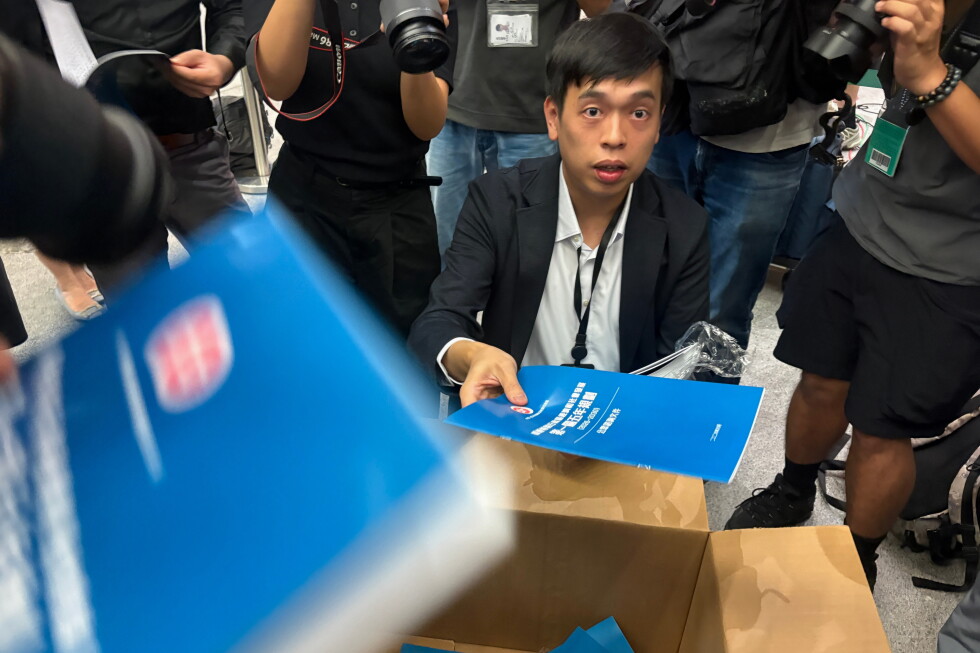
In a move that marks a notable shift in how the special administrative region frames its long-term growth strategy, Hong Kong kicked off a two-month public consultation on its first ever five-year development blueprint on Monday, bringing the city’s planning framework more closely into alignment with mainland China’s national development approach.
Speaking at an official press conference to launch the consultation, Secretary for Constitutional and Mainland Affairs Janice Tse laid out the core logic of the new planning structure: mainland China has already commenced work on its 15th five-year national plan, covering the 2026–2030 period, and Hong Kong’s local blueprint is designed to synchronize with this national agenda while preserving the city’s long-standing commitment to free market principles. For decades, Hong Kong has positioned itself as a bastion of limited government intervention in the economy, even as it has referenced Beijing’s national vision for the city’s role within China’s broader growth story.
Tse emphasized that alignment with the national five-year plan does not override Hong Kong’s free market system. Instead, she argued, clear strategic direction from government across major policy areas creates a more stable, predictable operating environment that lets market forces flourish more effectively. Under the draft framework, Hong Kong will double down on strengthening its established status as a global financial, maritime and trade center. Officials also outlined two key priority development projects: accelerating construction of the Northern Metropolis, a planned new tech and education hub located directly across the border from mainland China’s leading tech center Shenzhen, and deepening integration across the Guangdong-Hong Kong-Macao Greater Bay Area, Beijing’s flagship initiative to build a unified economic hub across 11 cities including Hong Kong, Macau and nine mainland Guangdong municipalities.
Hong Kong Chief Executive John Lee previously framed the five-year plan as a framework to balance what he calls a “capable government” and an “efficient market”, arguing that proactive government leadership will boost the private sector’s overall competitiveness. Lee also noted that the plan will help individual Hong Kong residents identify clear personal development pathways and give greater clarity for businesses doing long-term strategic planning.
To gather public input, residents will be able to submit feedback via an official government website, email or traditional postal mail over the consultation period. The government will also host a series of engagement sessions with residents, industry stakeholders and political figures to collect on-the-record input. Officials have targeted the third quarter of this year to publish the finalized, approved version of the five-year plan. Separately, a senior Beijing official overseeing Hong Kong and Macau affairs is scheduled to arrive in Hong Kong on Tuesday for a two-day working visit focused on studying progress toward aligning the city’s development with the 2026–2030 national plan and advancing the Northern Metropolis project.
The shift toward formal five-year planning has drawn mixed commentary from local analysts. John Burns, a professor of politics and public administration at the University of Hong Kong, noted that Hong Kong has long struggled with coordination gaps and missed opportunities due to the absence of overarching long-term strategic planning. At the same time, he pointed out that public consultation processes in Hong Kong have long faced criticism for being performative, with authorities rarely making substantive changes to proposed policies even after receiving critical public feedback.
Burns described the consultation as an effort by the government to build community buy-in for a local five-year plan explicitly structured to align with central government priorities, adding that the current consultation document does not include concrete, measurable targets or binding timelines for key initiatives.
Contextual background helps frame the significance of this policy shift: since the 1997 handover that returned Hong Kong to Chinese rule after more than 150 years of British colonial administration, the city has grown increasingly integrated with mainland China through expanding economic, cultural and infrastructure ties. Under Beijing’s “one country, two systems” framework, Hong Kong retains its own independent executive, legislative and judicial systems, but Beijing’s political influence over the city has grown substantially in recent years. Following large-scale anti-government protests in 2019, Beijing imposed a sweeping national security law on the city that authorities have framed as essential to restoring stability, but which has effectively eliminated all open political dissent. Hundreds of opposition activists have been jailed under the law, and a subsequent electoral overhaul has ensured that Hong Kong’s legislature is dominated exclusively by politicians loyal to Beijing.