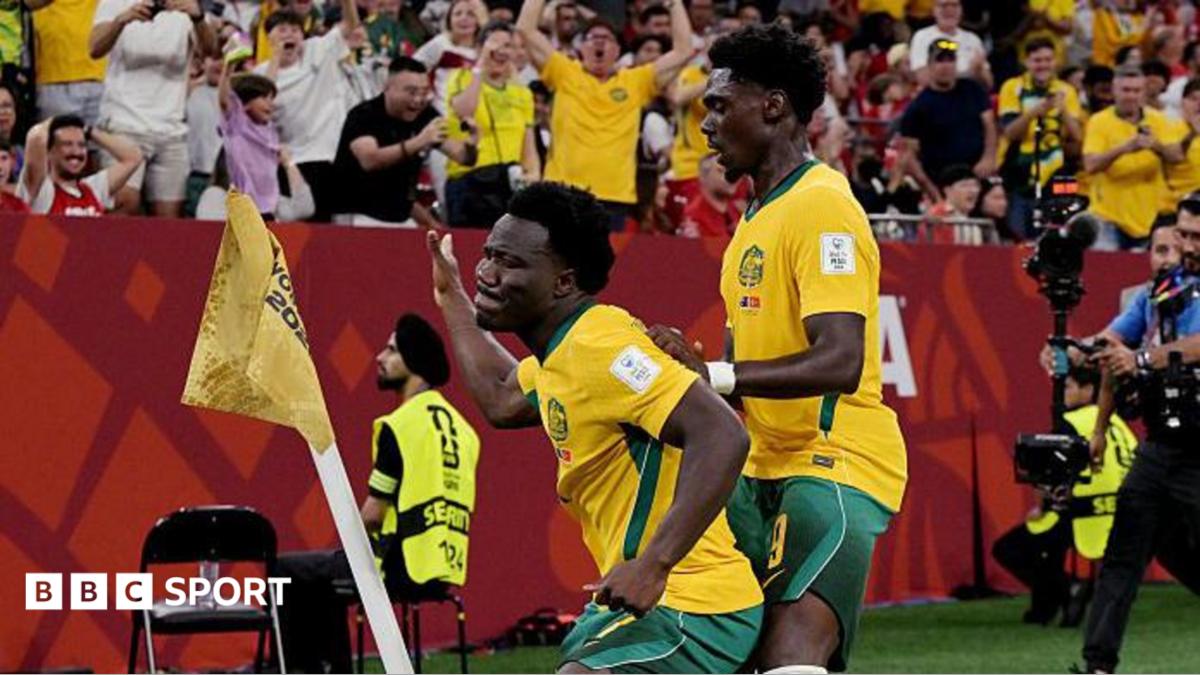
The 2026 FIFA World Cup has already delivered one of its most heartwarming and historic underdog stories, as 20-year-old Australia forward Nestory Irankunda etched his name into Socceroos folklore with a milestone opening goal in the team’s 2-0 victory over Turkey in Vancouver. What makes the moment even more remarkable is the incredible, winding journey Irankunda has taken to reach the sport’s biggest stage, one that begins far from the bright lights of global football.
Born in 2006 to Burundian parents who fled civil war in their homeland, Irankunda spent his earliest years in a Tanzanian refugee camp. His family resettled in Australia when he was a young child, and it was on Australian suburban pitches that he discovered his love for the game. He climbed through the youth academy at A-League side Adelaide United, turning heads at the senior level with 16 goals and 8 assists across his tenure there. His standout performances earned him a high-profile move to German Bundesliga giants Bayern Munich in 2024, where he spent months training alongside world-class talent including England captain Harry Kane.
However, first-team opportunities never materialized for Irankunda in Germany, and a lack of consistent match minutes put his lifelong dream of representing Australia at the World Cup in jeopardy. After a short loan spell at Swiss club Grasshopper, he faced a life-altering choice in the summer of 2025: stay at a top European club on the bench, or make a permanent move to English Championship side Watford in search of regular playing time. Though leaving Bayern was not easy, Irankunda made the call that prioritized his World Cup ambition.
“It was a hard decision but obviously my biggest goal for me is to play at the World Cup,” Irankunda told Sky Sports last summer. “The 2026 World Cup is around the corner and I have to play minutes, I wasn’t playing minutes. It has always been a dream of mine to play in England.”
The gamble paid off immediately. Irankunda turned out 42 times for Watford in the 2025-26 season, notching four goals and five assists, a run of form that earned him a call-up to Australia’s final World Cup squad. Against Turkey in the team’s opening group match, he delivered when it mattered most: in the 27th minute, he used blistering pace and physical strength to create a shooting opportunity, then finished with a clinical strike that put the Socceroos ahead.
With that goal, Irankunda became two pieces of Australian football history: the youngest player ever to score a World Cup goal for the Socceroos, and the first player born outside Australia to find the net in the tournament for the national side. In a touching tribute to one of his idols, he celebrated by replicating Tim Cahill’s iconic corner flag punching celebration, a nod to the former Australia and Everton legend who Irankunda calls his biggest football inspiration.
“Timmy Cahill is my biggest inspiration when it comes to football. Him and Lionel Messi. Tim Cahill, Australia’s greatest in my opinion. I just thought if I scored, I’ll do the same as him and I got to do it,” Irankunda explained after the match.
Teammates and coaches have long lavished praise on the young forward’s special talent. Teammate Mohamed Toure has nicknamed Irankunda “Houdini” for his on-pitch magic, and compared his potential impact on Australian football to that of Jude Bellingham’s transformative role for England. “I’ve seen a lot of good players but sometimes you have a special talent and he’s that,” Toure said. “If he puts in the work and stays grounded I think he’ll go beyond the potential many people already say he has. He’ll surpass that.”
Former Australia and Tottenham Hotspur manager Ange Postecoglou, who was commentating on the match for ITV, highlighted Irankunda’s standout physical quality, saying “It doesn’t matter what level of football you play at, in the park or World Cup, that is fantastic speed.” Postecoglou added that the World Cup goal could be a career-defining turning point for the young striker, noting “Sometimes in World Cups, you just need a good couple of weeks and your whole world can change. Let’s hope that is the start for him.”
For Irankunda, the milestone is just the latest step on an unlikely journey that has already turned a refugee camp childhood into a World Cup dream come true. “It is unreal and a dream come true,” he said shortly after the final whistle. For one of football’s most promising young talents, the fairytale is only just beginning.