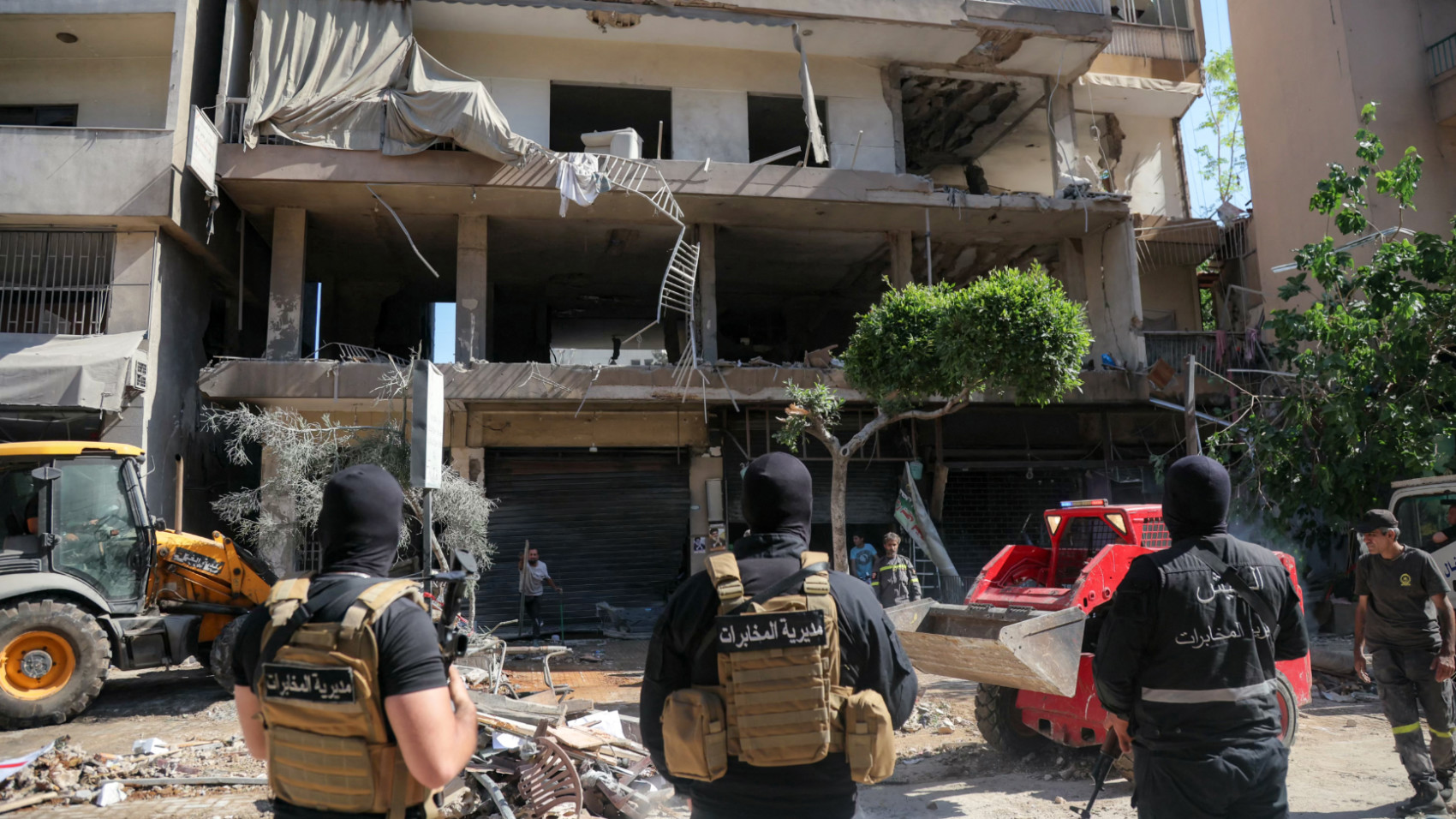
On a tense Sunday in the Middle East, an Israeli drone strike on an apartment building in Beirut’s southern Ghobeiry neighborhood of the Dahieh district killed at least three civilians and left 15 others injured, sending shockwaves through already fragile regional peace negotiations and drawing sharp condemnation alongside explicit threats of retaliation from top Iranian government and military officials.
Lebanese media confirmed the targeted structure was a municipally owned apartment building in the densely populated Dahieh area, a district that has long been a stronghold of the Lebanese militant group Hezbollah. The attack marked the latest escalation in a cycle of cross-border violence that has gripped the Israel-Lebanon border for months, coming just hours after three unmanned aerial vehicles launched from Lebanese territory struck northern Israel earlier the same day. In response to that initial incursion, senior Israeli cabinet members immediately called for forceful, aggressive retaliation targeting Beirut directly.
Israeli Prime Minister Benjamin Netanyahu and Defense Minister Israel Katz issued a joint statement confirming the Sunday strike was a deliberate targeting of Hezbollah assets in Dahieh, carried out in direct response to the earlier drone fire on Israeli territory. This latest attack fits a consistent pattern of Israeli military activity that has persisted since a temporary ceasefire went into effect across the region on April 16: Israel has conducted daily bombardment operations across southern Lebanon, while its ground forces have progressively expanded their occupation of southern Lebanese villages and carried out widespread demolitions of local residential and civilian infrastructure.
Early Sunday, the Israeli military had already issued a broad evacuation order urging residents of at least 30 towns and villages across Lebanon’s Nabatieh and Sidon districts, located north of the Litani River, to leave their homes immediately ahead of planned military operations. The timing of the Beirut strike carries particularly high stakes, as it comes at a critical moment when Washington and Tehran appeared to be on the cusp of finalizing a landmark US-Iran agreement designed to de-escalate the broader regional war. As recently as this weekend, both US and Pakistani leaders publicly predicted the deal could be finalized and signed as early as Sunday.
Just last week, a separate Israeli strike on the Dahieh district already triggered a full exchange of cross-border fire between Israeli and Iranian forces, bringing regional tensions dangerously close to a full-scale conflict that would have collapsed the ongoing negotiation process entirely. Iran has long listed a full cessation of Israeli hostilities in Lebanon and a complete withdrawal of Israeli occupying forces from all southern Lebanese territory as non-negotiable conditions for any final wider agreement with the United States. On Friday, Iranian Foreign Minister Abbas Araghchi reaffirmed that the imminent deal would explicitly include commitments to end all hostilities in Lebanon and enforce the full withdrawal of Israeli troops from the south.
Sunday’s strike has thrown these plans into complete disarray. Mohammad Baqer Ghalibaf, Iran’s chief nuclear and negotiation negotiator, argued that the attack exposed a critical failure on the part of the United States: either Washington lacks the political will to uphold its own commitments to the emerging deal, or it does not have the capability to rein in its Israeli ally to meet the agreed terms. In a public post on the social platform X, Ghalibaf warned that the current path toward negotiation would become completely unworkable if the US cannot deliver on the obligations it has put forward.
Senior Iranian military leadership has further raised the threat of direct retaliation. Brigadier General Mohammad Jafar Asadi, deputy commander of Iran’s supreme military command, told Iranian state media that what he labeled Israeli “crimes” in Lebanon would not remain unanswered, signaling that Tehran is prepared to take direct military action in response to the strike.
Adding another layer of complication to the negotiation process, Israeli Defense Minister Katz has already explicitly rejected the core Iranian condition for the deal: he confirmed earlier this week that Israel has no intention of withdrawing its forces from the areas of southern Lebanon it currently occupies. This stance puts Washington in an impossible position, as it tries to reconcile its unwavering military and political support for Israel with its diplomatic goal of reaching a de-escalation agreement with Iran to prevent a wider regional war.