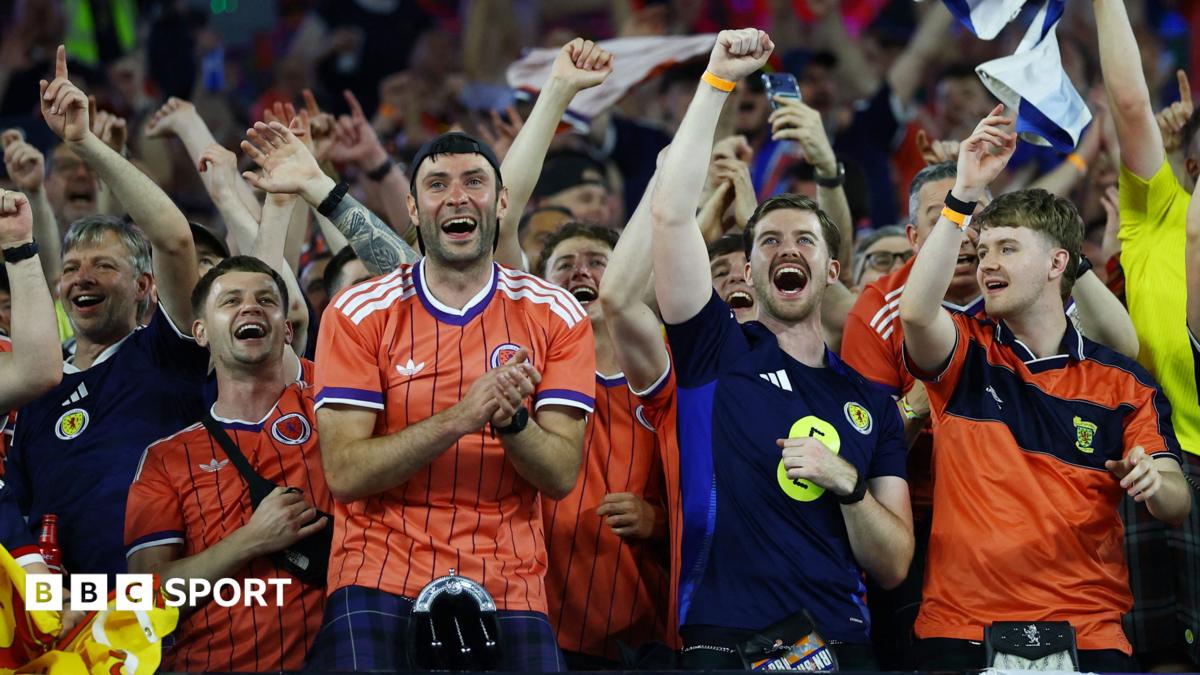
For 28 long years, Scotland’s football fans had been locked out of the World Cup, forced to watch from the sidelines as the world’s biggest football tournament rolled on without them. So when thousands of members of the famous Tartan Army found themselves stuck in crippling traffic gridlock on the highway to Foxborough’s Boston Stadium ahead of their opening 2026 World Cup group match against Haiti, there was not a hint of frustration – only unbridled joy.
Four hours before kickoff, a line of yellow school buses carrying jubilant Scottish supporters crawled along Interstate 95 at just one mile per hour. Fans leaned out of every window, belting out traditional anthems, waving blue and white flags, and turning the slow-moving convoy into an impromptu street party, completely unaware of the nail-biting tension that would unfold on the pitch hours later. The anticipation across the entire city of Boston was tangible; clusters of Scotland fans packed every street corner, turning the area into a sea of tartan that felt less like a visiting crowd and more than a joyful invasion.
When the Scottish team walked out onto the pitch just before 9 p.m. local time, the Boston Stadium erupted into a cacophony of noise and color. Giant screens behind each goal captured every raw emotion on the stands, from tearful grins to thunderous cheers as the crowd sang *Flower of Scotland* with a ferocity that manager Steve Clarke would later note felt even more powerful on foreign soil than it does at Hampden Park. For a side that had waited a generation to return to the World Cup finals, the moment was electric – a raw, authentic rebuke to the commercialism and greed that plagues modern global football.
The match got off to a promising start for Scotland, but the side quickly faded, letting Haiti, ranked 83rd in the world, grow into the contest. The Caribbean side grew bolder as the half wore on, creating more clear chances than the heavily favored Scots, even if they failed to convert their opportunities. With less than 30 minutes on the clock, a small section of the Tartan Army began chanting for Aston Villa midfielder John McGinn, urging their talisman to deliver a moment of magic. Two minutes later, he answered the call.
McGinn’s winning goal was far from a technical masterpiece: the scruffy strike took two deflections before looping into the Haitian net, but that detail meant nothing to the jubilant crowd. It was Scotland’s first goal at a World Cup finals in a generation, and it put Clarke’s side 1-0 up, lifting their total of all-time World Cup finals wins from four to five. Rare moments like this do not need to be pretty to be perfect.
Instead of pushing on to extend their lead after the break, Scotland retreated into a defensive shell, unable to impose their game on a hungry Haiti side. For the final 20 minutes, the Scots hung on desperately, their defense littered with errors and constantly pinned deep inside their own half. With 12 minutes left on the clock, the Tartan Army dug into their songbook for a dry, gallows-humored rendition of “No Scotland No Party” – a ironic tweak on their favorite anthem, as the entire crowd held its breath through every attacking Haiti thrust. The tension was so thick you could cut it: with six minutes remaining, Haiti striker Frantzdy Pierrot rose above center-back Grant Hanley and sent a header inches wide of the post, sending heart rates soaring across the Scottish section.
A late equalizer would not just have stolen a point for Haiti – it would have gutted Scotland’s hopes of progressing out of the group stage, a historic first for the nation. If they could not beat Haiti, there seemed little hope of taking points from heavyweights Brazil or Morocco in their remaining group matches. Pierrot had another golden chance late on and missed again, while panicked Scottish defenders cleared lines frantically rather than playing the composed football they are capable of.
What was supposed to be a relatively comfortable return to the World Cup stage for Scotland turned into a 90-minute rollercoaster of nerves, an exhausting contest that left both players and fans drained. But at the final whistle, the scoreboard still read 1-0, and the 36-year wait for a World Cup finals win was over.
Post-match reactions summed up the conflicting mood in the camp: three points on the board, but plenty of work to do. McGinn, who spoke after the game beaming with pride, admitted the side has higher gears that they did not show on the night, a sentiment echoed by Clarke, who described the match as a must-win that his side had grinded out. Goalkeeper Angus Gunn acknowledged that the performance was far from perfect, but stressed that a World Cup win is still a win. Young winger Ben Gannon-Doak was Scotland’s stand-out player, his constant running causing Haiti problems all evening, while key stars like Billy Gilmour, Scott McTominay (who hit the post late on) and even McGinn failed to exert their usual control over the match outside of the winning goal.
On Monday morning, the squad will return to their Charlotte base tired but victorious, with six days to iron out their mistakes before their second group match against Morocco back in Boston. The win sparked wild celebrations among the Tartan Army, but most supporters admitted the mood was more relief than unfiltered joy. Still, after waiting 28 years just to be back at the World Cup, even the most nail-biting win is enough. Thousands of fans are already planning to return for the Morocco match, ready for another night of anxiety and pressure – and adamant there is nowhere else they would rather be.