Renowned Iranian-French comic author Marjane Satrapi passed away in Paris last week at the age of 56, mere days before a new wave of conflict erupted between Israel and her native Iran. In death, as in life, Satrapi’s body of work has found renewed, urgent relevance amid the rising regional tensions that trace their roots to the same historical forces she spent decades documenting. Satrapi’s work stands apart in how it masterfully interlaces intimate personal narrative with the sweeping arc of Iran’s modern political and social history, turning centuries of upheaval into a accessible, human story for global audiences.
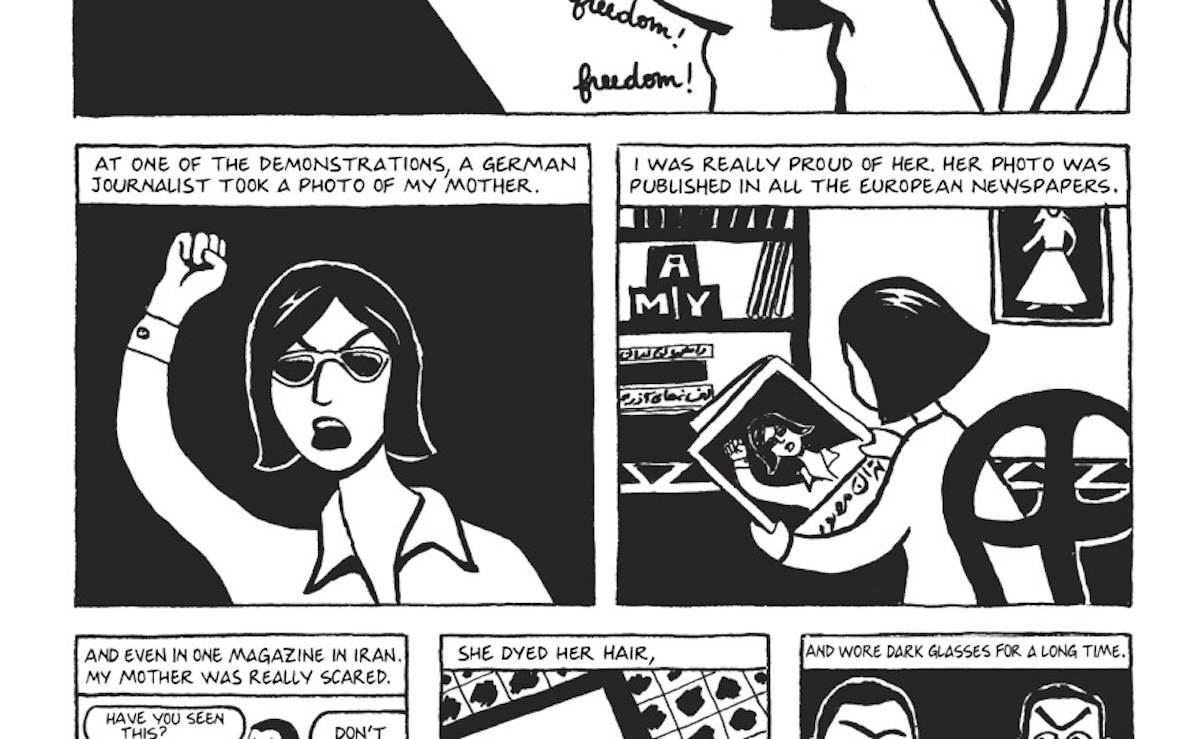
One of Satrapi’s most iconic works, the graphic memoir *Persepolis* (later adapted into an acclaimed film), weaves personal coming-of-age with a clear-eyed retelling of Iran’s 20th century power shifts. The work opens with context for the 1979 Islamic Revolution, tracing the lineage of unrest back to 1925, when Iranian military officer Reza Khan overthrew the Qajar dynasty with quiet encouragement from British officials who had already installed sympathetic monarchies in Iraq and Jordan. Instead of backing the secular republic Khan initially sought, British powers pushed him to declare himself shah, founding the Pahlavi dynasty that would rule Iran until it was toppled in the 1979 revolution. Satrapi anchors every major turning point to the lives of ordinary Iranian citizens, whose fates are shifted by foreign interference and political upheaval beyond their control. Rendered in a stark, striking monochrome art style, her work roots the long-simmering Iranian resentment of foreign meddling in personal experience, rather than abstract political rhetoric.
For all its enduring acclaim, *Persepolis* has long been a source of polarizing debate. Critics have frequently attacked the work for alleged historical inaccuracies, but this critique misses Satrapi’s core purpose: she was not a professional historian, but a storyteller drawing on her own lived experience growing up in Iran and building a life abroad. This controversy has spilled into academic spaces, as the article’s author, historian Ibrahim Al-Marashi, can attest firsthand. In 2007, while teaching a course on Iranian history at Istanbul’s Bogazici University, Al-Marashi assigned *Persepolis* as required reading for the class. Student activists affiliated with the campus Communist party accused him of secretly promoting Western-backed regime change, arguing that the work’s focus on religious oppression under the Islamic Republic amounted to anti-Iranian propaganda.
Al-Marashi’s intention was far simpler: he assigned the memoir because it offered valuable context, artistic merit, and deep insight into modern Iranian life that could not be found in traditional academic texts. But the protests persisted, growing loud enough that Al-Marashi was ultimately forced to resign his position and leave Turkey.
*Persepolis* opens in the early days of the 1979 revolution, with Satrapi’s father Ebi explaining to his young daughter why thousands of Iranians had taken to the streets to overthrow the monarchy. He frames the uprising as the culmination of 2,500 years of foreign and domestic tyranny: starting with native emperors, followed by foreign invasions from the west and east, and ending with centuries of modern Western imperial meddling. That “modern imperialism” includes Britain’s role in installing Reza Khan as shah, then removing him in World War II over his pro-German leanings to install his more compliant son Mohammad Reza Pahlavi. When democratically elected prime minister Mohammad Mossadegh launched a popular internal coup to curb monarchical power in 1953, MI6 and the CIA orchestrated a counter-coup to restore Mohammad Reza to the throne, cementing decades of Western influence over the Iranian state.
Throughout the Cold War, the U.S. armed the restored shah with advanced military hardware to counter Soviet influence in the region, including top-of-the-line F-14 fighter jets. The constant presence of American military advisors and personnel on Iranian soil fanned the flames of nationalist anger that eventually boiled over into the 1979 revolution, which ousted the monarchy and brought Ruhollah Khomeini’s Islamic Republican faction to power. Like the Russian Revolution, the Iranian Revolution’s path to stable rule was marked by bloodshed and chaos. When Iraqi forces invaded Iran in September 1980, Khomeini’s faction consolidated control by leaning into surging nationalist sentiment, turning the war into a unifying cause for the new republic.
*Persepolis* captures the quiet human cost of this era through one iconic anecdote centered on Iran’s unofficial nationalist anthem, “Ey Iran.” The track, which predates both the Pahlavi monarchy and the Islamic Republic, was written in the 1940s during the Allied occupation of Iran, after poet Hossein Gol-e-Golab witnessed an American soldier beating an Iranian greengrocer. The anthem’s lyrics declare fierce devotion to the Iranian homeland, ending with the line: “May my life be sacrificed for my pure motherland.” During an early retaliatory raid against Iraq following the bombing of Tehran, the father of one of Satrapi’s schoolmates—one of the pilots flying Iran’s U.S.-built F-14s—died in the mission, fulfilling that oath even as the anthem played on state radio to celebrate the attack. Satrapi does not shy away from the complexity of this moment: her own father, a leftist activist who helped overthrow the shah only to oppose the Islamic Republic, often wept when he heard the song. Decades later, Al-Marashi notes, the track still brings Iranian students to tears, a testament to how deeply personal grief and nationalist pride are intertwined in the country’s modern history.
Satrapi’s singular genius lay in her ability to synthesize a century of messy, overlapping history, personal memory, political upheaval, and cultural identity into a coherent, deeply human narrative rendered in bold, unforgettable art. As new conflict erupts across the Middle East, her work remains as vital today as it was when it was first published, offering a rare unfiltered window into the historical forces that continue to shape Iran and its relationship with the wider world.