Five years after Myanmar’s military seized power in a 2021 coup, the ruling junta has pushed a carefully crafted narrative that the country has returned to stable, normal governance: it points to recently held elections, a newly installed civilian government, and the December lifting of Yangon’s restrictive 1 a.m. to 3 a.m. curfew as proof the nation is moving past its post-coup unrest. But the shadowy, high-adrenaline underground party scene thriving in the country’s largest city tells a far different story – one of widespread fear, unaddressed trauma, and a desperate search for escape amid a still-raging civil war.
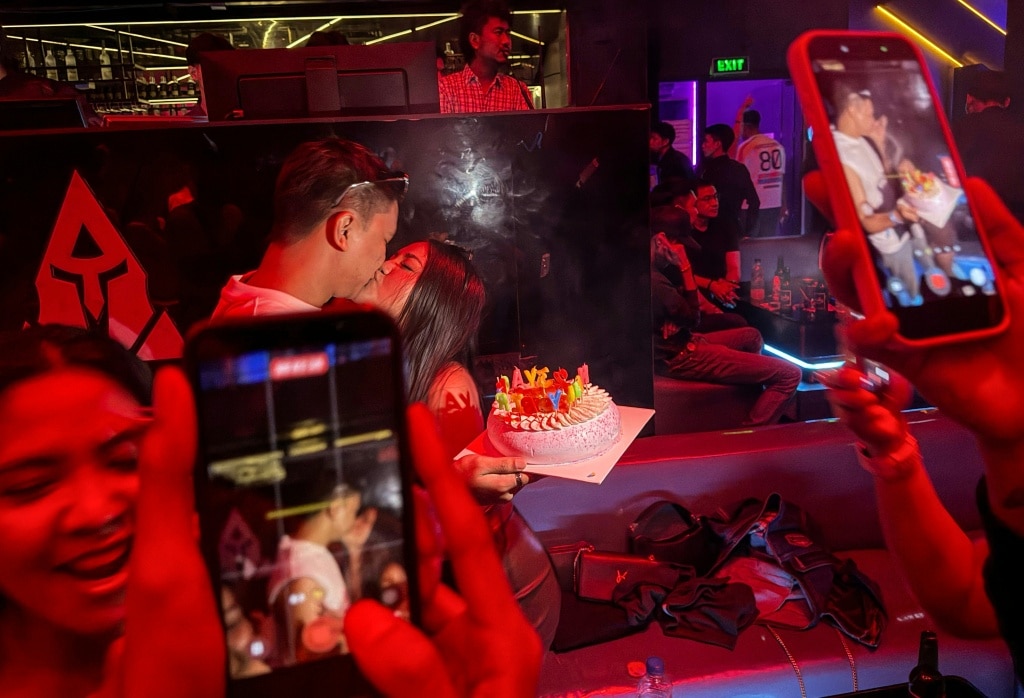
Inside a sprawling, warehouse-turned-nightclub in Yangon, bass-heavy music blares at 150 decibels – as loud as a jet engine during takeoff – while cutting laser lights slice through clouds of cigarette and vape smoke. When the final set ends around dawn, many partygoers don’t rush to head home. Instead, they doze off on leather sofas scattered around the venue, a habit formed after years of avoiding late-night travel through streets controlled by military checkpoints and armed factions. “That became a habit, they’re used to it,” explained a 29-year-old veteran of Yangon’s underground elite party scene, who, like all other interviewees for this report, requested full anonymity out of fear of reprisal from military authorities.
For many of Myanmar’s young people, the desire to cut loose from daily stress collides with a persistent dread of moving through the streets after dark. Widespread arbitrary detention, forced conscription campaigns by both the military and opposing armed groups, and ongoing violence have left nearly half of all young people reporting they feel “unsafe” or “very unsafe” walking alone after sundown, according to a 2025 United Nations report – that’s more than double the rate recorded before the 2021 coup. By late evening, most public streets in Yangon are nearly empty, deserted save for stray dogs and occasional military patrols.
Local performer Sae Sar, who performs under a stage name to protect his identity, said this tension between the urge to connect and the fear of danger defines Yangon’s modern nightlife. “I know my fans are tired all day,” the 24-year-old artist said. “If they keep all their feelings inside, it can cause many problems.”
On weekends, the first stop for many night owls is Yangon’s iconic Chinatown, where neon signs line 19th Street and open-air beer bars spill out onto the sidewalk. This strip is the only major late-night public gathering spot in the city; as midnight approaches, every surrounding street has long emptied out. One local street vendor selling individual sachets of hangover cure says that six months after the curfew was lifted, the number of people out for the night has stayed roughly the same. “People just want to be happy, even though they are worried,” she explained. “They’re still going home early.” Lyrics from busking performers drift out onto the street, capturing the collective mood: “Life is short as a drying drop of water. Don’t be sad. Things will get better. Try just to be happy.”
Once 19th Street winds down around midnight, the party moves underground to the Sanchaung neighborhood. Once a center of anti-coup protests after 2021, the area has emerged as a hub for underground nightlife after security forces crushed the public pro-democracy movement. Many of the young activists who led those early protests have since joined anti-military resistance factions fighting in the country’s ongoing civil war, which has killed more than 70,000 people, displaced 3.7 million more, and pushed half of Myanmar’s population into poverty. Even when strict full-night curfews were in place in the years immediately after the coup, young people still gathered secretly to party, one local DJ told AFP. He argued that military authorities often turned a blind eye to these gatherings, reasoning that young people focused on partying “won’t focus on the resistance.”
Today, regular nightlife carries a distinctly different energy than it did before the coup, according to everyone interviewed for this report. The trade in illicit party narcotics has exploded in recent years: ketamine, ecstasy, and homemade “happy water” cocktails that mix unpredictable combinations of stimulants and sedatives are now widely available at underground events. “These days people judge whether a DJ is good or bad based entirely on how well the music complements their drug high,” the 31-year-old DJ said. “It is supply and demand.”
The search for escape from daily stress and trauma only ends at dawn, when bleary-eyed partygoers stumble out into the early morning light to head home, carrying the collective weight of the coup’s ongoing impact with them – a lingering post-coup hangover that no night of partying can fully wash away.